Impacts of the COVID-19 pandemic on the well-being and mental health of Uruguayan adults
Abstract:
The COVID-19 pandemic and associated restrictions have had significant effects on mental health globally. This study was part of the global COH-FIT project and aimed at describing the effects of the pandemic on the mental health of adults in Uruguay through an online survey methodology. The sample included 1936 adults between 18 and 93 years old (M = 43.90, SD = 16.25), mostly women (81.3 %). The results indicate a self-reported deterioration in well-being, sleep, and anxiety, depressive and post-traumatic symptoms, when comparing the times before and during the pandemic. In addition, female gender, young adulthood (18-26 years), primary education level, or a previous mental health diagnosis were associated with worse mental health indicators. Nearly a third of adults reported suicidal ideation during the pandemic. These results provide relevant regional and local epidemiological information and identify risk groups that should be considered to mitigate the long-term effects of the pandemic.
Keywords:
COVID-19; mental health; suicide; Uruguay
Resumen:
La pandemia de COVID-19 y las restricciones asociadas han tenido efectos significativos sobre la salud mental a nivel mundial. Esta investigación, parte del estudio global COH-FIT, buscó describir los efectos de la pandemia sobre la salud mental de adultos en Uruguay a través de una metodología de encuesta online. Se estudió una muestra de 1936 adultos entre 18 y 93 años (M = 43.90, DE = 16.25), mayormente mujeres (81.3 %). Los resultados reflejan percepción de deterioro del bienestar, el sueño y la sintomatología ansiosa, depresiva y postraumática, al comparar el tiempo pre y durante la pandemia. Se encontró que ser mujer, adulto joven (18-26 años), tener nivel educativo de primaria, o un diagnóstico previo de salud mental se asoció con peores indicadores. Casi la tercera parte de los adultos reportaron ideación suicida durante la pandemia. Estos resultados aportan información epidemiológica regional y local relevante e identifican grupos que deben ser tenidos para mitigar los efectos a largo plazo de la pandemia.
Palabras clave:
COVID-19; salud mental; suicidio; Uruguay
Resumo:
A pandemia da COVID-19 e as restrições associadas tiveram efeitos significativos sobre a saúde mental em nível mundial. Esta pesquisa, parte do estudo global COH-FIT, buscou descrever os efeitos da pandemia sobre a saúde mental de adultos no Uruguai, por meio de uma metodologia de pesquisa online. Estudou-se uma amostra de 1936 adultos entre 18 e 93 anos (M = 43,90; DP = 16,25), sendo a maioria mulheres (81,3 %). Os resultados refletem uma percepção de deterioração do bem-estar, o sono e a sintomatologia ansiosa, depressiva e pós-traumática, ao comparar o período pré-pandemia com o período durante a pandemia. Verificou-se que ser mulher, adulto jovem (18-26 anos), ter nível educacional de ensino fundamental, ou um diagnóstico prévio de saúde mental, estava associado a piores indicadores. Quase um terço dos adultos relatou ideação suicida durante a pandemia. Esses resultados proporcionam informações epidemiológicas regionais e locais relevantes e identificam grupos que devem ser considerados para mitigar os efeitos a longo prazo da pandemia.
Palavras-chave:
COVID-19; saúde mental; suicídio; Uruguai
Between January 2020 and May 2023, the world faced the COVID-19 pandemic, an acute respiratory syndrome caused by a highly contagious new variant of coronavirus (SARS-COV-2) (Ciotti et al., 2020). This disease and the associated preventive measures -such as voluntary or government-mandated confinement- had significant repercussions on the global economy (Naseer et al., 2023), the educational developments of children and adolescents (Skar et al., 2023; Tadesse & Muluye, 2020), and the physical and mental health of individuals (Shanbehzadeh et al., 2021), among others. While the long-term effects remain largely unknown, residual effects of the disease on different systems of the human body have already begun to be found (He et al., 2023; Xu et al., 2023).
Mental health effects of the COVID-19 pandemic
The effects of the COVID-19 pandemic on mental health have been extensively documented. Results from systematic reviews and meta-analyses confirm an increase in anxiety and depression symptoms, stress, sleep problems, and post-traumatic stress disorder, with variations observed across different population groups (Bourmistrova et al., 2022; Cénat et al., 2022; Chen et al., 2022; Dragioti et al., 2022; Jin et al., 2021; Wu et al., 2021). Individuals with pre-existing chronic diseases and those who contracted COVID-19 were at higher risk of suffering from depression and anxiety (Dragioti et al., 2022; Wu et al., 2021). Healthcare workers were mainly affected by symptoms of stress and fear (Chen et al., 2022; Dragioti et al., 2022; Wu et al., 2021). Women and younger individuals reported greater symptomatology overall (Dragioti et al., 2022).
Reviews of longitudinal studies show that people who contracted the virus experienced an increase in anxiety, depression, stress, insomnia, and post-traumatic stress disorder symptoms that, over time, remitted to levels similar to those of the general population (Bourmistrova et al., 2022). During the early months of the pandemic, symptoms of anxiety and depression increased in the general population, declining over time until becoming non-significant by mid-2020 (Robinson et al., 2022).
In the Latin American context, Zhang et al. (2022) identified and analyzed 62 studies in which increased anxiety, depression, and insomnia symptomatology was reported. This meta-analysis did not include any primary studies in Uruguay.
Pandemic and mental health effects in Uruguay
Uruguay is a South American country with a population of 3,444,263 inhabitants (National Institute of Statistics, 2023). According to the latest United Nations Development Programme report (UNDP, 2022) Uruguay ranks among the countries with Very High Human Development, with a Human Development Index (HDI) of 0.809 in 2021, placing it in the 58th place worldwide. It is one of the countries with lowest poverty and extreme poverty rates, as well as the lowest poverty gap in Latin America (Economic Commission for Latin America and the Caribbean, 2022). Nonetheless, Uruguay has historically had high suicide rates (Vignolo Ballesteros et al., 2019). In 2022, the country’s total suicide rate reached 23 per 100,000 inhabitants, the highest record since data collection began (Uruguayan’s Ministry of Public Health (MSP), 2023). Despite accounting for 33% of the total years lost due to disability, Uruguay does not have routinely collected epidemiological data on mental health disorders (MSP, 2020). Among these mental health disorders, depression and anxiety are the most prevalent, followed by the impact of suicide and self-harm, schizophrenia and bipolar disorder (Pan American Health Organization (PAHO), 2018).
The first confirmed case of COVID-19 in Uruguay was reported on March 13, 2020. On the same day, the government declared a health emergency and implemented measures to strengthen the healthcare and epidemiological surveillance systems. Contrary to other countries, Uruguay opted for a voluntary social distancing policy rather than compulsory population-wide quarantine measures. During the first months of the pandemic, there were high levels of compliance with the social distancing and preventive quarantines measures which helped to reduce the spread of the virus (Medina, 2020; Ministry of Public Health, 2021). By August 2023, the cumulative number COVID-19 confirmed cases was 1,038,774 and the number of deaths was 7,634. As of October 2021, which marked the last month of data collection for the study in Uruguay, 393,454 people had contracted the disease and 6,077 had died (World Health Organization (WHO), 2023).
The relatively controlled situation in terms of health coexisted with a strong demand for mental health care. In the first two months following the creation of a free emotional support hotline, a total of 1,363 calls were registered-74% of those coming from women-mainly reporting symptoms of depression, anxiety, loneliness and isolation, along with a need of company and guidance. Meanwhile, the VIDA suicide prevention line had an increase of 321% in calls from March to June 2020 compared to the same period in 2019 (Bagattini et al., 2020).
To the best of our knowledge, five studies have been published to date on the impact of the COVID-19 pandemic on the mental health of Uruguayan adults in the general population (Castellano et al., 2023; Fernández-Theoduloz et al. 2024; Paz et al., 2023; Ruiz et al., 2022; Torterolo et al., 2023).
Torterolo et al. (2023) analyzed the sleep quality of 1,137 adults using the Pittsburgh Sleep Quality Index (PSQI) in May 2020 via an online survey. Results showed that 63% of participants reported poor sleep quality (PSQI > 5), with a higher mean score for women (8.2) than for men (6.4). Paz et al. (2023) conducted an online survey with 1,051 Uruguayan adults between June and July 2020, assessing sociodemographic variables, quality of life, and depressive (BDI-II) and anxious (STAI-S) symptomatology. The study found mild to moderate depressive symptoms and severe anxiety symptoms. Risk factors associated with higher levels of symptoms included the duration of isolation, younger age, female gender, and lower socioeconomic status. In contrast, physical activity, regular sleep routines, and exposure to natural light were associated with fewer mental health conditions. Building on this, Fernández-Theoduloz et al. (2024) performed a longitudinal study on the same sample used by Paz et al. (2023), collecting data from June to October 2020. During that period the authors conducted six rounds of data collection (n = 1,051 at T1 and n = 232 at T6), reporting a decline in anxiety and depressive symptoms as mobility restrictions eased. Castellano et al. (2023) analyzed levels of anxiety, sadness, and sleep difficulties through a self-administered online survey. They established a first cut-off point between March and December 2020 (n = 1,500), and a second cut-off between January and June 2021 (n = 1,405). During the first period, Uruguay had a very low infection rate compared to other countries, whereas the second period was characterized by an exponential increase in cases and deaths from COVID-19. At the first cut-off, 27.1% of respondents said they felt anxious and 19.9% said they felt sad; these results had risen by the second cut-off to 31% and 31.4%, respectively. The study found that living in households with more than five members had a protective effect against feelings of sadness, while being a woman was associated with higher levels of both anxiety and sadness. Finally, Ruiz et al. (2022) observed an increase in the volume (28% of the sample) and frequency (17.7% of the sample) of use of alcohol, tobacco, cannabis, and psychotropic drugs during March and April 2020, based on an online survey with 1,916 participants.
Given the global mental health impacts of the pandemic and the poor pre-pandemic mental health indicators in Uruguay, it is relevant to investigate the pandemic’s effects and to identify potentially at-risk populations, to inform the public health policies. Data on mental health and well-being of Uruguayan adults during the COVID-19 pandemic are scarce and focused primarily on anxiety, depression, and substance use. Additionally, there are no local studies comparing pre-pandemic and mid-pandemic levels of well-being and symptomatology, which limits the understanding of how the pandemic and social distancing measures have affected the mental health of the population. Thus, further research that explores the impacts on different aspects of mental health and well-being, using validated instruments, and incorporating a comparison with the pre-pandemic time is needed.
Method
Presentation, design and specific objectives of the COH-FIT study
This cross-sectional study is part of the global Collaborative Outcomes study on Health and Functioning during Infection Times (COH-FIT) project, which aims to assess the impact of the COVID-19 pandemic on the physical and mental well-being of children, adolescents and adults, as well as to identify associated risks and protective factors. The project involves an anonymous online survey, available in 30 languages, which has collected over 185,000 responses from 156 countries, making it the largest survey on the pandemic’s impact (COH-FIT, 2023; Solmi et al., 2022).
The specific objectives of the study using data from Uruguay were: (a) to compare reported levels of well-being and psychopathology including anxious and depressive symptomatology, sleep problems, and post-traumatic stress symptoms before and during the pandemic in Uruguayan adults, according to sociodemographic variables -gender, age, educational level, and previous mental disorder diagnoses-; (b) to identify the sociodemographic groups that experienced a greater deterioration in well-being and psychopathology, (c) to analyze the predictive role of sociodemographic variables on the deterioration in well-being and psychopathology; and (d) to describe the levels of suicidal thoughts and suicide attempts, and frequency of self-injury, according to sociodemographic variables.
Data reporting will follow the Checklist for Reporting of Survey Studies (CROOS) guidelines (Sharma et al., 2021).
Instrument
COH-FIT-A survey includes questions on sociodemographic and clinical data to identify specific population subgroups, as well as questions assessing well-being and psychopathology. For each symptom group, the survey includes questions on current symptomatology, as well as a question about how the participant perceived the worst symptom experienced two weeks before the outbreak of the pandemic. Most of the responses are recorded on a scale from 0 to 100, except for questions on self-injury, suicidal thoughts, and suicide attempts, which require simple frequency-based answers (Solmi et al., 2022).
To ensure that the scale covers a broad spectrum of symptomatology while remaining of reasonable length, items were selected from widely used scales. The validation study of the survey (Solmi et al., 2023) demonstrated adequate concurrent validity between the scores of the selected items and the complete scales from which they derive, confirming that the selected items are reliable brief measures of the dimensions they intend to evaluate.
In this study we took sections of the survey designed to assess the following: well-being (WHO-5, five items assessing currently and retrospectively), anxiety (two items for current symptomatology, one retrospective item), depression (two items for current symptomatology, one retrospective item), post-traumatic stress (four items for current symptomatology, one retrospective item), sleep problems (one item for current and retrospective problems), self-injury (one item for current episodes), suicidal thoughts (one item for current thoughts) and suicidal attempts (one item for current attempts). The items and the original scales from which they derive are presented in the Appendix A. The variables were selected based on the availability of both international and national precedents and the presence of validated items for their evaluation (Solmi et al., 2023). Reliability analysis of the scales in the current sample showed the following results: current well-being (α = .87), retrospective well-being (α = .84), anxiety (α = .86), depression (α = .88), and PTSD (α = .88).
Participants
Participants included adults (18 years and older) living in Uruguay at the time of data collection. A total of 1,936 adults participated in this study between May 2020 and October 2021. Only the answers of those who completed at least one item related to one of the dimensions of interest (e.g., well-being) were retained, resulting in the exclusion of 453 questionnaires that only contained sociodemographic data. Additionally, those who identified as “transgender or intersex” and “non-binary” were excluded given that they had a low incidence in this sample (n = 9). The final sample consisted of 1,474 Uruguayan adults, ranging in age from 18 to 93 years (M = 43.90 SD = 16.25). Participants were categorized into three age groups: young adults (18-26 years, n = 284, 19.3%), adults (27-59 years, n = 860, 58.3%), and older adults (60 years and older, n = 330, 22.4%). In terms of gender distribution, 1,198 participants (81.3%) were female and 276 (18.7%) were male. Regarding educational level, 22 participants (1.5%) had completed only primary education, 419 (28.4%) had completed secondary education, 718 (48.7%) held technical or university degrees, and 314 (21.3%) had postgraduate degrees. Additionally, 316 participants (21.4%) were diagnosed with a mental health condition at some point in their lives, with 275 of these individuals being women and 41 men.
Procedure and ethical considerations
The survey was conducted using the Research Electronic Data Capture platform (REDCap; Harris et al., 2009; Harris et al., 2019) located on the servers of Charité - Universitätsmedizin Berlin, Germany. The project was disseminated through mass media, social networks, and collaborations with public and private institutions linked to mental health and education. Upon accessing the survey link, participants were presented with an informed consent form outlining the project’s objectives and the general characteristics of the survey (voluntary, anonymous, with an approximate duration of 40 minutes). Those who gave their consent to participate were required to answer three initial questions about their country, gender, and age, before proceeding to the rest of the survey, which consisted of non-mandatory questions.
The COH-FIT study was approved by the Aristotle University of Thessaloniki, Greece (04/27/2020). At national level, it was endorsed by Research Ethics Committee of the Universidad Católica del Uruguay (https://www.ucu.edu.uy/Menu-principal-home/Comite-de-Etica-uc739).
Data analysis
Data were analyzed using the SPSS v.29 statistical package.
To address objective 1, means and standard deviations were calculated for well-being, anxious symptomatology, depressive symptomatology, sleep problems, and post-traumatic stress symptoms. Following the recommendations of le Cessie (2020) and considering the sample size, parametric statistics were used for intra-group or between-group comparisons. T-tests for related samples were performed to compare participants’ current symptom reports with their reports of the same dimensions from the two weeks preceding the pandemic. These estimates were conducted for both the overall sample and for specific sociodemographic subgroups: age (young adults (18-26 years), adults (27-59 years), and older adults (60 years and older)), gender (male and female), educational level (primary education, secondary education, university, and postgraduate), and previous mental health diagnosis (presence or absence).
For objective 2, the extent of well-being and symptomatology deterioration during the pandemic was compared between the different sociodemographic subgroups by subtracting the pandemic values from the pre-pandemic values. T-tests for independent samples were used to compare differences in means between groups with two options (e.g., gender, previous mental health diagnosis), while differences between groups with three or more levels were calculated using one-factor ANOVA tests (e.g., age, educational level). To test the predictive hypotheses, multiple linear regression analyses were performed. The independent variables used were gender (male or female), age (as a continuous variable), presence of a mental health clinical diagnosis (yes or no), and educational level (primary education, secondary education, university or technical degree, postgraduate degree). Five models were tested, with the following dependent variables: well-being, anxiety, depression, sleep problems, and post-traumatic symptomatology.
Finally, for objective 3, simple frequency analyses were used to quantify the number of participants who reported suicidal thoughts, suicide attempts, and self-injury episodes.
Results
Well-being and psychopathological symptoms before and during the pandemic
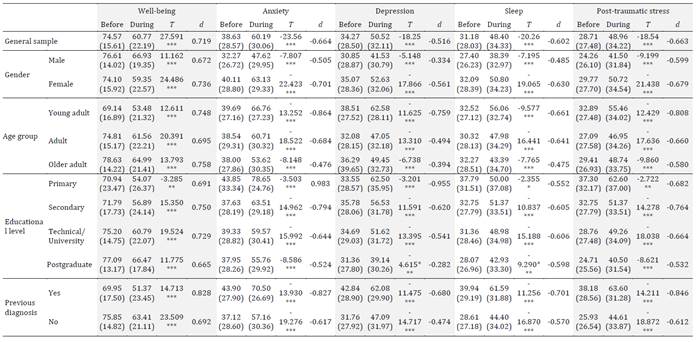
In the overall sample, there was a statistically significant deterioration of medium effect (.50>d<.80) across all analyzed variables-well-being, anxiety, depression, sleep problems, and post-traumatic stress-during the pandemic, compared to the pre-pandemic period (Table 1).
In addition, a significant deterioration was observed across all analyzed variables regardless of the sociodemographic characteristic considered. In particular, individuals with previous mental health diagnoses exhibited a large effect deterioration (d > .80) in well-being, anxiety, and post-traumatic stress. Similarly, young adults showed a large effect deterioration in anxiety and post-traumatic symptomatology, while participants who had only completed primary school education exhibited a large effect deterioration in anxiety and depression. All the remaining sociodemographic subgroups presented significant deterioration in the well-being, anxiety, depression, sleep, and posttraumatic stress variables, with effect sizes ranging from small to medium (Table 1).
Differences between sociodemographic groups
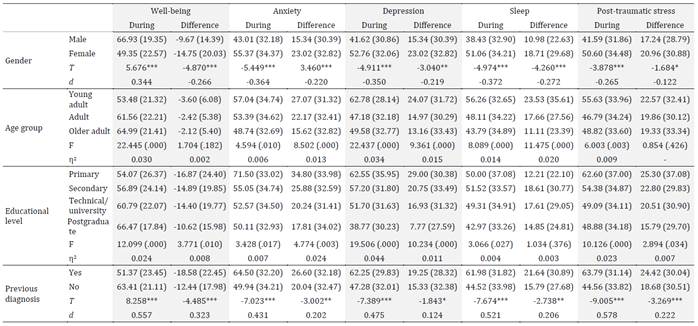
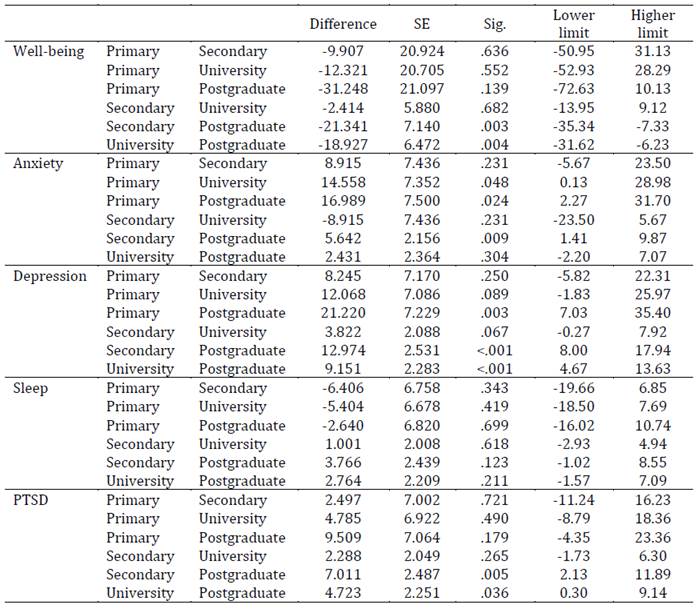
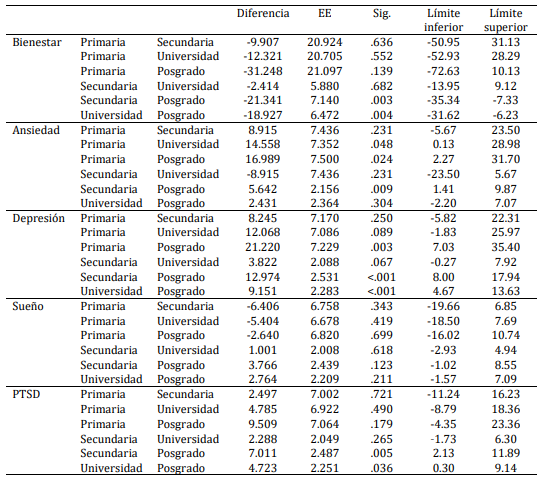
Table 2 presents the results of comparisons between sociodemographic groups indicating significant differences during the pandemic and in the level of deterioration in all variables -well-being, anxiety, depression, sleep, and post-traumatic stress- except for post-traumatic stress symptomatology between age groups (see Appendix A for the Bonferroni correction for each comparison).
Regarding the gender variable, women exhibited statistically lower levels of well-being and higher symptomatology levels during the pandemic compared to men. Additionally, the level of deterioration across all variables was higher for women.
When comparing the different age groups, younger adults presented significantly higher levels of symptomatology and lower levels of well-being than adults and older adults. The only exceptions found were in anxious symptomatology and post-traumatic stress symptomatology, where no significant differences emerged between young adults and adults or older adults, respectively. There are no significant differences between adults and older adults in most indicators, except in well-being, where older adults exhibited significantly higher levels. In terms of the levels of deterioration according to age group, young adults presented a statistically higher level of deterioration in depression and sleep compared to adults, as well as differences in anxiety, depression, and sleep compared to older adults. On the other hand, adults presented significantly greater deterioration in anxiety and sleep compared to older adults.
Taking into consideration the educational level, participants who had only completed primary education exhibited higher anxiety levels compared to the rest of the educational levels. They also presented significantly higher levels of depression, post-traumatic stress symptomatology, and lower levels of well-being compared to those with postgraduate studies. Participants who had completed secondary education showed significantly higher levels of depression, post-traumatic stress symptomatology, and lower levels of well-being compared to those with a university or postgraduate degree, as well as greater sleep problems than those with a postgraduate education. Differences were also found between participants with university degrees and those with postgraduate studies, with the former group exhibiting worse levels of depression, post-traumatic stress, sleep and well-being. Considering the degree of deterioration, participants who only completed primary school presented higher levels of anxiety deterioration than those with university and postgraduate studies, as well as higher levels of depression deterioration than postgraduates. Those who completed secondary studies presented higher levels of deterioration in anxiety, depression, post-traumatic stress, and well-being than those with postgraduate studies. Additionally, those with university studies showed a greater deterioration in depression, post-traumatic stress, and well-being, than participants with a postgraduate degree.
Lastly, individuals with prior mental health diagnoses reported lower levels of well-being and higher levels of symptomatology during the pandemic, as well as higher levels of deterioration..
Suicidal Thoughts and Attempts and Self-Injury during the Pandemic
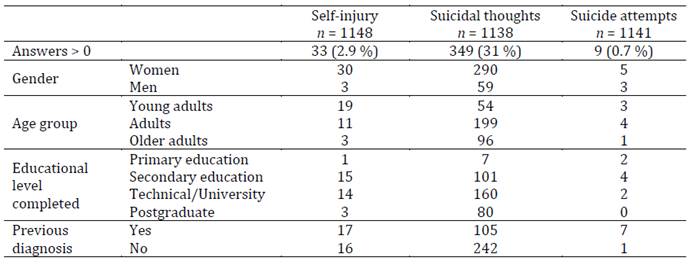
In the overall sample, 2.9 % of participants reported at least one episode of self-injury within the past two weeks during the pandemic. Additionally, 31 % indicated that they had thought about taking their own life at least once in the two weeks prior to completing the survey, and 0.7 % reported at least one suicide attempt in the last two weeks (Table 4).
Number of people with answers > 0 in self-injury, suicidal thoughts, and suicide attempts and sociodemographic variables
Discussion
The aim of this study was to describe the impact of the COVID-19 pandemic on indicators of well-being and psychopathological symptoms in the general Uruguayan population to identify at-risk population groups.
Presenting descriptive data on mental health from a large sample, such as the one analyzed in this study, adds valuable evidence to the limited previous studies published on Uruguayan population (Castellano et al., 2023; Fernández-Theoduloz et al. 2024; Paz et al., 2023; Ruiz et al., 2022; Torterolo et al., 2023). Knowing symptomatology trends during the pandemic, along with the people’s perception of pre-pandemic symptomatology, is crucial to understand the behavior of these variables in a country lacking epidemiological data and characterized by concerning mental health indicators (MOH, 2020; PAHO, 2018) and alarming suicide rates (MOH, 2023; Vignolo Ballesteros et al., 2019).
Comparison between pre-pandemic and pandemic data revealed a deterioration trend on all well-being and psychopathology indicators analyzed, which aligns with the results of international (Bourmistrova et al., 2022; Cénat et al., 2022; Chen et al., 2022; Dragioti et al., 2022; Jin et al., 2021; Wu et al., 2021), regional (Zhang et al., 2022), and local (Castellano et al., 2023; Fernández-Theoduloz et al. 2024; Paz et al., 2023; Torterolo et al., 2023) studies. It would seem that, even though Uruguay showed a different evolution of the pandemic than many countries-marked by voluntary confinement and lower infection and death rates-, the pandemic’s impact on mental health mirrored global trends.
Taking at-risk groups into account, defined as those who presented a higher level of deterioration, these results coincided with those reported in local and international studies.
Female participants reported lower levels of well-being and higher symptomatology, in accordance with international (Dragioti et al., 2022) and local (Castellano et al., 2023; Paz et al., 2023) studies. These results could be associated to contextual factors and to previous vulnerabilities of the population subgroup. As for contextual factors, several studies (Batthyány et al., 2020; Espino & De los Santos, 2020) highlighted that the demand for care affected women to a greater extent than men, particularly those women and mothers who assumed the responsibilities of domestic household chores, support for online education of their children, care of older adults in the family, along with the stress of face-to-face or remote work modalities. Regarding previous vulnerabilities, in the sample studied, a higher percentage of women had previous psychopathological diagnoses than men. Likewise, it is important to note that, in epidemiological terms, the psychopathological indicators analyzed-in particular anxiety and depression-mainly affect women (WHO, 2017).
When considering the different age groups, young adults (18 to 26 years) presented worse mental health indicators than the rest of the adults, mirroring results reported internationally in the meta-analysis by Dragioti et al. (2022), as well as by Paz et al. (2023) for Uruguayan adults. These differences could be understood if we consider that younger people have less independence and high appreciation for extrafamilial social interaction, and that some of the health measures adopted during the pandemic may have affected evolutionary milestones such as becoming independent, obtaining a first job, etc. (Bell et al., 2023; European Commission: European Education and Culture Executive Agency, 2022).
In this study, a greater mental health deterioration was found in people with a lower educational level. Although these results do not appear in the studies consulted, when educational level is taken as a proxy for socioeconomic level (Sirin, 2005), the results align with those of Paz et al. (2023) who found greater symptomatology in people with lower socioeconomic levels in Uruguay, as well as with the pre-pandemic literature that considers poverty as a risk factor for the development of mental health conditions (World Health Organization, 2022).
Finally, it is unsurprising that individuals with previous mental health diagnoses were among the most affected in terms of deterioration in well-being and symptomatology, given their greater vulnerability to the accumulation of stressors during the COVID-19 pandemic (Rains et al., 2021). Additionally, limited mobility and the impact of the pandemic on health services likely created barriers to mental health care access (Byrne et al., 2021).
A notable finding of this study is that nearly a third of the sample (31%) reported experiencing suicidal thoughts at some point during the pandemic. Although causal relationships cannot be established, it is worth mentioning that Uruguay’s suicide rate in 2021 reached 21.4 per 100,000 inhabitants, exceeding the previous highest rate, recorded in 2002 during the economic crisis (20.6 per 100,000 inhabitants). This rate was further increased to 23.2 per 100,000 inhabitants in 2023 (Monza & Cracco, 2023).
Our results should be interpreted considering certain limitations. Firstly, the pre-pandemic period was assessed retrospectively, which increases the risk of recall bias influenced by the participants’ current situation. Secondly, the use of a non-representative sampling method introduces potential sample biases, evident by the higher number of female participants, which limits the generalizability of the results. Lastly, although a validation study of the items selected for the COH-FIT scale has been conducted (Solmi et al., 2023), these analyses were not performed for the local sample.
Despite these limitations, this study provides evidence for identifying at-risk groups within the Uruguayan general population of adults during the COVID-19 pandemic, consistent with the results from previous regional and international research. The sociodemographic groups identified in this study are also likely to experience a greater deterioration in mental health during the post-pandemic period. Studies conducted 12 to 14 months after the pandemic have observed persistent depression, anxiety, and stress symptomatology, particularly among women, young people, people with previous mental health diagnoses, and people of lower socioeconomic status (Benke et al., 2023; Rossi et al., 2023). Identifying vulnerable sociodemographic groups is essential for designing preventive mental health interventions that combine actions aimed at the general population (i.e., universal prevention) and at specific at-risk groups (i.e., selective prevention) (Fusar-Poli et al., 2021). In the case of suicide prevention, for example, current evidence favors a combination of strategies at the general population level, such as outreach and psychoeducation campaigns, along with targeted interventions, such as training programs for school personnel or general practitioners to detect suicidal risk (Zalsman et al., 2016).
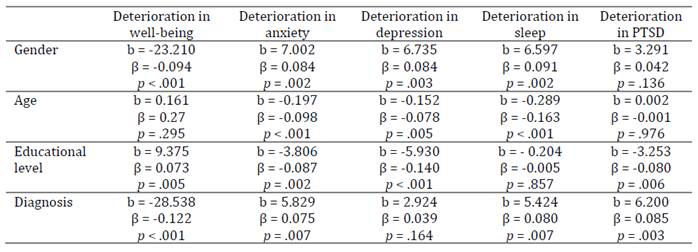
On the other hand, in our study, non-modifiable individual variables, such as gender, age, educational level and previous mental health diagnosis, explained only a small percentage of the variance in mental health indicators (around 3 %). These results highlight the value of acting on modifiable variables linked to good mental health indicators (see Fusar-Poli et al., 2020, for a description of the domains associated with good mental health). Thus, the post-pandemic period constitutes an opportunity to design public health strategies to promote good mental health and resilience in the face of potential scenarios of high psychosocial stress, such as the COVID-19 pandemic, rather than only focusing on preventing mental disorders. In the case of young people, for example, although the evidence is still emerging and fragmented, cost-effective interventions that can be implemented on a national scale through digital platforms-such as psychoeducation programs-can effectively promote good mental health (Salazar de Pablo et al., 2020).
References
-
Bagattini, N., Dogmanas, D., Villalba, L., & Bernardi, R. (2020). Atención en salud mental y COVID-19: Algunas respuestas iniciales en Uruguay. Revista de Psiquiatría del Uruguay, 84(2), 111. https://doi.org/10.46706/psi/84.2.4
» https://doi.org/10.46706/psi/84.2.4 -
Batthyány, K., & Sanchez, A. (2020). Profundización de las brechas de desigualdad por razones de género: El impacto de la pandemia en los cuidados, el mercado de trabajo y la violencia en América Latina y el Caribe. Astrolabio, 25, 1-21. https://doi.org/10.55441/1668.7515.n25.29284
» https://doi.org/10.55441/1668.7515.n25.29284 -
Bell, I. H., Nicholas, J., Broomhall, A., Bailey, E., Bendall, S., Boland, A., Robinson, J., Adams, S., McGorry, P., & Thompson, A. (2023). The impact of COVID-19 on youth mental health: A mixed methods survey. Psychiatry Research, 321, 115082. https://doi.org/10.1016/j.psychres.2023.115082
» https://doi.org/10.1016/j.psychres.2023.115082 -
Benke, C., Autenrieth, L. K., Asselmann, E., Pané-Farré, C. A. (2023). One year after the COVID-19 outbreak in Germany: Long-term changes in depression, anxiety, loneliness, distress and life satisfaction. European Archives of Psychiatry and Clinical Neuroscience, 273, 289-299. https://doi.org/10.1007/s00406-022-01400-0
» https://doi.org/10.1007/s00406-022-01400-0 -
Bourmistrova, N. W., Solomon, T., Braude, P., Strawbridge, R., & Carter, B. (2022). Long-term effects of COVID-19 on mental health: A systematic review. Journal of Affective Disorders, 299, 118-125. https://doi.org/10.1016/j.jad.2021.11.031
» https://doi.org/10.1016/j.jad.2021.11.031 -
Byrne, A., Barber, R., & Lim, C. H. (2021). Impact of the COVID-19 pandemic - a mental health service perspective. Progress in Neurology and Psychiatry, 25(2), 27-33. https://doi.org/10.1002/pnp.708
» https://doi.org/10.1002/pnp.708 -
Castellano, G., Herrera, G., Heinzen, J., & Alfonso, D. (2023). Impacto de la COVID-19 sobre la salud mental en Uruguay. Alerta, Revista Científica Del Instituto Nacional de Salud, 6(2), 125-132. https://doi.org/10.5377/alerta.v6i2.16213
» https://doi.org/10.5377/alerta.v6i2.16213 -
Cénat, J. M., Farahi, S. M. M. M., Dalexis, R. D., Darius, W. P., Bekarkhanechi, F. M., Poisson, H., Broussard, C., Ukwu, G., Auguste, E., Nguyen, D. D., Sehabi, G., Furyk, S. E., Gedeon, A. P., Onesi, O., El Aouame, A. M., Khodabocus, S. N., Shah, M. S., & Labelle, P. R. (2022). The global evolution of mental health problems during the COVID-19 pandemic: A systematic review and meta-analysis of longitudinal studies. Journal of Affective Disorders, 315, 70-95. https://doi.org/10.1016/j.jad.2022.07.011
» https://doi.org/10.1016/j.jad.2022.07.011 -
Chen, J., Zhang, S. X., Yin, A., & Yáñez, J. A. (2022). Mental health symptoms during the COVID-19 pandemic in developing countries: A systematic review and meta-analysis. Journal of Global Health, 12 https://doi.org/10.7189/jogh.12.05011
» https://doi.org/10.7189/jogh.12.05011 -
Ciotti, M., Ciccozzi, M., Terrinoni, A., Jiang, W.-C., Wang, C.-B., & Bernardini, S. (2020). The COVID-19 pandemic. Critical Reviews in Clinical Laboratory Sciences, 57(6), 365-388. https://doi.org/10.1080/10408363.2020.1783198
» https://doi.org/10.1080/10408363.2020.1783198 -
Collaborative Outcomes study on Health and Functioning during Infection Times. (2023). About The Project https://www.coh-fit.com/about-the-project/
» https://www.coh-fit.com/about-the-project/ -
Comisión Económica para América Latina y el Caribe. (2022). Panorama Social de América Latina y el Caribe. La transformación de la educación como base para el desarrollo sostenible Naciones Unidas. https://repositorio.cepal.org/bitstream/handle/11362/48518/1/S2200947_es.pdf
» https://repositorio.cepal.org/bitstream/handle/11362/48518/1/S2200947_es.pdf -
Dragioti, E., Li, H., Tsitsas, G., Lee, K. H., Choi, J., Kim, J., Choi, Y. J., Tsamakis, K., Estradé, A., Agorastos, A., Vancampfort, D., Tsiptsios, D., Thompson, T., Mosina, A., Vakadaris, G., Fusar‐Poli, P., Carvalho, A. F., Correll, C. U., Han, Y. J., … Solmi, M. (2022). A large‐scale meta‐analytic atlas of mental health problems prevalence during the COVID‐19 early pandemic. Journal of Medical Virology, 94(5), 1935-1949. https://doi.org/10.1002/jmv.27549
» https://doi.org/10.1002/jmv.27549 -
Espino, A., & De los Santos, D. (2020). Pandemia, políticas públicas y desigualdades de género en Uruguay ONU Mujeres. https://acortar.link/yzIwC0
» https://acortar.link/yzIwC0 -
European Commission: European Education and Culture Executive Agency. (2022). The impact of the COVID-19 pandemic on the mental health of young people. Policy responses in European countries Publications Office of the European Union. https://data.europa.eu/doi/10.2797/299233
» https://data.europa.eu/doi/10.2797/299233 -
Fernández-Theoduloz, G., Chirullo, V., Montero, F., Ruiz, P., Selma, H., & Paz, V. (2024). Longitudinal changes in depression and anxiety during COVID-19 crisis in Uruguay. Current Psychology, 43, 13841-13849 https://doi.org/10.1007/s12144-022-03460-w
» https://doi.org/10.1007/s12144-022-03460-w -
Fusar-Poli, P., Correll, C., Arango, C., Berk, M., Patel, V., & Ioannidis, J. (2021). Preventive psychiatry: A blueprint for improving the mental health of young people. World Psychiatry, 20(2), 200-221. https://doi.org/10.1002/wps.20869
» https://doi.org/10.1002/wps.20869 -
Fusar-Poli, P., Salazar de Pablo, G., De Micheli, A., Nieman, D. H., Correll, C. H., Kessing, L. V., Pfenning, A., Bechdolf, A., Borgwardt, S., Arango, C., & van Amelsvoort, T. (2020). What is good mental health? A scoping review. European Neuropsychopharmacology, 31, 33-46. https://doi.org/10.1016/j.euroneuro.2019.12.105
» https://doi.org/10.1016/j.euroneuro.2019.12.105 -
Harris, P. A., Taylor, R., Minor, B. L., Elliott, V., Fernández, M., O’Neal, L., McLeod, L., Delacqua, G., Delacqua, F., Kirby, J., & Duda, S. N. (2019). The REDCap consortium: Building an international community of software platform partners. Journal of Biomedical Informatics, 95, 103208. https://doi.org/10.1016/j.jbi.2019.103208
» https://doi.org/10.1016/j.jbi.2019.103208 -
Harris, P. A., Taylor, R., Thielke, R., Payne, J., Gonzalez, N., & Conde, J. G. (2009). Research electronic data capture (REDCap)-A metadata-driven methodology and workflow process for providing translational research informatics support. Journal of Biomedical Informatics, 42(2), 377-381. https://doi.org/10.1016/j.jbi.2008.08.010
» https://doi.org/10.1016/j.jbi.2008.08.010 -
He, D., Yuan, M., Dang, W., Bai, L., Yang, R., Wang, J., Ma, Y., Liu, B., Liu, S., Zhang, S., Liao, X., & Zhang, W. (2023). Long term neuropsychiatric consequences in COVID-19 survivors: Cognitive impairment and inflammatory underpinnings fifteen months after discharge. Asian Journal of Psychiatry, 80, 103409. https://doi.org/10.1016/j.ajp.2022.103409
» https://doi.org/10.1016/j.ajp.2022.103409 -
Instituto Nacional de Estadística. (2023). Censo 2023 https://www.gub.uy/instituto-nacional-estadistica/comunicacion/noticias/poblacion-preliminar-3444263-habitantes
» https://www.gub.uy/instituto-nacional-estadistica/comunicacion/noticias/poblacion-preliminar-3444263-habitantes -
Jin, Y., Sun, T., Zheng, P., & An, J. (2021). Mass quarantine and mental health during COVID-19: A meta-analysis. Journal of Affective Disorders, 295, 1335-1346. https://doi.org/10.1016/j.jad.2021.08.067
» https://doi.org/10.1016/j.jad.2021.08.067 -
Le Cessie, S., Goeman, J. J., & Dekkers, O. M. (2020). Who is afraid of non-normal data? Choosing between parametric and non-parametric tests. European Journal of Endocrinology, 182(2), E1-E3. https://doi.org/10.1530/eje-19-0922
» https://doi.org/10.1530/eje-19-0922 - Medina, J. (2020). Pandemia por SARS-CoV-2 (COVID-19): entre la incertidumbre y la fortaleza. Revista Médica del Uruguay, 36(2), 6-11.
-
Ministerio de Salud Pública. (2020). Plan Nacional de Salud Mental 2020-2027 https://www.gub.uy/institucion-nacional-derechos-humanos-uruguay/comunicacion/noticias/msp-aprobo-plan-nacional-salud-mental-2020-2027
» https://www.gub.uy/institucion-nacional-derechos-humanos-uruguay/comunicacion/noticias/msp-aprobo-plan-nacional-salud-mental-2020-2027 -
Ministerio de Salud Pública. (2021). La respuesta de Uruguay en 2020 a la Pandemia de COVID-19 https://www.gub.uy/ministerio-salud-publica/sites/ministerio-salud-publica/files/documentos/publicaciones/Resumen%20-%20Sistematizaci%C3%B3n%20de%20la%20respuesta%20a%20COVID-19%20en%20Uruguay_WEB.pdf
» https://www.gub.uy/ministerio-salud-publica/sites/ministerio-salud-publica/files/documentos/publicaciones/Resumen%20-%20Sistematizaci%C3%B3n%20de%20la%20respuesta%20a%20COVID-19%20en%20Uruguay_WEB.pdf -
Ministerio de Salud Pública. (2023). 17 de julio: Día Nacional para la Prevención del Suicidio Salud mental: una prioridad para Uruguay https://acortar.link/cf8fP0
» https://acortar.link/cf8fP0 -
Monza, A., & Cracco, C. (2023). Suicidio en Uruguay. Revisión de políticas públicas e iniciativas para su prevención Coordinadora de Psicólogos del Uruguay, Organización Panamericana de la Salud. https://www.paho.org/es/documentos/suicidio-uruguay-revision-politicas-publicas-e-iniciativas-para-su-prevision
» https://www.paho.org/es/documentos/suicidio-uruguay-revision-politicas-publicas-e-iniciativas-para-su-prevision -
Naseer, S., Khalid, S., Parveen, S., Abbass, K., Song, H., & Achim, M. V. (2023). COVID-19 outbreak: Impact on global economy. Frontiers in Public Health, 10 https://doi.org/10.3389/fpubh.2022.1009393
» https://doi.org/10.3389/fpubh.2022.1009393 -
Organización Mundial de la Salud. (2017). Depression and Other Common Mental Disorders. Global Health Estimates https://www.who.int/publications/i/item/depression-global-health-estimates
» https://www.who.int/publications/i/item/depression-global-health-estimates -
Organización Mundial de la Salud. (2022). Informe mundial sobre salud mental. Transformar la salud mental para todos https://www.who.int/es/publications/i/item/9789240050860
» https://www.who.int/es/publications/i/item/9789240050860 -
Organización Mundial de la Salud. (2023). WHO COVID-19 Dashboard https://covid19.who.int/table
» https://covid19.who.int/table -
Organización Panamericana de la Salud. (2018). La carga de los trastornos mentales en la Región de las Américas https://iris.paho.org/bitstream/handle/10665.2/49578/9789275320280_spa.pdf?sequence=9
» https://iris.paho.org/bitstream/handle/10665.2/49578/9789275320280_spa.pdf?sequence=9 -
Paz, V., Chirullo, V., Montero, F., Ruiz, P., Selma, H., & Fernández-Theoduloz, G. (2023). Mental health during the COVID-19 outbreak in Uruguay: the impact of healthy lifestyle behaviors and sociodemographic factors. Minerva Psychiatry, 64(2), 203-13. https://doi.org/10.23736/s2724-6612.21.02251-x
» https://doi.org/10.23736/s2724-6612.21.02251-x -
Programa de las Naciones Unidas para el Desarrollo. (2022). Human Development Report 2021/2022. Uncertain times, unsettled lives. Shaping our future in a transforming world https://hdr.undp.org/content/human-development-report-2021-22
» https://hdr.undp.org/content/human-development-report-2021-22 -
Rains, L. S., Johnson, S., Barnett, P., Steare, T., Needle, J. J., Carr, S., Lever Taylor, B., Bentivegna, F., Edbrooke-Childs, J., Scott, H. R., Rees, J., Shah, P., Lomani, J., Chipp, B., Barber, N., Dedat, Z., Oram, S., Morant, N., & Simpson, A. (2021). Early impacts of the COVID-19 pandemic on mental health care and on people with mental health conditions: framework synthesis of international experiences and responses. Social Psychiatry and Psychiatric Epidemiology, 56, 13-24. https://doi.org/10.1007/s00127-020-01924-7
» https://doi.org/10.1007/s00127-020-01924-7 -
Robinson, E., Sutin, A. R., Daly, M., & Jones, A. (2022). A systematic review and meta-analysis of longitudinal cohort studies comparing mental health before versus during the COVID-19 pandemic in 2020. Journal of Affective Disorders, 296, 567-576. https://doi.org/10.1016/j.jad.2021.09.098
» https://doi.org/10.1016/j.jad.2021.09.098 -
Rossi, R., Socci, V., Benedetto Jannini, T., D’Aurizio, G., Mensi, S., Pacitti, F., Rossi, A., & Di Lorenzo, G. (2023). Changes in mental health outcomes in the general population 14 months into the COVID-19 pandemic in Italy. Journal of Affective Disorders, 325, 35-40. https://doi.org/10.1016/j.jad.2022.12.148
» https://doi.org/10.1016/j.jad.2022.12.148 -
Ruiz, P., Semblat, F., & Pautassi, R. M. (2022). Change in Psychoactive Substance Consumption in Relation to Psychological Distress during the COVID-19 Pandemic in Uruguay. Sultan Qaboos University Medical Journal, 22(2), 198-205. https://doi.org/10.18295/squmj.5.2021.106
» https://doi.org/10.18295/squmj.5.2021.106 -
Salazar de Pablo, G., De Micheli, A., Nieman, D. H., Correll, C. U., Kessing, L. V., Pfenning, A., Bechdolf, A., Borgwardt, S., Arango, C., van Amelsvoort, T., Vieta, E., Solmi, M., Oliver, D., Catalan, A., Verdino, V., Di Maggio, L., Bonoldi, I., Vaquerizo-Serrano, J., Baccaredda Boy, O., Provenzani, U., ... Fusar-Poli, P. (2020). Universal and selective interventions to promote good mental health in young people: systematic review and meta-analysis. European Neuropsychopharmacology, 41, 28-39. https://doi.org/10.1016/j.euroneuro.2020.10.007
» https://doi.org/10.1016/j.euroneuro.2020.10.007 -
Shanbehzadeh, S., Tavahomi, M., Zanjari, N., Ebrahimi-Takamjani, I., & Amiri-arimi, S. (2021). Physical and mental health complications post-COVID-19: Scoping review. Journal of Psychosomatic Research, 147, 110525. https://doi.org/10.1016/j.jpsychores.2021.110525
» https://doi.org/10.1016/j.jpsychores.2021.110525 -
Sharma, A., Minh Duc, N. T., Luu Lam Thang, T., Nam, N. H., Ng, S. J., Abbas, K. S., Huy, N. T., Marušić, A., Paul, C. L., Kwok, J., Karbwang, J., de Waure, C., Drummond, F. J., Kizawa, Y., Taal, E., Vermeulen, J., Lee, G. H. M., Gyedu, A., To, K. G., … Karamouzian, M. (2021). A Consensus-Based Checklist for Reporting of Survey Studies (CROSS). Journal of General Internal Medicine, 36(10), 3179-3187. https://doi.org/10.1007/s11606-021-06737-1
» https://doi.org/10.1007/s11606-021-06737-1 -
Sirin, S. R. (2005). Socioeconomic status and academic achievement: A meta-analytic review of research. Review of Educational Research, 75(2), 285-453. https://doi.org/10.3102/00346543075003417
» https://doi.org/10.3102/00346543075003417 -
Skar, G. B., Graham, S., & Huebner, A. (2023). The long-term effects of the COVID-19 pandemic on children’s writing: A follow-up replication study. Educational Psychology Review, 35(1). https://doi.org/10.1007/s10648-023-09729-1
» https://doi.org/10.1007/s10648-023-09729-1 -
Solmi, M., Estradé, A., Thompson, T., Agorastos, A., Radua, J., Cortese, S., Dragioti, E., Leisch, F., Vancampfort, D., Thygesen, L. C., Aschauer, H., Schloegelhofer, M., Akimova, E., Schneeberger, A., Huber, C. G., Hasler, G., Conus, P., Cuénod, K., von Känel, R., Arrondo, G., … Correll, C. U. (2022). The collaborative outcomes study on health and functioning during infection times in adults (COH-FIT-Adults): Design and methods of an international online survey targeting physical and mental health effects of the COVID-19 pandemic. Journal of Affective Disorders, 299, 393-407. https://doi.org/10.1016/j.jad.2021.07.048
» https://doi.org/10.1016/j.jad.2021.07.048 -
Solmi, M., Thompson, T., Estradé, A., Agorastos, A., Radua, J., Cortese, S., Dragioti, E., Leisch, F., Vancampfort, D., Thygesen, L. C., Aschauer, H., Schlögelhofer, M., Aschauer, E., Schneeberger, A., Huber, C. G., Hasler, G., Conus, P., Do Cuénod, K. Q., von Känel, R., … Correll, C. U. (2023). Validation of the Collaborative Outcomes study on Health and Functioning during Infection Times (COH-FIT) questionnaire for adults. Journal of Affective Disorders, 326, 249-261. https://doi.org/10.1016/j.jad.2022.12.022
» https://doi.org/10.1016/j.jad.2022.12.022 -
Tadesse, S., & Muluye, W. (2020). The impact of COVID-19 pandemic on education system in developing countries: A review. Open Journal of Social Sciences, 8(10), 159-170. https://doi.org/10.4236/jss.2020.810011
» https://doi.org/10.4236/jss.2020.810011 -
Torterolo, P., Benedetto, L., Copiz, N., & Peyrou, S. (2023). Calidad de sueño en Uruguay al inicio de la pandemia. Anales de la Facultad de Medicina, 10(2), e201. https://doi.org/10.25184/anfamed2023v10n2a1
» https://doi.org/10.25184/anfamed2023v10n2a1 -
Vignolo Ballesteros, J. C., Alegretti, M., Vacarezza, M., Álvarez, C., & Retamoso, E. (2019). Estudio de 130 años de defunciones por suicidio en el Uruguay 1887-2017. Revista de Salud Pública, 23(3), 32-41. https://doi.org/10.31052/1853.1180.v23.n3.24034
» https://doi.org/10.31052/1853.1180.v23.n3.24034 -
Wu, T., Jia, X., Shi, H., Niu, J., Yin, X., Xie, J., & Wang, X. (2021). Prevalence of mental health problems during the COVID-19 pandemic: A systematic review and meta-analysis. Journal of Affective Disorders, 281, 91-98. https://doi.org/10.1016/j.jad.2020.11.117
» https://doi.org/10.1016/j.jad.2020.11.117 -
Xu, E., Xie, Y., & Al-Aly, Z. (2023). Long-term gastrointestinal outcomes of COVID-19. Nature Communications, 14(1). https://doi.org/10.1038/s41467-023-36223-7
» https://doi.org/10.1038/s41467-023-36223-7 -
Zalsman, G., Hawton, K., Wasserman, D., van Heeringen, K., Arensman, E., Sarchiapone, M., Carli, V., Höschl, C., Barzilay, R., Balazs, J., Purebl, G., Kahn, J. P., Sáiz, P. A., Bursztein Lipsicas, C., Bobes, J., Cozman, D., Hegerl, U., & Zohar, J. (2016). Suicide prevention strategies revisited: 10-year systematic review. Lancet Psychiatry, 3, 646-659. https://doi.org/10.1016/S2215-0366(16)30030-X
» https://doi.org/10.1016/S2215-0366(16)30030-X -
Zhang, S. X., Batra, K., Xu, W., Liu, T., Dong, R. K., Yin, A., Delios, A. Y., Chen, B. Z., Chen, R. Z., Miller, S., Wan, X., Ye, W., & Chen, J. (2022). Mental disorder symptoms during the COVID-19 pandemic in Latin America - a systematic review and meta-analysis. Epidemiology and Psychiatric Sciences, 31 https://doi.org/10.1017/s2045796021000767
» https://doi.org/10.1017/s2045796021000767
How to cite:
Authors’ contribution (CRediT Taxonomy):
Scientific editor in-charge:
Appendix 1T14 T15 T16 T17 T18
T14 T15 T16 T17 T18