Factorial Structure, Internal Consistency, and Measurement Invariance of a Self-Report Scale for Assessing Mental Health Problems in Adults
Background: In Latin America, there is a lack of brief, valid, and culturally appropriate instruments for assessing adult mental health, which may hinder early detection and primary access to interventions.
Objective: This aim of this study was to adapt and validate a self-report scale for adults derived from the Adolescent Self-Report (ADA), designed to assess psychopathological symptoms and personal strengths
Method: A total of 9,885 Uruguayan adults (M = 41.5 years; 62.7% women) participated by completing the abbreviated version of the instrument, the ADAL (Adult version of the ADA), along with the Personal Wellbeing Index (PWI-A). Confirmatory factor analyses, reliability assessments, measurement invariance tests by gender, age, and socioeconomic status, and correlational analyses with wellbeing and sociodemographic variables were conducted
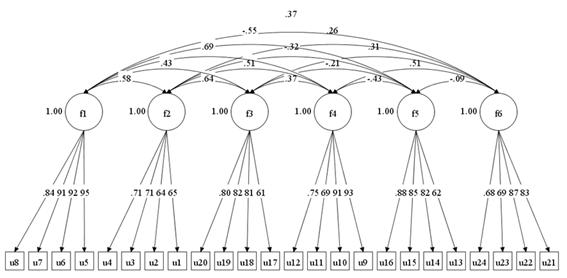
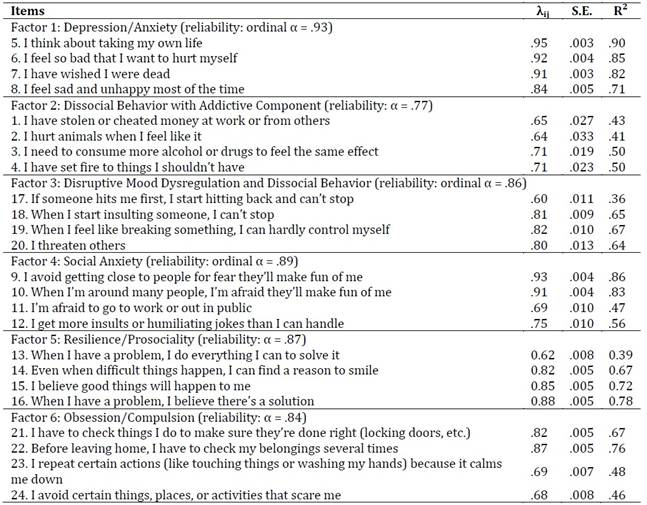
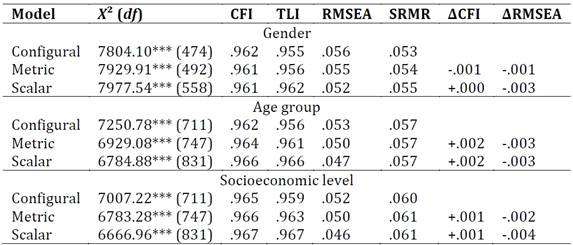
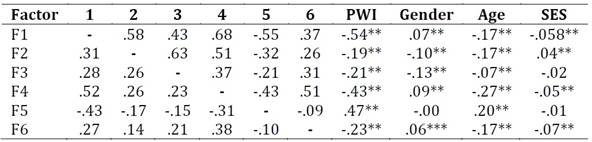
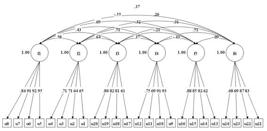
Results: The six-factor model showed good fit (CFI = .951, TLI = .944, RMSEA = .031) and adequate reliability (ordinal α = .71-.90). Configural, metric, and scalar invariance were confirmed across gender, age, and socioeconomic groups. Correlations with wellbeing provided evidence of validity based on relations with external variables
Conclusions: The ADAL is a brief, valid, and reliable instrument for assessing adult mental health, with potential applications in clinical, community, and research settings within Spanish-speaking populations
Keywords:
intervención parental; participación; implicación; padres
 Thumbnail