Exploring the potential impact of global climate change on grapevine health with particular emphasis on grapevine trunk diseases
Abstract:
The effects of global climate change are evident. Rising average temperature, increased carbon dioxide concentration and a higher frequency of extreme weather events such as heat waves, heavy rainfall, and droughts are well documented. Agriculture stands out as one of the most vulnerable sectors to these impacts. This vulnerability arises not only from the direct effects of agroclimatic variables on crop growth and development but also from the implications for plant health. Environmental changes can affect various aspects of pathogen dynamics, including reproduction, dispersal, survival, and activity, along with host susceptibility and host-pathogen interactions. Vineyards are highly susceptible to these effects, with projections indicating variability across different regions. In this review, we provide a summary of the impacts of climate change on plant diseases, with a specific focus on the potential implications for grapevine diseases. Among these, we highlight the complex of grapevine trunk diseases, which currently pose a significant challenge to grape production worldwide. Additionally, we explore the potential effects of climate change on microbial communities at the root-soil interface associated with grapevines and their correlation with grape health. Furthermore, we discuss key findings from a local study that examines the alterations induced by drought in the fungal composition of grapevine underground compartments. While certain research findings may be applicable to other regions, it's crucial to conduct local studies to evaluate the specific effects of climate change on grapevine diseases.
Keywords:
plant diseases; grapevine; fungal trunk diseases; microbial communities; global warming
Resumen:
Los efectos del cambio climático global son evidentes. El aumento de la temperatura media, el incremento de la concentración de dióxido de carbono y la mayor frecuencia de fenómenos meteorológicos extremos, como olas de calor, lluvias torrenciales y sequías, están bien documentados. La agricultura destaca como uno de los sectores más vulnerables a estos impactos. Esta vulnerabilidad deriva no sólo de los efectos directos de las variables agroclimáticas sobre el crecimiento y desarrollo de los cultivos, sino también de las implicancias para la sanidad vegetal. Los cambios ambientales pueden afectar diversos aspectos de la dinámica de los patógenos, como la reproducción, la dispersión, la supervivencia y la actividad, así como también la susceptibilidad del huésped y las interacciones huésped-patógeno. Los viñedos son muy susceptibles a estos efectos y las proyecciones indican una variabilidad de impactos según las distintas regiones. En esta revisión presentamos un resumen de los efectos del cambio climático sobre las enfermedades de las plantas, centrándonos específicamente en las posibles implicancias para las enfermedades de la vid. Entre ellas, destacamos el complejo de las enfermedades del tronco de la vid, que actualmente suponen un importante reto para la producción de uva en todo el mundo. Además, exploramos los efectos potenciales del cambio climático en las comunidades microbianas de la interfaz raíz-suelo asociadas a las vides y su correlación con la salud del viñedo. Además, discutimos los resultados más importantes de un estudio local que examina las alteraciones inducidas por la sequía en la composición fúngica de los compartimentos subterráneos de la vid. Aunque ciertos resultados de investigación pueden ser extrapolados a otras regiones, es crucial realizar estudios locales para evaluar los efectos específicos del cambio climático en las enfermedades de la vid.
Palabras clave:
cambio climático; enfermedades de las plantas; enfermedades de la vid; enfermedades del tronco; comunidades microbianas
Resumo:
Os efeitos das alterações climáticas globais são evidentes. O aumento da temperatura média, maior concentração de dióxido de carbono e a freqüência crescente de fenômenos meteorológicos extremos, como ondas de calor, precipitações intensas e secas, estão bem documentados. A agricultura destaca-se como um dos setores mais vulneráveis a esses impactos, não só devido aos efeitos diretos das variáveis agroclimáticas no crescimento e desenvolvimento das culturas, mas também pelas implicações para a fitossanidade. As alterações ambientais podem afetar vários aspectos da dinâmica dos agentes patogênicos, incluindo reprodução, dispersão, sobrevivência e atividade, assim como a suscetibilidade do hospedeiro e as interações hospedeiro-agente patogênico. As vinhas são altamente suscetíveis a esses efeitos, com projeções indicando variabilidade entre diferentes regiões. Nesta revisão apresentamos um resumo dos impactos das alterações climáticas nas doenças das plantas, com foco específico nas potenciais implicações para as doenças da videira. Entre estas, destacamos o complexo de doenças do tronco da videira, que atualmente representam um desafio significativo para a produção de uvas em todo o mundo. Além disso, exploramos os efeitos potenciais das alterações climáticas nas comunidades microbianas na interface raiz-solo associadas às videiras e sua correlação com a saúde da uva. Discutimos também os principais resultados de um estudo local que examina as alterações induzidas pela seca na composição fúngica dos compartimentos subterrâneos da videira. Embora certos resultados da pesquisa possam ser aplicáveis a outras regiões, é crucial realizar estudos locais para avaliar os efeitos específicos das alterações climáticas nas doenças da videira.
Palavras-chave:
alterações climáticas; doenças das plantas; doenças da videira; doenças do tronco; comunidades microbianas
1. Introduction
Adapting to the impacts of climate change emerges as one of the most pressing challenges of our time. As long as humanity fails to mitigate greenhouse gas emissions, climate change remains unabated, leading to an increase in extreme weather events. The increase in greenhouse gas concentration, primarily carbon dioxide (CO2) and methane (CH4), largely accounts for the rise in global surface temperature1. According to the Copernicus Climate Change Service and the World Meteorological Organisation2, the year 2023 is notable for being the warmest year on record. The global average temperature in 2023 surpassed pre-industrial levels by 2.6 °C2. This unprecedented warmth coincided with a rise in extreme weather occurrences. Syria and Iraq, for example, have been experiencing an exceptional drought for three years since 20203. Even in regions not traditionally associated with such extremes, the impacts of climate change are keenly felt. In Uruguay, for instance, an unprecedented four-year drought left the city of Montevideo grappling with a severe shortage of drinking water in 2023, something that had never happened before4)(5) .
Climate change, attributed directly or indirectly to human activities (fossil fuel burning, industry, wars, deforestation, and other land use changes), involves significant long-term alterations in weather patterns across the globe. In addition to the increase in average temperature, changes in extremes such as heat waves, heavy rainfall, droughts, and tropical cyclones have been evidenced1. All these changes have different geographical distribution and can strongly influence agriculture, which is regarded as one of the most vulnerable sectors owing to its extensive scale and sensitivity to weather parameters6)(7)8)(9) .
Changes in climatic events, such as rising temperatures, precipitation variation, and rising CO2 levels in the atmosphere, significantly impact crop yields, but the effects vary depending on the crop type, location, and the extent of these changes8. For example, rising temperatures are likely to reduce the yield of many crops by shortening their growing seasons10. Moreover, in tropical regions climate change has a greater impact because tropical crops are already near their high-temperature limits, causing them to experience high-temperature stress as temperatures rise8. On the other hand, rising CO2 levels in the atmosphere are expected to increase crop yields. However, these beneficial impacts are likely to be offset by elevated temperatures and altered precipitation patterns11.
In addition to the direct effects of changes in agroclimatic variables on crop growth and development, there are also consequences for plant health9)(12)13)(14)15. Plant diseases may increase, decrease, or remain unchanged as a result of climate change depending on the region or period16. The environment can influence pathogen reproduction, dispersal, survival, and activity, as well the host susceptibility and host-pathogen interaction. Given the close relationship between the environment and plant diseases, it is highly probable that climate change will significantly alter the existing phytosanitary scenario16 and will undoubtedly impact the management of plant diseases.
Strategies for disease management may necessitate adjustments in response to changing climatic conditions. A prime illustration of this is the utilization of microorganisms for biological control against plant diseases. It is well-established that a significant challenge in the field application of biological control agents is the susceptibility of these populations to environmental fluctuations and extremes17)(18) . Consequently, one can expect that climate change will have a notable impact on the effectiveness of biological control techniques for plant diseases management.
Viticulture is particularly susceptible to climate change19)(20) . Increasing temperatures have altered grapevine growth and physiological development, influencing grapevine yield, as well as berry and wine quality (modification in the aroma profile, excessive alcohol levels, increased pH)20)(21)22)(23)24)(25)26, leading to fluctuations in wine prices27. Alterations in the spatial and temporal precipitation patterns also lead to a wide range of effects on grapevine, which can be positive or negative depending on the phenological stage28. Based on climatic projections, viticulture in some regions will benefit. For example, there will be increased fruit ripening and the emergence of new wine areas29. However, other regions may suffer a decrease in their viticultural suitability30, mainly due to severe droughts31, with important negative social and economic consequences20.
Regarding the effect of climate change on grape diseases, research has focused on predicting the consequences of climate change on downy mildew (Plasmopara viticola) and powdery mildew (Erysiphe necator)32)(33)34)(35) , two foliar diseases of great economic impact in most parts of the world36. Concerning diseases affecting the bunch, attention has been focused on botrytis bunch rot (Botrytis cinerea), as well as on bitter rot (Greeneria uvicola) and ripe rot (Colletotrichum acutatum). Speculation has arisen regarding the consequences of climate change on the incidence and control of these diseases37. Additionally, attempts have been made to speculate on the consequences of climate change on the development of grapevine trunk diseases (GTDs), which are currently regarded as one of the principal threats to the future economic viability of viticulture38.
GTDs are a complex of fungal diseases affecting grapevines worldwide39)(40)41)(42) . These diseases infect wood organs and cause a range of foliar and wood symptoms, which may vary depending on the specific disease but often overlap, making accurate visual diagnosis difficult in the field41. Moreover, although the relationship between wood necrosis and the presence of several fungi is well documented, the causes of the development of typical foliar symptoms remain elusive43. GTDs reduce grapevine yields and shorten the lifespan of vineyards, causing significant economic losses. Management of GTDs is difficult, and despite intensive studies, there are currently no single effective measures to control these diseases41.
The underground grapevine-associated microbial community may also be affected by climate change. The rhizosphere, defined as the narrow soil zone surrounding the root system, is a site of particularly high microbial activity. These microorganisms play a crucial role in the functioning of agro-ecosystems44 and are selectively recruited by plants from the surrounding soil communities through the emission of root exudates45)(46) . They provide benefits to plants by contributing to nutrient mobilization and transport through various mechanisms, such as solubilizing phosphorus (P) or fixing N. Additionally, they offer protection against pathogens or pests by combating pathogens and triggering resistance mechanisms and contributing to stress alleviation47)(48)49)(50) . Consequently, they foster a robust ecosystem conducive to plant growth.
Factors such as soil CO2 concentration, temperature, nitrogen (N) availability, and water content play crucial roles in driving soil-rhizosphere microorganisms dynamics8)(12)44. Climate change may directly impact these communities by altering soil physical structure and carbon allocation44. Additionally, climate change may indirectly affect these communities. For example, it can induce modifications in the exudation profile of roots, which indirectly alter rhizosphere communities51. Therefore, both direct and indirect effects of climate change on soil-rhizosphere communities are expected to influence plant growth and health. However, it remains largely unexplored in the context of grapevines.
This paper aims to review the potential impact of global climate change on grapevine health. We begin by updating our understanding of how climate change may influence plant diseases in general. Following this, we examine the impact of climate change on grapevine diseases, paying particular attention to the potential implications for the development of GTDs, since they are recognized as one of the most significant threats to vineyard sustainability. Subsequently, our focus shifts to examining the potential effects of climate change on the microbial communities at the root-soil interface associated with grapevines and their association with grape health. Next, we present the primary findings of a local study focused on examining the drought-induced alterations in the fungal composition of grapevine underground compartments. This study represents the initial local effort to understand the implications of climate change on grapevine health. Finally, conclusions and future perspectives are presented.
2. Impact of Climate Change on Plant Diseases
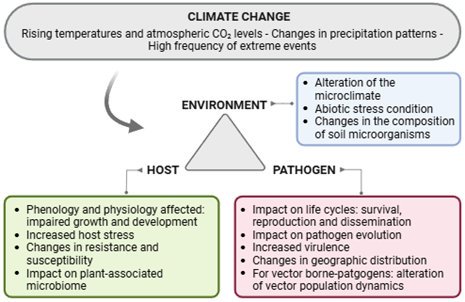
The classical disease triangle emphasizes the spatial and temporal interaction of a susceptible host with a virulent pathogen in a conducive environment for plant disease development13)(16) . Environmental changes associated with global warming are expected to affect the pathogen (reproduction, survival, dispersal, and activity), the host (growth and susceptibility), as well as the interaction between the host and the pathogen16. Furthermore, in the case of vector-transmitted pathogens, climate change can also impact the development and spatial distribution of diseases by affecting the population dynamics of the vectors9)(16) .
Pathogen phenology, understood as the successive and irreversible stages of development during the completion of its life cycle and its relationship to seasonal environmental variations52, is directly influenced by environmental conditions as well as by the host plant53. Altered temperatures can significantly impact the life cycles of pathogens in different ways, depending on the direction of the changes and the season in which they occur. Temperature determines the reproduction rate of many pathogens12; for example, the fungus Monosporascus cannonballus, a melon and watermelon root rot pathogen, produces a higher number of perithecia at temperatures of 25-30 °C compared to 20 °C54. The spore germination of Puccinia substriata var. indica, the causal agent of pearl millet rust, increases with rising temperatures over a range of 10-25 °C, while less than 1% of spores germinate at 35 °C55. Altered temperatures may also affect the overwintering of pathogens; for example, warmer winters enhance the survival of Puccinia striiformis, the wheat stripe rust pathogen, leading to more severe epidemics56. Similarly, Pfender and Vollmer57 demonstrated that extremely low winter temperatures (-10 °C or below) can have a significant detrimental effect on the survival of the grass stem rust pathogen Puccinia graminis subsp. graminicola.
Changes in temperature can also influence pathogen evolution. Higher temperatures leading to longer seasons may provide more opportunities for pathogen evolution. This evolution is determined by factors such as the rate of reproduction, which may be favored by increasing temperatures, and the heritability of traits related to the adaptability under the new climate scenario12. In addition, rising temperatures are expected to cause geographical expansion of pathogen and vector distributions, bringing pathogens into contact with potential new hosts12. For instance, Bergot and others58 predicted the expansion of the geographic range of Phytophthora cinnamomi, a devastating oak pathogen in Europe, from the Atlantic coast to the east in France, due to higher annual survival rates of the pathogen because of increased temperatures.
The spread of some pathogens may also be affected by other factors. For example, spores of airborne fungal that can resist desiccation, such as teliospores or uredospores, could be transported by increased wind to a new region where they were absent or where their density is not likely to cause a significantly high prevalence15. If these pathogens can adapt to the climatic conditions of the new area, this could potentially result in a wider spatial distribution of rusts12)(15) . For water-borne pathogens (bacteria and many fungi), altered rainfall patterns may affect their dispersal as well as favor their proliferation9. Furthermore, extreme weather events like flooding and heavy rains can facilitate the spread of soil-borne pathogens9.
Elevated CO2 concentration may also affect the life cycle of pathogens, which could have either positive or negative implications for plant disease development. The aggressiveness, the fecundity, and the development of fungal spores may increase at higher CO2 concentrations16)(59) . Nevertheless, it was demonstrated that elevated CO2 concentrations delay and reduce germination, germ tube growth, and appressoria production by Colletotrichum gloeosporioides, the causal agent of anthracnose disease of the tropical pasture legume Stylosanthes scabra60.
When considering the impact of climate change on the host, several plant responses to the new climate scenario may affect disease development. For example, studies on grapevine have shown that increasing atmospheric CO2 concentration promotes a significant increase in the net photosynthetic rate and higher efficiency in the water use61)(62) . Additionally, vines exhibit greater vigour under elevated CO2 conditions61. Greater plant biomass production and changes in the architecture of plants (increase in shoots, leaves, flowers, fruits, and roots biomass) result in more tissue available for pathogen infection16. In addition, increased canopy density can alter the microclimate, leading to higher leaf surface moisture and longer moisture duration, which significantly increases the risk of pathogen infection12.
Drought and excessive heat induce stress in plants, impacting their susceptibility to pathogens. This stress can either weaken plant defenses, making them more susceptible to infection, or induce general defense pathways, increasing their resistance12)(63) . For example, alfalfa plants inoculated with Verticillium alboatrum exhibited fewer symptoms under drought stress64. However, the deleterious effect of Macrophomina phaseolina and Septoria musiva, which causes canker in poplar, were observed to be more significant under drought conditions65)(66) . Chickpea dry root rot caused by Rhizoctonia bataticola is becoming more intense in rainfed areas because during flowering and pod-filling stage the host is more vulnerable due to higher temperatures and higher levels of water stress59. The effect of increased temperature may vary depending on the season: while in cooler seasons higher temperatures may alleviate stress on plants, during warmer seasons warming is likely to exacerbate stress12)(59) . Additionally, temperature can affect the expression of resistance genes. For example, some oat stem rust resistance genes fail to function at temperatures above 20 °C67. Thus, climate change also represents a threat in this regard. A schematic representation of the expected effects of climate change on the components of the classical disease triangle (environment, pathogen and host) is shown in Figure 1.
Representation of the expected effects of climate change on the components of the classical disease triangle: environment, pathogen and host
3. What to Expect with Grapevine Diseases under Climate Change?
3.1 Foliar and Bunch Diseases
Some research has focused on modelling the effect of climate change on important grapevine foliar diseases such as downy mildew and powdery mildew, with variable predictions depending on the region32)(33)34)(68)69)(70) . In the north-west of Italy, particularly on Acqui region, simulations of future climatic scenarios according to two general circulation models (GCMs, the main tool used for predicting and quantifying climate change based on greenhouse gas emission scenarios) indicate that more severe epidemics of downy mildew may occur32. This potential increase in disease pressure is attributed to the more favorable temperature conditions during spring, which are expected to have a greater impact than the anticipated reductions in rainfall32. In this regard, Gullino and others69 evaluated the impact of increasing temperature in combination with increasing CO2 concentration (from 20-22 °C to 24-26 °C, and from 400 ppm to 800 ppm of CO2) using phytotrons, and observed an increase in both the severity and incidence of downy mildew. Additionally, Salinari and others68 predicted a potential advancement of the initial outbreak of downy mildew disease in both the northern and southern hemispheres across different climate change scenarios simulated by two GCMs. This advancement could lead to more severe infections, attributed to the polycyclic nature of the pathogen. The expected advancement of the first seasonal outbreaks of P. viticola ranges from 1 day in South Africa to 28 days in Chile and China. This is explained by the higher expected number of consecutive rainy days and higher average temperature in early spring68. Conversely, future climate scenarios in Brazil suggest a decrease in the favorability of downy mildew, although the impact may vary across different grape-producing regions34. In this regard, Zito and others70 projected a decrease in mildews pressure (downy mildew and powdery mildew) with a consequent decrease in the number of treatments for mildews control in Burgundy, France, throughout the 21st century.
Concerning powdery mildew, Pugliese and others33 and Gullino and others69 analysed the impact of increased CO2 and temperature using phytotrons and observed a decrease in both powdery mildew incidence and severity. However, Pugliese and others33 discussed that elevated CO2 concentrations and the resulting increase in global temperature may extend growing seasons, thereby providing more time for pathogen evolution and increased pathogen survival, which indirectly contribute to the increase of powdery mildew. In the central eastern Italian Alps, simulations based on GCMs suggest that powdery mildew severity could decrease due to increased temperature, particularly during extreme years71.
Research indicates that bunch rots will be affected by climate change; however, the consequences will vary depending on the region under study. For instance, in various grape-producing regions of Australia, there is a forecast of increased incidence of bitter rot and ripe rot alongside a decrease in botrytis bunch rot37. On the other hand, predictions for viticulture in northeast Brazil show a reduction in the area favourable for both botrytis bunch rot and bitter rot development72.
3.2 Grapevine Trunk Diseases
Another important group of diseases affecting grapevines worldwide is the complex of grapevine trunk diseases (GTD)40)(41) . This complex includes black foot disease, Petri disease, botryosphaeria dieback, diaporthe dieback, eutypa dieback, all caused by taxonomically unrelated Ascomycete fungi, and esca, which is caused by both Ascomycete and Basidiomycete fungi73)(74)75)(76)77)(78)79. At present, GTD are recognized as one of the most significant threats to vineyard sustainability, primarily due to the economic damage incurred from decreased productivity, elevated crop management costs, and shortened vineyards lifespan41)(43)80.
These diseases are caused by fungi that colonize wood, producing both internal and external symptoms. The symptoms may vary depending on the specific disease. Internally, affected plants can exhibit white rot, which gradually transforms the hardwood into a soft, friable, and spongy mass, as well as wood discoloration, necrosis, and the formation of dark vascular streaks. Externally, visible symptoms may include reduced vigour, delayed or absent budburst, chlorotic foliage with necrotic margins, leaves with multiple discolorations, wilting, cankers, dead stems, and, ultimately, plant death41)(42)73)(81) . The onset of external symptoms typically occurs several years after infection, as most GTD fungi exhibit a slow colonization of the wood82. Moreover, symptoms expression may vary from one year to the next in individual grapevines38)(43)83. On the other hand, several GTD fungi have been detected in asymptomatic tissues using both culture dependent approaches78)(84)85)(86)87)(88)89) and culture-independent high-throughput amplicon sequencing techniques90)(91)92, leading to the proposal that some of these fungi may act as latent pathogens82.
The transition from the asymptomatic phase, known as the endophytic phase, to the pathogenic phase of certain GTD fungi is believed to be significantly influenced by biotic or abiotic stresses experienced by the host, which increases its susceptibility38)(41)82. Consequently, GTDs are notably influenced by climate change, not only due to potential direct impacts on pathogens but also because factors such as water scarcity and heat stress can significantly influence the GTDS symptom expression38.
Regarding the direct effects of climate change on GTD pathogens, certain pathogens implicated in botryosphaeria dieback, Petri disease, and esca demonstrate optimal mycelial growth at around 30 °C and can even thrive at temperatures of 35 °C or higher93)(94)95)(96) . This suggests that these pathogens could potentially thrive under rising temperatures in the context of global warming82. The virulence of GTD fungi may also be affected by abiotic factors such as heat. Changes in fungal secretome have been detected in Lasiodiplodia theobromae, a member of Botryosphaeriaceae family, as a consequence of increased temperature, which favor its pathogenicity97. Climate change may also favor the dissemination of GTD pathogens. For example, rain events play a crucial role in the spread of Botryosphaeriaceae species98, Phaeomoniella chlamydospora99, associated with Petri disease and esca, as well as Eutypa lata43, the causal agent of eutypa dieback. Therefore, in regions where drought is expected, such as southern Spain, Portugal, and Italy, major grape and wine-producing countries19, the dissemination of these pathogens may be diminished.
The geographical distribution of GTD pathogens is also influenced by climate. For instance, certain botryosphaeria dieback pathogens such as L. theobromae were predominantly the sole GTD pathogen identified in the warmer regions of USA95, Mexico100 and Australia101, whereas Dothiorella spp. was frequently isolated from the cooler climate regions of New South Wales and South Australia101)(102) . In France, the incidence of eutypa dieback varied among different regions and is attributable to different climatic conditions, particularly temperature regimes103. Therefore, the potential geographical distribution of certain species may fluctuate as a result of climate change.
When considering abiotic stressors as potential triggers for the expression of GTD symptoms, water stress has received the most attention. For example, concerning botryosphaeria dieback, it was noted that grapevines subjected to drought conditions exhibited larger necrotic wood lesions compared to those receiving adequate water supply when inoculated with various botryosphaeria dieback pathogens104)(105)106. In a study conducted in South Australia, it was observed that reducing watering from 100% of the standard program to 25% significantly elevated the susceptibility of pruning wounds to E. lata infection107. Moreover, grapevines infected with E. lata showed reduced leaf water potential in comparison to uninfected grapevines under conditions of moisture deficits. The authors suggested that, under water stress, the pathogen enhances its sensitivity, potentially facilitating symptom development107. Additionally, the authors observed a correlation between water and temperature stress, highlighting that the extreme combination of both factors was linked to the most severe foliar symptoms107.
The literature on esca is somewhat contradictory. Research conducted in Italy led to the conclusion that rainy summers are more conducive to the expression of foliar symptoms108)(109) . Calzarano and others monitored the incidence and severity of foliar symptoms for 21 consecutive years in two vineyards and observed that summer rainfall was a key factor in the symptom expression109. Authors suggested that higher soil moisture levels could enhance transpiration, potentially promoting the build-up of higher concentrations of phytotoxic substances in leaves, thereby resulting in symptoms development108. Bortolami and others110 assessed the impact of drought on the expression of esca foliar symptoms in uprooted naturally infected vines planted in pots under controlled conditions and found that drought conditions (predawn leaf water potential ΨPD -1 MPa for 3 months) inhibit the formation of these symptoms. The results obtained by Monod and others111 support these observations. The authors monitored the expression of esca and botryosphaeria dieback symptoms (without distinguishing between them) in 19 vineyards in western Switzerland over four consecutive years and observed that heat and water stress were not conducive to symptom expression111.
On the other hand, in a greenhouse experiment, Fischer and Kassemeyer112 inoculated potted grapevine plants with P. chlamydospora and noted that the development of internal wood symptoms, plant growth, and the likely survival of infected grapevines depended on adequate water supply to avoid stress. Under controlled conditions, Lima and others113 artificially inoculated rooted cuttings with esca pathogens and observed that drought contributes to esca progression by increasing nutrient concentrations in the xylem sap, potentially leading to increased fungal growth over time. However, it should be noted that neither Fischer and Kassemeyer112 nor Lima and others113 observed typical leaf symptoms of esca during the course of their experiments. The effects of climate change on the symptom expression of GTDs, host susceptibility, and pathogen virulence are summarized in Table 1.
Effects of climate change on the symptom expression of grapevine trunk diseases, host susceptibility, and pathogen virulence
Regarding the effect of climate change on soilborne grapevine trunk disease pathogens, it has been underexplored. Black foot, caused by “Cylindrocarpon-like asexual morphs”77)(114)115)(116) , is a soilborne fungal disease that affects nursery grapevines and young vineyards worldwide80)(117) , causing necrosis and potentially leading to the death of young vines77. Despite the significance of this disease, considered a major cause of vine decline80, little is known about the impact of extreme environmental conditions on these pathogens. In vitro assays conducted by Agustí-Brisach and Armengol118 indicated that Cylindrocarpon isolates exhibit reduced mycelial growth as water potential decreases in the culture medium. Moreover, it is known that poor drainage conditions and high moisture content of soil favored black foot incidence117. Thus, it is to be expected that extreme environmental conditions, such as drought, may be unfavorable for these pathogens. However, long-term trials are needed to assess the impact of drought on black foot disease. These trials should also consider the consequences of climate change on intrinsic vine characteristics and on the rest of the microbial community closely associated with the root system.
4. The Vulnerability of Grapevine-Associated Belowground Microorganisms to Climate Change
In addition to pathogens, several microorganisms cohabit and interact with vines at the soil-root interface. These communities not only serve diverse functions such as nutrient mobilization and transport, protection against pathogens or pests, and stress alleviation47)(48)49)(119)120)(121) , but also play a significant role in shaping the unique characteristics of wine terroir122)(123) . Terroir, as defined by the International Organization of Vine and Wine (OIV), encompasses “an area in which collective knowledge of the interactions between identifiable physical and biological environments and applied vitivinicultural practices develops, providing distinctive characteristics for the products originating from this area”124.
Recent studies, many of which employed high-throughput sequencing approaches, have provided a deeper understanding of the composition of the grapevine microbial community at the soil-root interface122)(125)126)(127)128)(129)130)(131)132)(133)134. Various factors have been identified as drivers of grapevine-associated belowground microbiota, with some linked to abiotic factors and others associated with vine characteristics. Among these, soil physicochemical properties, soil moisture content, vineyard management practices (such as tillage and irrigation), rootstock genotype, grape variety, and phenological stage play significant roles in shaping the grapevine microbiota at the soil-root interface122)(126)127)(128)129)(130)131)(132)133)(134) . Moreover, year-to-year variation in the diversity and composition of the grapevine soil-root microbiota has been observed, which can be attributed to distinct root responses to various environmental factors, such as precipitation or temperature128)(135)136.
Under stressful conditions, plants tend to promote the establishment of specific microorganisms in the rhizosphere that can enhance the ecosystem services essential for sustaining plant growth119)((137)138)(139) . The plant regulates the microorganism composition through the alteration of the root exudate profile119)(140)141)(142) . In grapevine, Rolli and others143 investigated whether the culturable bacterial rhizosphere microbiome associated with different rootstocks and the grapevine cultivar Barbera could enhance plant growth under drought stress, and were able to select strains that exhibited a wide range of plant growth-promoting (PGP) traits. They observed that these PGP bacteria contribute to improving plant adaptation to drought through their ability to promote growth under water stress conditions143. In addition, plants establish symbiotic relationships with arbuscular mycorrhizal fungi (AMF), grouped in the Glomeromycota phylum144, which enhance the ability of plants to acquire water and nutrients from the soil. In exchange, plants provide carbon (C) to their biotrophic partners145. The symbiosis between AMF and grapevines is well-documented, with multiple studies consistently finding a dominance of members from the Glomeraceae family colonizing grapevine roots146)(147)148)(149)150)(151)152)(153)154)(155) .
Arbuscular mycorrhizal symbiosis offers numerous ecosystem services for grapevine production. It reduces the requirement for fertilizers by enhancing the uptake of P, N, and, to a lesser extent, other nutrients145. Additionally, it increases plant tolerance to abiotic stresses, such as aiding grapevines in coping with calcareous soil and iron deficiency, enhancing grapevine tolerance to soil salinity and heavy metals, and alleviating grapevine water stress145. While there is currently no evidence of direct water transfer to plants via AM fungal hyphae, increased water use efficiency has been reported in plants associated with arbuscular mycorrhiza145. Cardinale and others156 evaluated the effects of mycorrhization on grapevine vegetative growth under exacerbated summer stress conditions (heat and drought) and observed a very strong positive effect on plant survival and growth. In addition, the authors found that mycorrhization modulated total element absorption and absorption selectivity and had a strong influence on the bacterial microbiota in the root endosphere, where several beneficial taxa were enriched.
Interesting, Donkó and others157 reported that the degree of mycorrhizal colonization in grapevines was higher in drier soil areas. However, in a previous investigation, Valentine and others158 found that one-year-old grapevines colonized with arbuscular mycorrhizal (AM) fungus and subjected to drought conditions for four weeks experienced a decline in AM colonization. Nevertheless, water use efficiency was higher in AM-inoculated plants than in plants without AM interaction (control plants)158.
Arbuscular mycorrhizal fungi also provide protection against biotic stresses enhancing plant defensive capacity through the induction of systemic resistance in the plant145. In grapevines, “mycorrhiza-induced resistance” has been observed against the ectoparasitic nematode Xiphinema index, the vector of Grapevine fanleaf virus (GFLV)159. Inoculations with Glomus intraradices, a member of the Glomeraceae family, reduced gall formation on the roots of the grapevine rootstock SO4. This reduction was observed in both mycorrhizal and non-mycorrhizal parts of the mycorrhizal root systems, suggesting that systemic-induced bioprotection mechanisms were active against the pathogen159. Additionally, they observed a decrease in the number of nematodes in the surrounding soil, suggesting a potential direct effect of AMF on the nematode as a biocontrol agent159. Additionally, the presence of AMF has been negatively correlated with pathotrophic fungi in wild grapevines150. For example, research on Vitis rupestris demonstrated that plants inoculated with Glomus intradices were less susceptible to black foot disease160.
5. Climate Change and the Health of Uruguayan Vineyards
In Uruguay, local winegrowers are aware of the interannual climate variability and clearly perceive an increase in the frequency of extreme events in recent years. However, they do not associate it with the global phenomenon of climate change, and worse still, they assume that climate change is a future and long-term issue161. Among the climate factors perceived as threats by winegrowers, increasing rainfall during the vegetative cycle and ripening period is identified as a significant risk factor for vineyard health. This is due to its association with increased incidence and severity of foliar and bunch diseases161. Despite these insights based on empirical knowledge highlighting the necessity for research on this issue, there is a complete absence of studies on how climate change could impact the health of Uruguayan vineyards.
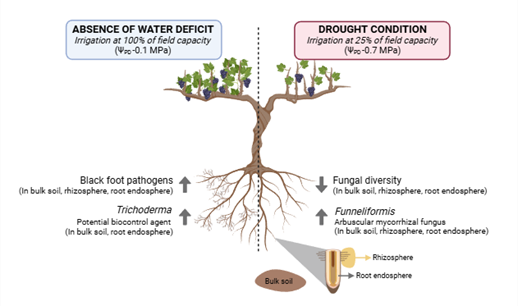
A first exploratory assay was conducted in 2018-2019 by Carbone and others162. The aim of the study was to explore the impact of drought on the root-associated fungal communities, with particular interest in evaluating the impact of that extreme environmental condition on black foot pathogens. The greenhouse-based experiment consisted of imposing three irrigation regimes, irrigation at 100%, 50% and 25% of field capacity, simulating conditions of absence of water deficit (ΨPD -0.1 MPa), moderate water deficit (ΨPD -0.4 MPa) and severe water deficit (ΨPD -0.7 MPa), respectively, on one-year old grapevine rootstock plants cv. SO4 (the most widely rootstock in Uruguay), planted in pots containing natural soil from a commercial grapevine nursery. Six and twelve months after the establishment of the irrigation treatments, samples of bulk soil, rhizosphere, and roots were collected, and the fungal community composition was examined using internal transcribed spacer (ITS) high-throughput amplicon sequencing.
Fungal diversity and composition of the belowground compartments were extremely susceptible to the irrigation regimes (Figure 2). Major differences were observed between the treatments of severe water deficit and the full-watered condition. Overall, the fungal diversity significantly decreased towards the severe water deficit regime, with several fungi explaining the observed differences among treatments. Regarding black foot pathogens, significantly higher relative abundances of Cylindrocarpon were observed in the soil-root interface of well-irrigated vines compared to vines experiencing drought, reaffirming the hypothesis that extreme water deficit conditions could be unfavourable for black foot pathogens. Interestingly, a similar pattern was observed for Trichoderma, a potential biocontrol agent of black foot pathogens163)(164)165)(166)167)(168) . Trichoderma showed higher abundances at treatments of moderate and absence of water deficit rather than at the severe water deficit condition, indicating that the extreme condition is not favourable for this fungus. These results emphasize that further analysis is needed to evaluate the success of Trichoderma spp. as biological control fungi in challenging environment conditions162.
Main findings obtained in the Drought influences fungal community dynamics in the grapevine rhizosphere and root microbiome study (J Fungi 2021, 7, 686) by Carbone and others162
On the other hand, an enrichment of Funneliformis, an AMF previously classified in the former genus Glomus sensu lato, was observed in roots and rhizosphere under severe water deficit conditions. These results suggest that grapevine mycorrhization may naturally intensify in response to drought. Furthermore, Carbone and others162 hypothesized that Funneliformis enrichment could also explain the minimal presence of black foot pathogens found under severe water deficit conditions, since some AMF are cataloged as biocontrol agents169. Funneliformis could act as a biological controller, serving as another ecosystem service provided by AMF to grapevines.
This study represents one of the initial exploratory efforts worldwide to investigate the impact of drought on the structure and composition of the fungal microbiome in the underground compartments of grapevines. Understanding the impact of extreme environments on these communities provides valuable insights into how the network of grapevine-microbiome interactions is reshaped under challenging scenarios. Regarding black foot disease, long-term trials are needed to assess the impact of extreme environmental conditions such as drought and excessive rainfall on black foot incidence and severity. The conclusions drawn from this study require validation, which can be achieved by incorporating assessments of plant health through additional conventional methods, such as internal and external observation of black foot symptoms and the isolation of black foot pathogens. On the other hand, it was interesting to find the enrichment of AMF in plants under severe water deficit conditions. Further investigation is warranted to explore the impact of increasing drought events on natural AMF colonization in grapevines and how it could facilitate adaptation to climate change.
6. Conclusions and Future Perspectives on Vineyard Health
As outlined in this review, ample evidence exists regarding the impact of climate change on agriculture, with viticulture being particularly affected19)(20)21)(22)23)(24)25)(26)28)(29)30)(31) . Numerous studies have modeled various future scenarios, all of them concluding that preparing to confront the repercussions of climate change on viticulture production is inevitable. In this context, assessing the crop-climate suitability of a particular region should involve analyzing ecoclimatic indicators. These indicators are based on agroclimatic metrics calculated over phenological periods, providing precise information about the effect of climate on specific plant processes and cultural practices during these periods170.
Climate change not only influences grapevines through the direct effects of agroclimatic variables on crop growth and development, but also encompasses important consequences for plant health, impacting both yields and quality. In a global survey evaluating the possible evolution of grapevine pests and diseases in response to climate change, it was observed that the main vine diseases are present in most production sites, despite climatic differences171. This highlights the plasticity and adaptive capacity of the pathogens, enabling them to adapt to future climate change scenarios.
It has been demonstrated that climate change may influence important grapevine foliar diseases such as downy mildew and powdery mildew32)(33)34)(68)69)(70) . Additionally, climate change may affect GTDs. The virulence, dissemination and geographical distribution of GTD pathogens may be altered43)(95)97)(98)99)(100)101)(102)103). Grapevines become more susceptible due to stress conditions, which also affect the expression of symptoms104)(105)106)(107)108)(109)110)(111)112)(113) . Changes in the dynamics of pathogen and pest insect populations (not reviewed in this work) necessitate a reevaluation and adjustment of disease and pest management practices to adapt to the evolving situation. This adaptation will vary from one location to another, highlighting the need to assess the consequences of climate change in each productive area and formulate tailored responses accordingly.
Equally significant is the influence of climate change on microbial populations. The soil microbiome holds paramount importance not only due to its impact on crop development but also on plant health. Furthermore, as the soil microbiome affects the characteristics of harvested and processed products, the impact of climate change extends beyond mere productivity.
To address the effects of climate change, it is crucial to first acknowledge and conceptualize the problem and develop the necessary actions to mitigate its negative impacts while enhancing any potential positive outcomes. Global and European surveys on winegrowers' perceptions of climate change impacts have noted increased risks of pests and diseases, among other attributes such as yield, quality, and the timing of phenological periods, and have also discussed options for adaptation172)(173) .
In Uruguay, there is considerable work to be done in this regard. Research efforts should prioritize evaluating how climate changes are impacting the incidence and severity of foliar, bunch, and grapevine trunk diseases. This involves identifying the diseases that are being affected and understanding the manner in which they are changing, as well as assessing adaptive management strategies to mitigate their effects. While the results may not be immediate, a collaborative effort between academia, the productive sector, and the government is essential to investigate and redesign vineyard management strategies aimed at mitigating the impact of climate change on vineyard health.
References:
-
1. IPCC. Sections. In: Climate Change 2023: synthesis report: summary for policymakers. Geneva: IPPC; 2023. p. 35-115. Doi: 10.59327/IPCC/AR6-9789291691647.
» https://doi.org/10.59327/IPCC/AR6-9789291691647 -
2. European State of the Climate: Summary 2023 (Internet). 2023 (cited 2025 Jun 13). 28p. Available from: Available from: https://climate.copernicus.eu/sites/default/files/custom-uploads/ESOTC 2023/Summary_ESOTC2023.pdf
» https://climate.copernicus.eu/sites/default/files/custom-uploads/ESOTC 2023/Summary_ESOTC2023.pdf -
3. Adamo N, Al-Ansari N, Sissakian V, Fahmi KJ, Abed SA. Climate change: droughts and increasing desertification in the Middle East, with special references to Iraq. Engineering. 2022;14:235-73. Doi: 10.4236/eng.2022.147021.
» https://doi.org/10.4236/eng.2022.147021 -
4. Instituto Uruguayo de Meteorología. Sequía Meteorológica en Uruguay 2020-2023: informe final (Internet). Montevideo: INUMET; 2023 (cited 2025 Jun 13). 16p. Available from: Available from: https://www.inumet.gub.uy/sites/default/files/202401/Informe%20final_Sequ%C3%ADa%20Final_2020_2023_compressed.pdf
» https://www.inumet.gub.uy/sites/default/files/202401/Informe%20final_Sequ%C3%ADa%20Final_2020_2023_compressed.pdf -
5. Uruguay Presidencia. Estado uruguayo afrontó el mayor déficit hídrico de los últimos 74 años (Internet). 2023 (cited 2025 Jun 13). Available from: Available from: https://www.gub.uy/presidencia/comunicacion/noticias/estado-uruguayo-afronto-mayor-deficit-hidrico-ultimos-74-anos
» https://www.gub.uy/presidencia/comunicacion/noticias/estado-uruguayo-afronto-mayor-deficit-hidrico-ultimos-74-anos -
6. Salinger MJ, Sivakumar MVK, Motha R. Reducing vulnerability of agriculture and forestry to climate variability and change: workshop summary and recommendations. In: Salinger J, Sivakumar M, Motha RP, editors. Increasing climate variability and change. Dordrecht: Springer; 2005. p. 341-62. Doi: 10.1007/1-4020-4166-7_18.
» https://doi.org/10.1007/1-4020-4166-7_18 -
7. Mendelsohn R. The impact of climate change on agriculture in developing countries. J Nat Resour Policy Res. 2009;1(1):5-19. Doi: 10.1080/19390450802495882.
» https://doi.org/10.1080/19390450802495882 -
8. Malhi GS, Kaur M, Kaushik P. Impact of climate change on agriculture and its mitigation strategies: a review. Sustainability. 2021;13:1318. Doi: 10.3390/su13031318.
» https://doi.org/10.3390/su13031318 -
9. Kumar S, Thilagam P, Shikha D, Saikanth DRK, Rahmani U, Huded S, Panigrahi CK. Adapting plant protection strategies to meet the challenges posed by climate change on plant diseases: a review. Int J Environ Clim Change. 2023;13(12):25-36. Doi: 10.9734/ijecc/2023/v13i123657.
» https://doi.org/10.9734/ijecc/2023/v13i123657 -
10. Mahato A. Climate change and its impact on agriculture. Int J Sci Res Publ (Internet). 2014 (cited 2025 Jun 13);4(4). Available from: Available from: http://www.ijsrp.org/research-paper-0414.php?rp=P282518
» http://www.ijsrp.org/research-paper-0414.php?rp=P282518 -
11. DaMatta FM, Grandis A, Arenque BC, Buckeridge MS. Impacts of climate changes on crop physiology and food quality. Food Res Int. 2010;43:1814-23. Doi: 10.1016/j.foodres.2009.11.001.
» https://doi.org/10.1016/j.foodres.2009.11.001 -
12. Garrett KA, Dendy SP, Frank EE, Rouse MN, Travers SE. Climate change effects on plant disease: genomes to ecosystems. Annu Rev Phytopathol. 2006;44:489-509. Doi: 10.1146/annurev.phyto.44.070505.143420.
» https://doi.org/10.1146/annurev.phyto.44.070505.143420 -
13. Pautasso M, Döring TF, Garbelotto M, Pellis L, Jeger MJ. Impacts of climate change on plant diseases-opinions and trends. Eur J Plant Pathol. 2012;133:295-313. Doi: 10.1007/s10658-012-9936-1.
» https://doi.org/10.1007/s10658-012-9936-1 -
14. Das T, Majumdar MHD, Devi RT, Rajesh T. Climate change impacts on plant diseases. SAARC J Agric. 2016;14(2):200-9. Doi: 10.3329/sja.v14i2.31259.
» https://doi.org/10.3329/sja.v14i2.31259 - 15. Mustapha T, Kutama AS, Sultan Z, Musa HM. Resurgence of plant diseases in the era of climate change. Biol Environ Sci J Tropics. 2022;19(2):7-15.
-
16. Ghini R, Hamada E, Bettiol W. Climate change and plant diseases. Sci Agric. 2008;65:98-107. Doi: 10.1590/S0103-90162008000700015.
» https://doi.org/10.1590/S0103-90162008000700015 -
17. Sundin GW, Werner NA, Yoder KS, Aldwinckle HS. Field evaluation of biological control of fire blight in the Eastern United States. Plant Dis. 2009;93(4):386-94. Doi: 10.1094/PDIS-93-4-0386.
» https://doi.org/10.1094/PDIS-93-4-0386 -
18. Bonaterra A, Badosa E, Cabrefiga J, Francés J, Montesinos E. Prospects and limitations of microbial pesticides for control of bacterial and fungal pomefruit tree diseases. Trees (Berl West). 2012;26(1):215-26. Doi: 10.1007/s00468-011-0626-y.
» https://doi.org/10.1007/s00468-011-0626-y -
19. Santos JA, Fraga H, Malheiro AC, Moutinho-Pereira J, Dinis L-T, Correia C, Moriondo M, Leolini L, Dibari C, Costafreda-Aumedes S, Kartschall T, Menz C, Molitor D, Junk J, Beyer M, Schiltz HR. A review of the potential climate change impacts and adaptation options for european viticulture. Appl Sci. 2020;10(9):3092. Doi: 10.3390/app10093092.
» https://doi.org/10.3390/app10093092 -
20. van Leeuwen C, Sgubin G, Bois B, Ollat N, Swingedouw D, Zito S, Gambetta GA. Climate change impacts and adaptations of wine production. Nat Rev Earth Environ. 2024;5:258-75. Doi: 10.1038/s43017-024-00521-5.
» https://doi.org/10.1038/s43017-024-00521-5 -
21. Nemani RR, White MA, Cayan DR, Jones GV, Running SW, Coughlan JC, Peterson DL. Asymmetric warming over coastal California and its impact on the premium wine industry. Clim Res. 2001;19:25-34. Doi: 10.3354/cr019025.
» https://doi.org/10.3354/cr019025 -
22. Jones GV, White MA, Cooper OR, Storchmann K. Climate change and global wine quality. Clim Chang. 2005;73:319-43. Doi: 10.1007/s10584-005-4704-2.
» https://doi.org/10.1007/s10584-005-4704-2 -
23. Duchene E, Schneider C. Grapevine and climatic changes: a glance at the situation in Alsace. Agron Sustain Dev. 2005;25(1):93-9. Doi: 10.1051/agro:2004057.
» https://doi.org/10.1051/agro:2004057 -
24. Petrie PR, Sadras VO. Advancement of grapevine maturity in Australia between 1993 and 2006: putative causes, magnitude of trends and viticultural consequences. Aust J Grape Wine Res. 2008;14:33-45. Doi: 10.1111/j.1755-0238.2008.00005.x.
» https://doi.org/10.1111/j.1755-0238.2008.00005.x -
25. Duchene E, Huard F, Dumas V, Schneider C, Merdinoglu D. The challenge of adapting grapevine varieties to climate change. Clim Res. 2010;41:193-204. Doi: 10.3354/cr00850.
» https://doi.org/10.3354/cr00850 -
26. Kenny GJ, Harrison PA. The effects of climate variability and change on grape suitability in Europe. J Wine Res. 1992;3(3):163-83. Doi: 10.1080/09571269208717931.
» https://doi.org/10.1080/09571269208717931 -
27. Ashenfelter O, Storchmann K. Wine and climate change. AAWE Working Paper. 2014;152:43p. Doi: 10.22004/ag.econ.164854.
» https://doi.org/10.22004/ag.econ.164854 -
28. Austin ME, Bondari K. A Study of cultural and environmental-factors on the yield of Vitis rotundifolia. Sci Hortic. 1988;34:219-27. Doi: 10.1016/0304-4238(88)90095-7.
» https://doi.org/10.1016/0304-4238(88)90095-7 -
29. Schultz HR, Jones GV. Climate induced historic and future changes in viticulture. J Wine Res . 2010;21:137-45. Doi: 10.1080/09571264.2010.530098.
» https://doi.org/10.1080/09571264.2010.530098 -
30. Toth JP, Vegvari Z. Future of winegrape growing regions in Europe. Aust J Grape Wine Res . 2016;22:64-72. Doi: 10.1111/ajgw.12168.
» https://doi.org/10.1111/ajgw.12168 -
31. Fraga H, García de Cortázar Atauri I, Santos JA. Viticultural irrigation demands under climate change scenarios in Portugal. Agric Water Manag. 2018;196:66-74. Doi: 10.1016/j.agwat.2017.10.023.
» https://doi.org/10.1016/j.agwat.2017.10.023 -
32. Salinari F, Giosue S, Tubiello F, Rettori A, Rossi V, Spannas F, Rosenzweig, Gullino ML. Downy mildew (Plasmopara viticola) epidemics on grapevine under climate change. Glob Chan Biol. 2006;12:1299-307. Doi: 10.1111/j.1365-2486.2006.01175.x.
» https://doi.org/10.1111/j.1365-2486.2006.01175.x -
33. Pugliese M, Gullino ML, Garibaldi A. Effects of elevated CO₂ and temperature on interactions of grapevine and powdery mildew: first results under phytotron conditions. J Plant Dis Prot. 2010;117(1):9-14. Doi: 10.1007/BF03356327.
» https://doi.org/10.1007/BF03356327 -
34. Angelotti F, Hamada E, Magalhães EE, Ghini R, Garrido LDR, Pedro MJ. Climate change and the occurrence of downy mildew in Brazilian grapevines. Pesq Agropecu Bras. 2017;52(6):426-34. Doi: 10.1590/s0100-204x2017000600006.
» https://doi.org/10.1590/s0100-204x2017000600006 -
35. Gullino ML, Pugliese M, Gilardi G, Garibaldi A. Effect of increased CO2 and temperature on plant diseases: a critical appraisal of results obtained in studies carried out under controlled environment facilities. J Plant Pathol. 2018;100:371-89. Doi: 10.1007/s42161-018-0125-8.
» https://doi.org/10.1007/s42161-018-0125-8 - 36. Pearson RC, Goheen AC, editors. Compendium of grape diseases. St. Paul: APS; 1988. 121p.
-
37. Steel CC, Greer DH. Effect of climate on vine and bunch characteristics: bunch rot disease susceptibility. Acta Hortic. 2008;(785):253-62. Doi: 10.17660/ActaHortic.2008.785.31.
» https://doi.org/10.17660/ActaHortic.2008.785.31 -
38. Songy A, Fernandez O, Clément C, Larignon P, Fontaine F. Grapevine trunk diseases under thermal and water stresses. Planta. 2019;249(6):1655-79. Doi: 10.1007/s00425-019-03111-8.
» https://doi.org/10.1007/s00425-019-03111-8 -
39. Martin MT, Cobos R. ldentification of fungi associated with grape vine decline in Castilla y León (Spain). Phytopathol Mediterr. 2007;46:18-25. Doi: 10.14601/Phytopathol_Mediterr-1854.
» https://doi.org/10.14601/Phytopathol_Mediterr-1854 -
40. Bruez E, Lecomte P, Grosman J, Doublet B, Bertsch C, Fontaine F, Ugaglia A, Teissedre PL, Da Costa JP, Guerin-Dubrana L, Rey P. Overview of grapevine trunk diseases in France in the 2000s. Phytopathol Mediterr . 2013;52(2):262-75. Doi: 10.14601/Phytopathol_Mediterr-11578.
» https://doi.org/10.14601/Phytopathol_Mediterr-11578 -
41. Gramaje D, Úrbez-Torres JR, Sosnowski MR. Managing grapevine trunk diseases with respect to etiology and epidemiology: current strategies and future prospects. Plant Dis . 2018;102(1):12-39. Doi: 10.1094/PDIS-04-17-0512-FE.
» https://doi.org/10.1094/PDIS-04-17-0512-FE -
42. Mondello V, Songy A, Battiston E, Pinto C, Coppin C, Trotel-Aziz P, Clément C, Mugnai L, Fontaine F. Grapevine trunk diseases: a review of fifteen years of trials for their control with chemicals and biocontrol agents. Plant Dis . 2018;102(7):1189-217. Doi: 10.1094/PDIS-08-17-1181-FE.
» https://doi.org/10.1094/PDIS-08-17-1181-FE -
43. Bertsch C, Ramírez-Suero M, Magnin-Robert, M, Larignon P, Chong J, Abou-Mansour E, Spagnolo A, Clément C, Fontaine F. Grapevine trunk diseases: complex and still poorly understood. Plant Pathol. 2013;62:243-65. Doi: 10.1111/j.1365-3059.2012.02674.x.
» https://doi.org/10.1111/j.1365-3059.2012.02674.x -
44. Mekala S, Polepongu S. Impact of climate change on soil microbial community. In: Varma A, Tripathi S, Prasad R, editors. Plant biotic interactions: state of the art. Cham: Springer; 2019. p. 31-42. Doi: 10.1007/978-3-030-26657-8.
» https://doi.org/10.1007/978-3-030-26657-8 -
45. Reinhold-Hurek B, Bünger W, Burbano CS, Sabale M, Hurek T. Roots shaping their microbiome: global hotspots for microbial activity. Annu Rev Phytopathol . 2015;53:403-24. Doi: 10.1146/annurev-phyto-082712-102342.
» https://doi.org/10.1146/annurev-phyto-082712-102342 -
46. Santoyo G. How plants recruit their microbiome? New insights into beneficial interactions. J Adv Res. 2022;40:45-58. Doi: 10.1016/j.jare.2021.11.020.
» https://doi.org/10.1016/j.jare.2021.11.020 -
47. Trivedi P, Leach JE, Tringe SG, Sa T, Singh BK. Plant-microbiome interactions: from community assembly to plant health. Nat Rev Microbiol. 2020;18(11):607-21. Doi: 10.1038/s41579-020-0412-1.
» https://doi.org/10.1038/s41579-020-0412-1 -
48. Yang J, Kloepper JW, Ryu CM. Rhizosphere bacteria help plants tolerate abiotic stress. Trends Plant Sci. 2009;14(1):1-4. Doi: 10.1016/j.tplants.2008.10.004.
» https://doi.org/10.1016/j.tplants.2008.10.004 -
49. Lugtenberg B, Kamilova F. Plant-growth-promoting rhizobacteria. Annu Rev Microbiol. 2009;63:541-56. Doi: 10.1146/annurev.micro.62.081307.162918.
» https://doi.org/10.1146/annurev.micro.62.081307.162918 -
50. Thepbandit W, Athinuwat D. Rhizosphere microorganisms supply availability of soil nutrients and induce plant defense. Microorganisms. 2024;12(3):558. Doi: 10.3390/microorganisms12030558.
» https://doi.org/10.3390/microorganisms12030558 -
51. Wardle DA, Bardgett RD, Klironomos JN, Setälä H, van der Putten WH, Wall DH. Ecological linkages between aboveground and belowground biota. Science. 2004;304(5677):1629-33. Doi: 10.1126/science.1094875.
» https://doi.org/10.1126/science.1094875 -
52. Forrest J, Miller-Rushing AJ. Toward a synthetic understanding of the role of phenology in ecology and evolution. Philos Trans R Soc Lond B Biol Sci. 2010;365(1555):3101-12. Doi: 10.1098/rstb.2010.0145.
» https://doi.org/10.1098/rstb.2010.0145 -
53. Delmas CEL, Bancal MO, Leyronas C, Robin MH, Vidal T, Launay M. Monitoring the phenology of plant pathogenic fungi: why and how? Biol Rev Camb Philos Soc. 2024;99(3):1075-84. Doi: 10.1111/brv.13058.
» https://doi.org/10.1111/brv.13058 -
54. Waugh MM, Kim DH, Ferrin DM, Stanghellini ME. Reproductive potential of Monosporascus cannonballus. Plant Dis . 2003;87(1):45-50. Doi: 10.1094/PDIS.2003.87.1.45.
» https://doi.org/10.1094/PDIS.2003.87.1.45 -
55. Tapsoba H, Wilson JP. Effects of Temperature and Light on Germination of Urediniospores of the Pearl Millet Rust Pathogen, Puccinia substriata var. indica. Plant Dis . 1997;81(9):1049-52. Doi: 10.1094/PDIS.1997.81.9.1049.
» https://doi.org/10.1094/PDIS.1997.81.9.1049 -
56. Chen X. Pathogens which threaten food security: Puccinia striiformis, the wheat stripe rust pathogen. Food Sec. 2020;12:239-51. Doi: 10.1007/s12571-020-01016-z.
» https://doi.org/10.1007/s12571-020-01016-z -
57. Pfender WF, Vollmer SS. Freezing temperature effect on survival of Puccinia graminis subsp. graminicola in Festuca arundinacea and Lolium perenne. Plant Dis . 1999;83(11):1058-62. Doi: 10.1094/PDIS.1999.83.11.1058.
» https://doi.org/10.1094/PDIS.1999.83.11.1058 -
58. Bergot M, Cloppet E, Pérarnaud V, Déqué M, Marçais B, Desprez‐Loustau ML. Simulation of potential range expansion of oak disease caused by Phytophthora cinnamomi under climate change. Glob Chang Biol. 2004;10(9):1539-52. Doi: 10.1111/j.1365-2486.2004.00824.x.
» https://doi.org/10.1111/j.1365-2486.2004.00824.x -
59. Shah MH, Naim Aktar S, Pramanik K, Pande CB, Torab Ali G. The impact of climate change on plant diseases and food security. In: Kumar A, Santoyo G, Singh J, editors. Biocontrol Agents for improved agriculture. Chennai: Elsevier; 2024. p. 353-84. Doi: 10.1016/B978-0-443-15199-6.00002-6.
» https://doi.org/10.1016/B978-0-443-15199-6.00002-6 -
60. Chakraborty S, Pangga IB, Lupton J, Hart L, Room PM, Yates D. Production and dispersal of Colletotrichum gloeosporioides spores on Stylosanthes scabra under elevated CO2. Environ Pollut. 2000;108(3):381-7. Doi: 10.1016/s0269-7491(99)00217-1.
» https://doi.org/10.1016/s0269-7491(99)00217-1 -
61. Moutinho-Pereira J, Gonçalves B, Bacelar E, Boaventura Cunha J, Countinho J, Correira CM. Effects of elevated CO2 on grapevine (Vitis vinifera L.): physiological and yield attributes. Vitis. 2009;48:159-65. Doi: 10.5073/vitis.2009.48.159-165.
» https://doi.org/10.5073/vitis.2009.48.159-165 -
62. Wohlfahrt Y, Krüger K, Papsdorf D, Tittmann S, Stoll M. Grapevine leaf physiology and morphological characteristics to elevated CO2 in the VineyardFACE (Free air Carbon dioxide Enrichment) experiment. Front Plant Sci. 2022;13:1085878. Doi: 10.3389/fpls.2022.1085878.
» https://doi.org/10.3389/fpls.2022.1085878 -
63. Lamalakshmi DE, Kumar S, Basanta Singh T, Sharma SK, Beemrote A, Devi CP, Wani SH. Adaptation strategies and defence mechanisms of plants during environmental stress. In: Ghorbanpour M, Varma A, editors. Medicinal plants and environmental challenges. Cham: Springer ; 2017. p. 359-413. Doi: 10.1007/978-3-319-68717-9_20.
» https://doi.org/10.1007/978-3-319-68717-9_20 -
64. Pennypacker BW, Leath KT, Hill RR. Impact of drought stress on the expression of resistance to Verticillium albo-atrum in alfalfa. Phytopathology. 1991;81:1014-24. Doi: 10.1094/Phyto-81-1014.
» https://doi.org/10.1094/Phyto-81-1014 -
65. Maxwell DL, Kruger EL, Stanosz GR. Effects of Water Stress on Colonization of Poplar Stems and Excised Leaf Disks by Septoria musiva. Phytopathology. 1997;87(4):381-8. Doi: 10.1094/PHYTO.1997.87.4.381.
» https://doi.org/10.1094/PHYTO.1997.87.4.381 -
66. Mayek-Perez N, Garcia-Espinosa R, Lopez-Castaneda C, Acosta-Gallegos JA, Simpson J. Water relations, histopathology and growth of common bean (Phaseolus vulgaris L.) during pathogenesis of Macrophomina phaseolina under drought stress. Physiol Mol Plant Pathol . 2002;60:185-95. Doi: 10.1006/pmpp.2001.0388.
» https://doi.org/10.1006/pmpp.2001.0388. -
67. Martens JW, McKenzie RIH, Green GJ. Thermal stability of stem rust resistance in oat seedlings. Can J Bot. 1967;45:451-58. Doi: 10.1139/b67-046.
» https://doi.org/10.1139/b67-046 -
68. Salinari F, Giosue S, Rossi V, Tubiello FN, Rosenzweig C, Gullino ML. Downy mildew outbreaks on grapevine under climate change: elaboration and application of an empirical‐statistical model. Bull OEPP. 2007;37:317-26. Doi: 10.1111/j.1365-2338.2007.01126.x.
» https://doi.org/10.1111/j.1365-2338.2007.01126.x - 69. Gullino ML, Pugliese M, Paravicini A, Casulli E, Rettori A, Sanna M, Garibaldi A. New phytotron for studying the effect of climate change on plant pathogens. J Agric Eng. 2011;42(1):1-11.
-
70. Zito S, Caffarra A, Richard Y, Castel T, Bois B. Climate change and vine protection: the case of mildews management in Burgundy. E3S Web Conf. 2018;50:01006. Doi: 10.1051/e3sconf/20185001006.
» https://doi.org/10.1051/e3sconf/20185001006 -
71. Caffarra A, Rinaldi M, Eccel E, Rossi V, Pertot I. Modelling the impact of climate change on the interaction between grapevine and its pests and pathogens: European grapevine moth and powdery mildew. Agric Ecosyst Environ. 2012;148:89-101. Doi: 10.1016/j.agee.2011.11.017.
» https://doi.org/10.1016/j.agee.2011.11.017 - 72. Hamada E, Angelotti F, Garrido LDR, Ghini R, de Carvalho MC, Palladino RP. Efeito das mudanças climáticas sobre a favorabilidade às podridões da uva madura e cinzenta da videira no Nordeste brasileiro. Rev Bras Geogr Fís. 2011;06:1213-21.
-
73. Mugnai L, Graniti A, Surico G. Esca (Black Measles) and Brown Wood-Streaking: Two Old and Elusive Diseases of Grapevines. Plant Dis . 1999;83(5):404-18. Doi: 10.1094/PDIS.1999.83.5.404.
» https://doi.org/10.1094/PDIS.1999.83.5.404 -
74. Mostert L, Halleen F, Fourie P, Crous PW. A review of Phaeoacremonium species involved in Petri disease and esca of grapevines. Phytopathol Mediterr . 2006;45:12-29. Doi: 10.14601/Phytopathol_Mediterr-1844.
» https://doi.org/10.14601/Phytopathol_Mediterr-1844 -
75. Halleen F, Mostert L, Crous PW. Pathogenicity testing of lesser-known vascular fungi of grapevines. Australas Plant Pathol . 2007;36:277-85. Doi: 10.1071/AP07019.
» https://doi.org/10.1071/AP07019 - 76. Luque J, García-Figueres F, Legorburu FJ, Muruamendiaraz A, Armengol J, Trouillas F. Species of Diatrypaceae associated with grapevine trunk diseases in Eastern Spain. Phytopathol Mediterr . 2012;51:528-40.
-
77. AgustÍ-Brisach C, Armengol J. Black-foot disease of grapevine: an update on taxonomy, epidemiology and management strategies. Phytopathol Mediterr . 2013;52:245-61. Doi: 10.14601/Phytopathol_Mediterr-12662.
» https://doi.org/10.14601/Phytopathol_Mediterr-12662 -
78. Úrbez-Torres JR. The status of Botryosphaeriaceae species infecting grapevines. Phytopathol Mediterr . 2011;50(4):S5-S45. Doi: 10.14601/Phytopathol_Mediterr-9316.
» https://doi.org/10.14601/Phytopathol_Mediterr-9316 -
79. Úrbez-Torres JR, Peduto F, Smith RJ, Gubler WD. Phomopsis Dieback: a grapevine trunk disease caused by Phomopsis viticola in California. Plant Dis . 2013;97(12):1571-9. Doi: 10.1094/PDIS-11-12-1072-RE.
» https://doi.org/10.1094/PDIS-11-12-1072-RE -
80. Gramaje D, Armengol J. Fungal Trunk pathogens in the grapevine propagation process: potential inoculum sources, detection, identification, and management strategies. Plant Dis . 2011;95(9):1040-55. Doi: 10.1094/PDIS-01-11-0025.
» https://doi.org/10.1094/PDIS-01-11-0025 -
81. Lecomte P, Darrieutort G, Liminana JM, Comont G, Muruamendiaraz A, Legorburu FJ, Choueiri E, Jreijiri F, El Amil R, Fermaud M. New insights into Esca of grapevine: the development of foliar symptoms and their association with Xylem discoloration. Plant Dis . 2012;96(7):924-34. Doi: 10.1094/PDIS-09-11-0776-RE.
» https://doi.org/10.1094/PDIS-09-11-0776-RE -
82. Hyrcan J, Hart M, Bowen P, Forge T, Úrbez-Torres JR. Grapevine trunk disease fungi: their roles as latent pathogens and stress factors that favour disease development and symptom expression. Phytopathol Mediterr . 2020;59(3):395-424. Doi: 10.14601/Phyto-11275.
» https://doi.org/10.14601/Phyto-11275 -
83. Surico G, Marchi G, Braccini P, Mugnai L. Epidemiology of esca in some vineyards in Tuscany (Italy). Phytopathol Mediterr . 2000;39:190-205. Doi: 10.14601/Phytopathol_Mediterr-1536.
» https://doi.org/10.14601/Phytopathol_Mediterr-1536 -
84. Halleen F, Crous PW, Petrini O. Fungi associated with healthy grapevine cuttings in nurseries, with special reference to pathogens involved in the decline of young vines. Australas Plant Pathol . 2003;32:47-52. Doi: 10.1071/AP02062.
» https://doi.org/10.1071/AP02062 -
85. Aroca A, Gramaje D, Armengol J, García-Jiménez J, Raposo R. Evaluation of the grapevine nursery propagation process as a source of Phaeoacremonium spp. and Phaeomoniella chlamydospora and occurrence of trunk disease pathogens in rootstocks mother vines in Spain. Eur J Plant Pathol. 2010;126:165-74. Doi: 10.1007/s10658-009-9530-3.
» https://doi.org/10.1007/s10658-009-9530-3 -
86. Abreo E, Martínez S, Bettucci L, Lupo S. Characterization of Botryosphaeriaceae species associated with grapevines in Uruguay. AustralasPlant Pathol . 2013;42:241-9. Doi: 10.1007/s13313-013-0200-8.
» https://doi.org/10.1007/s13313-013-0200-8 -
87. Úrbez-Torres JR, Haag P, Bowen P, Lowery T, O'Gorman DT. Development of a DNA macroarray for the detection and identification of fungal pathogens causing decline of young grapevines. Phytopathology. 2015;105(10):1373-88. Doi: 10.1094/PHYTO-03-15-0069-R.
» https://doi.org/10.1094/PHYTO-03-15-0069-R -
88. Berlanas C, Ojeda S, López-Manzanares B, Andrés-Sodupe M, Bujanda R, Del Pilar Martínez-Diz M, Díaz-Losada E, Gramaje D. Occurrence and diversity of black-foot disease fungi in symptomless grapevine nursery stock in Spain. Plant Dis . 2020;104(1):94-104. Doi: 10.1094/PDIS-03-19-0484-RE.
» https://doi.org/10.1094/PDIS-03-19-0484-RE -
89. Carbone MJ, Gelabert M, Moreira V, Mondino P, Alaniz S. Grapevine nursery propagation material as source of fungal trunk disease pathogens in Uruguay. Front Fungal Biol. 2022;3:958466. Doi: 10.3389/ffunb.2022.958466.
» https://doi.org/10.3389/ffunb.2022.958466 -
90. Bruez E, Vallance J, Gautier A, Laval V, Compant S, Maurer W, Sessitsch A, Lebrun MH, Rey P. Major changes in grapevine wood microbiota are associated with the onset of esca, a devastating trunk disease. Environ Microbiol. 2020;22(12):5189-206. Doi: 10.1111/1462-2920.15180.
» https://doi.org/10.1111/1462-2920.15180 -
91. Del Frari G, Gobbi A, Aggerbeck MR, Oliveira H, Hansen LH, Ferreira RB. Characterization of the wood mycobiome of vitis vinifera in a vineyard affected by Esca. spatial distribution of fungal communities and their putative relation with leaf symptoms. Front Plant Sci . 2019;10:910. Doi: 10.3389/fpls.2019.00910.
» https://doi.org/10.3389/fpls.2019.00910 -
92. Gramaje D, Eichmeier A, Spetik M, Carbone MJ, Bujanda R, Vallance J, Rey P. Exploring the temporal dynamics of the fungal microbiome in Rootstocks, the lesser-known half of the grapevine crop. J Fungi (Basel). 2022;8(5):421. Doi: 10.3390/jof8050421.
» https://doi.org/10.3390/jof8050421 -
93. Whiting EC, Khan A, Gubler WD. Effect of temperature and water potential on survival and Mycelial growth of Phaeomoniella chlamydospora and Phaeoacremonium spp. Plant Dis . 2001;85(2):195-201. Doi: 10.1094/PDIS.2001.85.2.195.
» https://doi.org/10.1094/PDIS.2001.85.2.195 -
94. Fischer M. A new wood-decaying basidiomycete species associated with esca of grapevine: Fomitiporia mediterranea (Hymenochaetales). Mycol Progress. 2002;1(3):315-24. Doi: 10.1007/s11557-006-0029-4.
» https://doi.org/10.1007/s11557-006-0029-4 -
95. Úrbez-Torres JR, Leavitt GM, Voegel TM, Gubler WD. Identification and distribution of Botryosphaeria spp. associated with grapevine cankers in California. Plant Dis . 2006;90(12):1490-503. Doi: 10.1094/PD-90-1490.
» https://doi.org/10.1094/PD-90-1490 -
96. Pitt WM, Trouillas FP, Gubler WD, Savocchia S, Sosnowski MR. Pathogenicity of Diatrypaceous fungi on grapevines in Australia. Plant Dis . 2013;97(6):749-56. Doi: 10.1094/PDIS-10-12-0954-RE.
» https://doi.org/10.1094/PDIS-10-12-0954-RE -
97. Paolinelli-Alfonso M, Villalobos-Escobedo JM, Rolshausen P, Herrera-Estrella A, Galindo-Sánchez C, López-Hernández JF, Hernandez-Martinez R. Global transcriptional analysis suggests Lasiodiplodia theobromae pathogenicity factors involved in modulation of grapevine defensive response. BMC Genomics. 2016;17(1):615. Doi: 10.1186/s12864-016-2952-3.
» https://doi.org/10.1186/s12864-016-2952-3 -
98. Úrbez-Torres JR, Battany M, Bettiga LJ, Gispert C, McGourty G, Roncoroni J, Smith RJ, Verdegaal P, Gubler WD. Botryosphaeriaceae species spore-trapping studies in California vineyards. Plant Dis . 2010;94(6):717-24. Doi: 10.1094/PDIS-94-6-0717.
» https://doi.org/10.1094/PDIS-94-6-0717 -
99. Eskalen A, Gubler WD. Association of spores of Phaeomoniella chlamydospora, Phaeoacremonium inflatipes, and Pm. aleophilum with grapevine cordons in California. Phytopathol Mediterr . 2001;40:429-31. Doi: 10.14601/Phytopathol_Mediterr-1613.
» https://doi.org/10.14601/Phytopathol_Mediterr-1613 -
100. Úrbez-Torres JR, Leavitt GM, Guerrero JC, Guevara J, Gubler WD. Identification and pathogenicity of Lasiodiplodia theobromae and Diplodia seriata, the causal agents of Bot Canker disease of grapevines in Mexico. Plant Dis . 2008;92(4):519-29. Doi: 10.1094/PDIS-92-4-0519.
» https://doi.org/10.1094/PDIS-92-4-0519 -
101. Pitt WM, Huang R, Steel CC, Savocchia S. Identification, distribution and current taxonomy of Botryosphaeriaceae species associated with grapevine decline in New South Wales and South Australia. Aust J Grape Wine Res . 2010;16(1):258-71. Doi: 10.1111/j.1755-0238.2009.00087.x.
» https://doi.org/10.1111/j.1755-0238.2009.00087.x -
102. Wunderlich N, Savocchia S, Steel C, Ash G, Raman H. Identification of Botryosphaeria spp. and first report of Dothiorella viticola (“Botryosphaeria” viticola) associated with bunch rot in Australia. Phytopathol Mediterr . 2009;48(1):162. Doi: 10.14601/Phytopathol_Mediterr-2887.
» https://doi.org/10.14601/Phytopathol_Mediterr-2887 -
103. Guérin-Dubrana L, Labenne A, Labrousse JC, Bastien S, Rey P, Gégout-Petit A. Statistical analysis of grapevine mortality associated with esca or Eutypa dieback foliar expression. Phytopathol Mediterr . 2013;52(2):276-88. Doi: 10.14601/Phytopathol_Mediterr-11602.
» https://doi.org/10.14601/Phytopathol_Mediterr-11602 -
104. van Niekerk JM, Strever AE, Du Toit PG, Halleen F, Fourie PH. Influence of water stress on Botryosphaeriaceae disease expression in grapevines. Phytopathol Mediterr . 2011;50:151-65. Doi: 10.14601/Phytopathol_Mediterr-8968.
» https://doi.org/10.14601/Phytopathol_Mediterr-8968 -
105. Qiu Y, Steel CC, AshGJ, Savocchia S. Effects of temperature and water stress on the virulence of Botryosphaeriaceae spp. causing dieback of grapevines and their predicted distribution using CLIMEX in Australia. Acta Hortic . 2016;(1115):171-81. Doi: 10.17660/ActaHortic.2016.1115.26.
» https://doi.org/10.17660/ActaHortic.2016.1115.26 -
106. Galarneau ERA, Lawrence DP, Travadon R, Baumgartner K. Drought exacerbates Botryosphaeria dieback symptoms in grapevines and confounds host-based molecular markers of infection by Neofusicoccum parvum. Plant Dis . 2019;103(7):1738-45. Doi: 10.1094/PDIS-09-18-1549-RE.
» https://doi.org/10.1094/PDIS-09-18-1549-RE -
107 Sosnowski MR, Luque J, Loschiavo AP, Martos S, Garcia-Figueres F, Wicks TJ, Scott ES. Studies on the effect of water and temperature stress on grapevines inoculated with Eutypa lata. Phytopathol Mediterr . 2011;50:127-38. Doi: 10.14601/Phytopathol_Mediterr-8959.
» https://doi.org/10.14601/Phytopathol_Mediterr-8959 -
108. Marchi G, Peduto F, Surico G, Di Marco S, Calzarano F, Mugnai L. Some observations on the relationship of manifest and hidden esca to rainfall. Phytopathol mediterr. 2006;45:1000-10. Doi: 10.36253/phyto-5195.
» https://doi.org/10.36253/phyto-5195 -
109. Calzarano F, Osti F, Baranek M, Di Marco S. Rainfall and temperature influence expression of foliar symptoms of grapevine leaf stripe disease (esca complex) in vineyards. Phytopathol Mediterr . 2018;57(3):488-505. Doi: 10.14601/Phytopathol_Mediterr-23787.
» https://doi.org/10.14601/Phytopathol_Mediterr-23787 -
110. Bortolami G, Gambetta GA, Cassan C, Dayer S, Farolfi E, Ferrer N, Gibon Y, Jolivet J, Lecomte P, Delmas CEL. Grapevines under drought do not express esca leaf symptoms. Proc Natl Acad Sci U S A. 2021;118(43):e2112825118. Doi: 10.1073/pnas.2112825118.
» https://doi.org/10.1073/pnas.2112825118 -
111. Monod V, Zufferey V, Wilhelm M, Viret O, Gindro K, Croll D, Hofstetter V. A systemic approach allows to identify the pedoclimatic conditions most critical in the susceptibility of a grapevine cultivar to esca/Botryosphaeria dieback. bioRxiv (Prepint). 2023. Doi: 10.1101/2023.05.23.541976.
» https://doi.org/10.1101/2023.05.23.541976 -
112. Fischer M, Kassemeyer HH. Water regime and its possible impact on expression of Esca symptoms in Vitis vinifera: growth characters and symptoms in the greenhouse after artificial infection with Phaeomoniella chlamydospora. Vitis. 2012;51(3):129-35. Doi: 10.5073/vitis.2012.51.129-135.
» https://doi.org/10.5073/vitis.2012.51.129-135 -
113. Lima MRM, Machado AF, Gubler WD. Metabolomic study of Chardonnay grapevines double stressed with Esca-Associated fungi and drought. Phytopathology. 2017;107(6):669-80. Doi: 10.1094/PHYTO-11-16-0410-R.
» https://doi.org/10.1094/PHYTO-11-16-0410-R -
114. Lombard L, Van der Merwe NA, Groenewald JZ, Crous PW. Lineages in Nectriaceae: re-evaluating the generic status of Ilyonectria and allied genera. Phytopathol Mediterr . 2014;53:515-32. Doi: 10.14601/Phytopathol_Mediterr-14976.
» https://doi.org/10.14601/Phytopathol_Mediterr-14976 -
115. Carlucci A, Lops F, Mostert L, Halleen F, Raimondo M. Occurrence fungi causing black foot on young grapevines and nursery rootstock plants in Italy. Phytopathol Mediterr . 2017;56:10-39. Doi: 10.14601/Phytopathol_Mediterr-18769.
» https://doi.org/10.14601/Phytopathol_Mediterr-18769 -
116. Aigoun-Mouhous W, Elena G, Cabral A, León M, Sabaou N, Armengol J, Chaouia C, Mahamedi AE, Berraf-Tebbal A. Characterization and pathogenicity of Cylindrocarpon-like asexual morphs associated with black foot disease in Algerian grapevine nurseries, with the description of Pleiocarpon algeriense sp. Nov. Eur J Plant Pathol. 2019;154:887-901. Doi: 10.1007/s10658-019-01708-z.
» https://doi.org/10.1007/s10658-019-01708-z -
117. Halleen F, Fourie PH, Crous PW. A review of black foot disease of grapevine. Phytopathol Mediterr . 2006;45:55-67. Doi: 10.1400/52261.
» https://doi.org/10.1400/52261 -
118. Agustí-Brisach C, Armengol J. Effects of temperature, pH and water potential on mycelial growth, sporulation and chlamydospore production in culture of Cylindrocarpon spp. associated with black foot of grapevines. Phytopathol Mediterr . 2012;51:37-50. Doi: 10.14601/Phytopathol_Mediterr-9499.
» https://doi.org/10.14601/Phytopathol_Mediterr-9499 -
119. Aslam MM, Okal E, Idris AL, Qian Z, Xu W, Karanja JK, Wani SH, Yuan W. Rhizosphere microbiomes can regulate plant drought tolerance. Pedosphere. 2022;32(1):61-74. Doi: 10.1016/S1002-0160(21)60061-9.
» https://doi.org/10.1016/S1002-0160(21)60061-9 -
120. Fournier P, Pellan L, Barroso-Bergadà D, Bohan D, Candresse T, Delmotte F, Dufour MC, Lauvergeat V, Le Marrec C, Marais A, Martins G, Masneuf-Pomarède I, Rey P, Sherman D, This P, Frioux C, Labarthe S, Vacher C. The functional microbiome of grapevine throughout plant evolutionary history and lifetime. Adv Ecol Res. 2022;67:27-99. Doi: 10.1016/bs.aecr.2022.09.001.
» https://doi.org/10.1016/bs.aecr.2022.09.001 -
121. Bekris F, Vasileiadis S, Papadopoulou E, Samaras A, Testempasis S, Gkizi D, Tavlaki G, Tzima A, Paplomatas E, Markakis E, Karaoglanidis G, Papadopoulou KK, Karpouzas DG. Grapevine wood microbiome analysis identifies key fungal pathogens and potential interactions with the bacterial community implicated in grapevine trunk disease appearance. Environ Microbiome. 2021;16:23. Doi: 10.1186/s40793-021-00390-1.
» https://doi.org/10.1186/s40793-021-00390-1 -
122. Zarraonaindia I, Owens SM, Weisenhorn P, West K, Hampton-Marcell J, Lax S, Bokulich NA, Mills DA, Martin G, Taghavi S, van der Lelie D, Gilbert JA. The soil microbiome influences grapevine-associated microbiota. mBio. 2015;6(2):e02527-14. Doi: 10.1128/mBio .02527-14.
» https://doi.org/10.1128/mBio .02527-14 -
123. Gilbert JA, van der Lelie D, Zarraonaindia I. Microbial terroir for wine grapes. Proc Natl Acad Sci U S A . 2014;111(1):5-6. Doi: 10.1073/pnas.1320471110.
» https://doi.org/10.1073/pnas.1320471110 -
124. OIV. Definition of vitivinicultural “terroir”: resolution OIV/VITI 333/2010 (Internet). Tbilisi: OIV; 2010 (cited 2025 Jun 13). 1p. Available from: Available from: https://www.oiv.int/node/3362/download/pdf
» https://www.oiv.int/node/3362/download/pdf -
125. Zarraonaindia I, Gilbert JA. Understanding grapevine-microbiome interactions: implications for viticulture industry. Microb Cell. 2015;2(5):171-3. Doi: 10.15698/mic2015.05.204.
» https://doi.org/10.15698/mic2015.05.204 -
126. Vink SN, Chrysargyris A, Tzortzakis N, Falcão Salles J. Bacterial community dynamics varies with soil management and irrigation practices in grapevines (Vitis vinifera L.). Appl Soil Ecol. 2021;158:103807. Doi: 10.1016/j.apsoil.2020.103807.
» https://doi.org/10.1016/j.apsoil.2020.103807 -
127. Marasco R, Rolli E, Fusi M, Michoud G, Daffonchio D. Grapevine rootstocks shape underground bacterial microbiome and networking but not potential functionality. Microbiome. 2018;6(1):3. Doi: 10.1186/s40168-017-0391-2.
» https://doi.org/10.1186/s40168-017-0391-2 -
128. Berlanas C, Berbegal M, Elena G, Laidani M, Cibriain JF, Sagües A, Gramaje D. The fungal and bacterial Rhizosphere microbiome associated with grapevine rootstock genotypes in mature and young vineyards. Front Microbiol. 2019;10:1142. Doi: 10.3389/fmicb.2019.01142.
» https://doi.org/10.3389/fmicb.2019.01142 -
129. Liu D, Howell K. Community succession of the grapevine fungal microbiome in the annual growth cycle. Environ Microbiol . 2021;23(4):1842-57. Doi: 10.1111/1462-2920.15172.
» https://doi.org/10.1111/1462-2920.15172 -
130. Fernández-Calviño D, Martín A, Arias-Estévez M, Baath E, Díaz-Raviña M. Microbial community structure of vineyard soils with different pH and copper content. Appl Soil Ecol . 2010;46:276-82. Doi: 10.1016/j.apsoil.2010.08.001.
» https://doi.org/10.1016/j.apsoil.2010.08.001 -
131. Burns KN, Kluepfel DA, Strauss SL, Bokulich NA, Cantu D, Steenwerth KL. Vineyard soil bacterial diversity and composition revealed by 16S rRNA genes: differentiation by geographic features. Soil Biol Biochem. 2015;91:232-47. Doi: 10.1016/j.soilbio.2015.09.002.
» https://doi.org/10.1016/j.soilbio.2015.09.002 -
132. Holland TC, Bowen PA, Bogdanoff CP, Lowery TD, Shaposhnikova O, Smith S, Hart MM. Evaluating the diversity of soil microbial communities in vineyards relative to adjacent native ecosystems. Appl Soil Ecol . 2016;100:91-103. Doi: 10.1016/j.apsoil.2015.12.001.
» https://doi.org/10.1016/j.apsoil.2015.12.001 -
133. Dries L, Bussotti S, Pozzi C, Kunz R, Schnell S, Löhnertz O, Vortkamp A. Rootstocks shape their microbiome-bacterial communities in the rhizosphere of different grapevine rootstocks. Microorganisms. 2021;9(4):822. Doi: 10.3390/microorganisms9040822.
» https://doi.org/10.3390/microorganisms9040822 -
134. Bao L, Sun B, Wei Y, Xu N, Zhang S, Gu L, Bai Z. Grape cultivar features differentiate the grape Rhizosphere Microbiota. Plants (Basel). 2022;11(9):1111. Doi: 10.3390/plants11091111.
» https://doi.org/10.3390/plants11091111 -
135. Cureau N, Threlfall R, Savin M, Marasini D, Lavefve L, Carbonero F. Year, location, and variety impact on grape-, soil-, and leaf-associated fungal microbiota of Arkansas-grown table grapes. Microb Ecol. 2021;82(1):73-86. Doi: 10.1007/s00248-021-01698-8.
» https://doi.org/10.1007/s00248-021-01698-8 -
136. Wagner MR, Lundberg DS, Del Rio TG, Tringe SG, Dangl JL, Mitchell-Olds T. Host genotype and age shape the leaf and root microbiomes of a wild perennial plant. Nat Commun. 2016;7:12151. Doi: 10.1038/ncomms12151.
» https://doi.org/10.1038/ncomms12151 -
137. Köberl M, Müller H, Ramadan EM, Berg G. Desert farming benefits from microbial potential in arid soils and promotes diversity and plant health. PLoS One. 2011;6(9):e24452. Doi: 10.1371/journal.pone.0024452.
» https://doi.org/10.1371/journal.pone.0024452 -
138. Timmusk S, Paalme V, Pavlicek T, Bergquist J, Vangala A, Danilas T, Nevo E. Bacterial distribution in the rhizosphere of wild barley under contrasting microclimates. PLoS One . 2011;6(3):e17968. Doi: 10.1371/journal.pone.0017968.
» https://doi.org/10.1371/journal.pone.0017968 -
139. Marasco R, Rolli E, Ettoumi B, Vigani G, Mapelli F, Borin S, Abou-Hadid AF, El-Behairy UA, Sorlini C, Cherif A, Zocchi G, Daffonchio D. A drought resistance-promoting microbiome is selected by root system under desert farming. PLoS One . 2012;7(10):e48479. Doi: 10.1371/journal.pone.0048479.
» https://doi.org/10.1371/journal.pone.0048479 -
140. Naylor D, Coleman-Derr D. Drought stress and root-associated bacterial communities. Front Plant Sci . 2018;8:2223. Doi: 10.3389/fpls.2017.02223.
» https://doi.org/10.3389/fpls.2017.02223 -
141. Henry A, Doucette W, Norton J, Bugbee B. Changes in crested wheatgrass root exudation caused by flood, drought, and nutrient stress. J Environ Qual. 2007;36(3):904-12. Doi: 10.2134/jeq2006.0425sc.
» https://doi.org/10.2134/jeq2006.0425sc -
142. Song F, Han X, Zhu X, Herbert SJ. Response to water stress of soil enzymes and root exudates from drought and non-drought tolerant corn hybrids at different growth stages. Can J Soil Sci. 2012;92:501-7. Doi: 10.4141/cjss2010-057.
» https://doi.org/10.4141/cjss2010-057 -
143. Rolli E, Marasco R, Vigani G, Ettoumi B, Mapelli F, Deangelis ML, Gandolfi C, Casati E, Previtali F, Gerbino R, Pierotti Cei F, Borin S, Sorlini C, Zocchi G, Daffonchio D. Improved plant resistance to drought is promoted by the root-associated microbiome as a water stress-dependent trait. Environ Microbiol . 2015;17(2):316-31. Doi: 10.1111/1462-2920.12439.
» https://doi.org/10.1111/1462-2920.12439 -
144. Schüßler A, Schwarzott D, Walker C. A new fungal phylum, the Glomeromycota: phylogeny and evolution. Mycol Res. 2001;105:1413-21. Doi: 10.1017/S0953756201005196.
» https://doi.org/10.1017/S0953756201005196 -
145. Trouvelot S, Bonneau L, Redecker D, van Tuinen D, Adrian M, Wipf D. Arbuscular mycorrhiza symbiosis in viticulture: a review. Agron Sustain Dev . 2015;35:1449-67. Doi: 10.1007/s13593-015-0329-7.
» https://doi.org/10.1007/s13593-015-0329-7 -
146. Schreiner RP, Mihara KL. The diversity of arbuscular mycorrhizal fungi amplified from grapevine roots (Vitis vinifera L.) in Oregon vineyards is seasonally stable and influenced by soil and vine age. Mycologia. 2009;101(5):599-611. Doi: 10.3852/08-169.
» https://doi.org/10.3852/08-169 -
147. Balestrini R, Magurno F, Walker C, Lumini E, Bianciotto V. Cohorts of arbuscular mycorrhizal fungi (AMF) in Vitis vinifera, a typical Mediterranean fruit crop. Environ Microbiol Rep. 2010;2(4):594-604. Doi: 10.1111/j.1758-2229.2010.00160.x.
» https://doi.org/10.1111/j.1758-2229.2010.00160.x -
148. Lumini E, Orgiazzi A, Borriello R, Bonfante P, Bianciotto V. Disclosing arbuscular mycorrhizal fungal biodiversity in soil through a land-use gradient using a pyrosequencing approach. Environ Microbiol . 2010;12(8):2165-79. Doi: 10.1111/j.1462-2920.2009.02099.x.
» https://doi.org/10.1111/j.1462-2920.2009.02099.x -
149. Holland TC, Bowen P, Bogdanoff C, Hart MM. How distinct are arbuscular mycorrhizal fungal communities associating with grapevines? Biol Fertil Soils. 2014;50:667-74. Doi: 10.1007/s00374-013-0887-2.
» https://doi.org/10.1007/s00374-013-0887-2 -
150. Radić T, Likar M, Hančević K, Regvar M, Čarija M, Zdunić G. Root-associated community composition and co-occurrence patterns of fungi in wild grapevine. Fungal Ecol. 2021;50:101034. Doi: 10.1016/j.funeco.2020.101034.
» https://doi.org/10.1016/j.funeco.2020.101034 -
151. Likar M, Hančević K, Radić T, Regvar M. Distribution and diversity of arbuscular mycorrhizal fungi in grapevines from production vineyards along the eastern Adriatic coast. Mycorrhiza. 2013;23(3):209-19. Doi: 10.1007/s00572-012-0463-x.
» https://doi.org/10.1007/s00572-012-0463-x -
152. Massa N, Bona E, Novello G, Todeschini V, Boatti L, Mignone F, Gamalero E, Lingua G, Berta G, Cesaro P. AMF communities associated to Vitis vinifera in an Italian vineyard subjected to integrated pest management at two different phenological stages. Sci Rep. 2020;10(1):9197. Doi: 10.1038/s41598-020-66067-w.
» https://doi.org/10.1038/s41598-020-66067-w -
153. Zaller JG, Cantelmo C, Santos GD, Muther S, Gruber E, Pallua P, Mandl K, Friedrich B, Hofstetter I, Schmuckenschlager B, Faber F. Herbicides in vineyards reduce grapevine root mycorrhization and alter soil microorganisms and the nutrient composition in grapevine roots, leaves, xylem sap and grape juice. Environ Sci Pollut Res Int. 2018;25(23):23215-26. Doi: 10.1007/s11356-018-2422-3.
» https://doi.org/10.1007/s11356-018-2422-3 -
154. Moukarzel R, Ridgway HJ, Guerin-Laguette A, Jones EE. Grapevine rootstocks drive the community structure of arbuscular mycorrhizal fungi in New Zealand vineyards. J Appl Microbiol. 2021;131(6):2941-56. Doi: 10.1111/jam.15160.
» https://doi.org/10.1111/jam.15160 -
155. Schreiner RP. Spatial and temporal variation of roots, arbuscular mycorrhizal fungi, and plant and soil nutrients in a mature Pinot Noir (Vitis vinifera L.) vineyard in Oregon, USA. Plant Soil. 2005;276:219-34. Doi: 10.1007/s11104-005-4895-0.
» https://doi.org/10.1007/s11104-005-4895-0 -
156. Cardinale M, Minervini F, De Angelis M, Papadia P, Migoni D, Dimaglie M, Dinu DG, Quarta C, Selleri F, Caccioppola A, Vacca M, Rustioni L. Vineyard establishment under exacerbated summer stress: effects of mycorrhization on rootstock agronomical parameters, leaf element composition and root-associated bacterial microbiota. Plant Soil . 2022;478:613-34. Doi: 10.1007/s11104-022-05495-1.
» https://doi.org/10.1007/s11104-022-05495-1 -
157. Donkó Á, Zanathy G, Èros-Honti Z, Villangó S, Bisztray GD. Changes of mycorrhizal colonization along moist gradient in a vineyard of Eger (Hungary). Acta Univ Sapientiae Agric Environ. 2014;6:13-23. Doi: 10.2478/ausae-2014-0008.
» https://doi.org/10.2478/ausae-2014-0008 - 158. Valentine AJ, Mortimer PE, Lintnaar M, Borge R. Drought responses of arbuscular mycorrhizal grapevines. Symbiosis. 2006;41:127-33.
-
159. Hao Z, Fayolle L, van Tuinen D, Chatagnier O, Li X, Gianinazzi S, Gianinazzi-Pearson V. Local and systemic mycorrhiza-induced protection against the ectoparasitic nematode Xiphinema index involves priming of defence gene responses in grapevine. J Exp Bot. 2012;63(10):3657-72. Doi: 10.1093/jxb/ers046.
» https://doi.org/10.1093/jxb/ers046 -
160. Petit E, Gubler WD. Influence of Glomus intraradices on black foot disease caused by Cylindrocarpon macrodidymum on Vitis rupestris under controlled conditions. Plant Dis . 2006;90(12):1481-4. doi: 10.1094/PD-90-1481.
» https://doi.org/10.1094/PD-90-1481 -
161. Fourment M, Ferrer M, Barbeau G, Quénol H. Local perceptions, vulnerability and adaptive responses to climate change and variability in a winegrowing region in Uruguay. Environ Manage. 2020;66(4):590-9. Doi: 10.1007/s00267-020-01330-4.
» https://doi.org/10.1007/s00267-020-01330-4 -
162. Carbone MJ, Alaniz S, Mondino P, Gelabert M, Eichmeier A, Tekielska D, Bujanda R, Gramaje D. Drought influences fungal community dynamics in the grapevine rhizosphere and root microbiome. J Fungi (Basel) . 2021;7(9):686. Doi: 10.3390/jof7090686.
» https://doi.org/10.3390/jof7090686 -
163. Fourie PH, Halleen F, van der Vyver J, Schreuder W. Effect of Trichoderma treatments on the occurrence of decline pathogens in the roots and rootstocks of nursery grapevines. Phytopathol Mediterr . 2001;40:473-8. Doi: 10.14601/Phytopathol_Mediterr-1619.
» https://doi.org/10.14601/Phytopathol_Mediterr-1619 -
164. Fourie PH, Halleen F. Chemical and biological protection of grapevine propagation material from trunk disease pathogens. Eur J Plant Pathol. 2006;116:255-65. Doi: 10.1007/s10658-006-9057-9.
» https://doi.org/10.1007/s10658-006-9057-9 -
165. Santos R, Heckler L, Lazarotto M, Garrido L, Rego C, Blume E. Trichoderma spp. and Bacillus subtilis for control of Dactylonectria macrodidyma in grapevine. Phytopathol Mediterr . 2016;55:293-300. Doi: 10.14601/Phytopathol_Mediterr-18048.
» https://doi.org/10.14601/Phytopathol_Mediterr-18048 -
166. Berlanas C, Andrés-Sodupe M, López-Manzanares B, Maldonado-González MM, Gramaje D. Effect of white mustard cover crop residue, soil chemical fumigation and Trichoderma spp. root treatment on black-foot disease control in grapevine. Pest Manag Sci. 2018;74(12):2864-73. Doi: 10.1002/ps.5078.
» https://doi.org/10.1002/ps.5078 -
167. Berbegal M, Ramón-Albalat A, León M, Armengol J. Evaluation of long-term protection from nursery to vineyard provided by Trichoderma atroviride SC1 against fungal grapevine trunk pathogens. Pest Manag Sci . 2020;76(3):967-77. Doi: 10.1002/ps.5605.
» https://doi.org/10.1002/ps.5605 -
168. Del Pilar Martínez-Diz M, Díaz-Losada E, Andrés-Sodupe M, Bujanda R, Maldonado-González MM, Ojeda S, Yacoub A, Rey P, Gramaje D. Field evaluation of biocontrol agents against black-foot and Petri diseases of grapevine. Pest Manag Sci . 2021;77(2):697-708. Doi: 10.1002/ps.6064.
» https://doi.org/10.1002/ps.6064 -
169. Tahat MM, Kamaruzaman S, Othman R. Mycorrhizal fungi as a biocontrol agent. Plant Pathol J. 2010;9:198-207. Doi: 10.3923/ppj.2010.198.207.
» https://doi.org/10.3923/ppj.2010.198.207 -
170. Caubel J, García de Cortázar-Atauri I, Launay M, Noblet-Ducoudré N, Huard F, Bertuzzi P, Graux AI. Broadening the scope for ecoclimatic indicators to assess crop climate suitability according to ecophysiological, technical and quality criterio. Agric For Meteorol. 2015;207:94-106. Doi: 10.1016/j.agrformet.2015.02.005.
» https://doi.org/10.1016/j.agrformet.2015.02.005 -
171. Bois B, Zito S, Calonnec A. Climate vs grapevine pests and diseases worldwide: the first results of a global survey. OENO One. 2017;51:133-9. Doi: 10.20870/oeno-one.2017.51.2.1780.
» https://doi.org/10.20870/oeno-one.2017.51.2.1780 -
172. Battaglini A, Barbeau G, Bindi M, Badeck FW. European winegrowers’ perceptions of climate change impact and options for adaptation. Reg Environ Change. 2009;9:61-73. Doi: 10.1007/s10113-008-0053-9.
» https://doi.org/10.1007/s10113-008-0053-9 -
173. Neethling E, Symoneaux R, Ollat N, Parker A, Quénol H. A global and regional study on winegrowers’ perceptions and adaptations to climate change. IVES Conference Series (Internet). 2020 (cited 2025 Jun 13);(Terroir 2020). Available from: Available from: https://ives-openscience.eu/6588/
» https://ives-openscience.eu/6588/