Exploring the antimicrobial potential of honey from Montes del Queguay
Abstract:
In Uruguay, most of the honey produced is destined for bulk export and lacks differentiation. This lack of appreciation for the specific characteristics of locally produced honey results in lower prices compared to other countries. Therefore, research is crucial to identify honeys with distinctive attributes in our country. In the Montes del Queguay region (Paysandú, Uruguay) numerous beekeepers strive to produce pure forest honey with unique properties, taking advantage of the area's unique conditions and natural environment. This work focuses on investigating the antimicrobial potential of honey from Montes del Queguay as well as the possible relationship between antimicrobial activity and the various components and characteristics of the honey, such as free acidity, pH, color, hydrogen peroxide production, phenolic compounds, among others. Samples collected during 2022 and 2023 were analyzed through melissopalynology to determine their floral origin, physicochemical parameters were studied, and total phenolic content was quantified. These results were compared using multivariate analysis. Antimicrobial activity was assessed, determining the minimum inhibitory concentration and minimum bactericidal concentration against Staphylococcus aureus ATCC 6538P, Escherichia coli ATCC 25922, Pseudomonas aeruginosa ATCC 15422, and Candida albicans ATCC 101231. The results highlight honeys from native species such as Scutia buxifolia, Blepharocalyx salicifolius, and Terminalia australis, which exhibited high total phenolic concentrations, exceeding 840 mg gallic acid/kg, and demonstrated bacteriostatic activity in all evaluations and bactericidal activity against at least two strains. These results are promising for contributing to the valuation of native flora honeys produced in Uruguay through the characterization of their chemical composition and antimicrobial potential.
Keywords:
honeys; native flora; antimicrobial potential
Resumen:
En Uruguay, gran parte de la miel se exporta a granel sin diferenciarse, lo que genera precios más bajos en comparación con otros países. Por consiguiente, es importante la investigación para identificar mieles con atributos distintivos. En la región de Montes del Queguay (Paysandú, Uruguay) numerosos apicultores se esfuerzan por producir miel pura de monte con propiedades singulares, aprovechando las condiciones y el entorno natural únicos de la zona. Este trabajo investigó el potencial antimicrobiano de las mieles provenientes de Montes del Queguay y su posible relación con componentes como acidez libre, pH, color, producción de peróxido de hidrógeno, compuestos fenólicos, entre otros. Se recolectaron muestras durante los años 2022 y 2023 que fueron analizadas mediante melisopalinología para determinar su origen floral, se estudiaron parámetros fisicoquímicos y se cuantificó el contenido de fenoles totales. Estos resultados se compararon mediante análisis multivariado. La evaluación de actividad antimicrobiana se realizó determinando la concentración mínima inhibitoria y la concentración microbicida mínima frente a Staphylococcus aureus ATCC 6538P, Escherichia coli ATCC 25922, Pseudomonas aeruginosa ATCC 15422 y Candida albicans ATCC 101231. Los resultados obtenidos destacan mieles de especies nativas como Scutia buxifolia, Blepharocalyx salicifolius y Terminalia australis, que exhibieron una concentración alta de fenoles totales, superiores a 840 mg ác. gálico/Kg, y demostraron actividad bacteriostática en todas las evaluaciones y actividad bactericida frente a al menos dos cepas. Estos resultados son promisorios para contribuir a valorizar las mieles de flora nativa producidas en Uruguay a través de la caracterización de su composición química y su actividad antimicrobiana.
Palabras clave:
mieles; flora nativa; potencial antimicrobiano
Resumo:
No Uruguai, grande parte do mel é exportado a granel sem diferenciação, o que resulta em preços mais baixos em comparação com outros países. Por isso, é importante a pesquisa para identificar meles com atributos distintivos. Na região de Montes del Queguay (Paysandú, Uruguai), diversos apicultores se esforçam para produzir mel puro de monte com propriedades singulares, aproveitando as condições e o ambiente natural únicos da região. Este trabalho investigou o potencial antimicrobiano dos meles provenientes de Montes del Queguay e sua possível relação com componentes como acidez livre, pH, cor, produção de peróxido de hidrogênio, compostos fenólicos. Amostras foram coletadas entre os anos de 2022 e 2023, analisadas por meio de melisopalinologia para determinar sua origem floral, estudaram-se parâmetros físico-químicos e quantificou-se o conteúdo de fenóis totais. Os resultados foram comparados por meio de análise multivariada. A avaliação da atividade antimicrobiana foi realizada determinando a concentração mínima inibitória e a concentração microbicida mínima frente a Staphylococcus aureus ATCC 6538P, Escherichia coli ATCC 25922, Pseudomonas aeruginosa ATCC 15422 e Candida albicans ATCC 101231. Os resultados destacaram meles de espécies nativas como Scutia buxifolia, Blepharocalyx salicifolius e Terminalia australis, que apresentaram alta concentração de fenóis totais, superiores a 840 mg de ácido gálico/Kg, e demonstraram atividade bacteriostática em todas as avaliações e atividade bactericida contra pelo menos duas cepas. Esses resultados são promissores para contribuir na valorização dos meles de flora nativa produzidos no Uruguai, por meio da caracterização de sua composição química e atividade antimicrobiana.
Palavras-chave:
méis; flora nativa; potencial antimicrobiano
1. Introduction
Honey is defined as the food product produced by honeybees from the nectar of flowers or from secretions from living parts of plants or excretions from plant-sucking insects left on living parts of plants, which bees collect, transform, combine with specific substances of their own, and store and mature in the honeycomb cells of the hive1. It is a complex food with over 200 reported substances, including sugars, water, proteins, vitamins, minerals, phenolic compounds, and plant derivatives. Historically, honey has been recognized for its beneficial effects on human health, particularly in wound and burn healing2.
Antimicrobial resistance is an escalating public health concern. Certain bacteria, such as Escherichia coli and Staphylococcus aureus, are responsible for a significant number of infections, leading to higher rates of morbidity and mortality. The widespread presence of these microorganisms, coupled with factors such as the overuse and misuse of antibiotics, has accelerated the development of antimicrobial resistance in these pathogens3. According to WHO reports, three of the top ten global causes of death are infectious diseases, responsible for approximately 6 million deaths annually4. Several initiatives, such as the ESKAPE program, aim to address this issue by encouraging the development of new treatments. The ESKAPE pathogens -Enterococcus faecium, Staphylococcus aureus, Klebsiella pneumoniae, Acinetobacter baumannii, Pseudomonas aeruginosa, and various Enterobacter species- are currently among the leading causes of hospital-acquired infections in the United States, known for their ability to "escape" the effects of antimicrobial drugs5. Furthermore, recent research indicates that around one-third of antimicrobials in development may not be sufficient to counteract the rapid emergence of resistance, with very few new drugs offering novel mechanisms of action. Fungal infections are also a significant public health issue. At any given time, a quarter of the global population is estimated to be affected by skin fungal infections. Candida albicans, a major fungal pathogen in humans, particularly affects immunocompromised individuals6. Currently, there are only four main classes of antifungal drugs in use -azoles, echinocandins, pyrimidines, and polyenes-, with few new options under development. Due to the shared eukaryotic nature of both fungal and human cells, antifungal treatments often have significant side effects. To minimize harm to human cells, these medications are designed to target features unique to fungal cells, such as ergosterol in the fungal cell membrane and glucan in the cell wall. Its biofilms exhibit resistance to conventional antifungal treatments as well as the host's immune defenses, making it a pressing health concern7.
In this context, the increasing resistance of bacteria to antibiotics has driven the exploration of alternative treatments, with honey emerging as a notable option due to its antimicrobial properties and healing potential8)(9)10. Honey offers several advantages over antibiotics: it is natural, has no adverse effects, and is cost-effective11. Recent studies have shown honey's significant effectiveness in reducing the growth of multidrug-resistant bacteria, such as Staphylococcus aureus, Escherichia coli, Pseudomonas aeruginosa, Klebsiella pneumoniae, Bacillus subtilis, and Listeria monocytogenes 12)(13)14)(15) . Furthermore, research has also addressed honey's efficacy against fungi such as Aspergillus and Penicillium, and yeasts of the genus Candida that affect human health16.
The antimicrobial activity of honey is attributed to a range of compounds that work synergistically, including its high sugar content, osmolarity, pH, hydrogen peroxide production, phenolic compounds, and others such as methylglyoxal2)(9)17. Among these, the concentration and type of phenolic compounds and hydrogen peroxide production are primary contributors to its antimicrobial activity18)(19) . Additionally, volatile compounds such as terpenes, monoterpenes, and monoterpenoids (e.g., linalool, citronellal, and isoborneol) present in honey also can exhibit antimicrobial activity against viruses, bacteria, and fungi16.
However, honey's composition is influenced by its botanical and geographical origin. Therefore, the content of phenols, hydrogen peroxide, and volatile compounds can vary among different honeys, potentially affecting their antimicrobial activity. Identifying the floral origin of honeys is crucial for understanding these variations. Melissopalynology, or pollen analysis, is the standard method used to determine the floral origin of honey. Honeybees selectively use floral resources, incorporating a mixture of nectar and pollen into their honey stomach, and these pollen grains can be identified in the honey. Characterizing honeys based on their botanical and geographical origin enhances market competitiveness20)(21) .
Uruguay ranks among the top 20 global honey exporters, producing 13 thousand tons in 2022, with 80% destined for international markets. In this context, the beekeeping industry primarily focuses on the international market. However, the sector faces significant challenges concerning the reputation of its product quality, resulting in a considerable price gap compared to major global producers. For example, New Zealand, with approximately 11 thousand tons of production, markets its Manuka honey at USD 17.79 per kilogram, while Uruguay sells its bulk honeys -without origin differentiation- at USD 3.57 per kilogram. Quality analyses for export are currently limited to basic routines, focusing on bromatological suitability and pesticide content, which determine whether a batch is accepted or rejected22)(23) .
This study aims to investigate the antimicrobial potential of honeys produced in Montes del Queguay, Paysandú, Uruguay. The interest in this protected area stems from its environmental diversity, which includes a vast and diverse native flora suitable for producing pure honey from native plants such as Salix humboldtiana (Creole Willow), Pouteria salicifolia (Mataojo), Erythrina crista-galli (Ceibo), Blepharocalyx salicifolius (Arrayán), and Myrcianthes cisplatensis (Red Guava), among others24. As many beekeepers in the region have relocated their hives to Montes del Queguay in pursuit of high-quality, pure honey, it is essential to intensify research to adequately characterize and value this product.
2. Materials and methods
2.1 Honey samples
The study was conducted using raw honey samples collected directly from the apiaries in the area of Montes del Queguay (between the coordinates 32°07'36.6"S, 57°52'56.1"W and 32°12'50.8"S, 57°37'09.6"W). A total of 30 samples were obtained during the spring and autumn seasons of 2022 and 2023. The samples were stored in airtight jars at room temperature and in dark conditions until analysis.
2.2 Melissopalynological analysis
Following the methodology established by Louveaux25, melissopalynological analyses were performed. The honey was dissolved in water to release the pollen grains. The solution was then centrifuged, and the sediment underwent acetolysis using acetic anhydride and sulfuric acid to remove organic material, making the exine -the outermost layer of the pollen- visible. After further centrifugation and washing, the sediment was resuspended in a gelatin-glycerin medium for mounting on slides. Observations were made under a microscope at 40× magnification, with 100× magnification used in specific cases. Pollen counting continued until 700 to 1,200 grains per sample were identified or until the species appearance curve stabilized.
2.3 Physicochemical analysis
The physicochemical parameters of honey were assessed, including pH, moisture content, hydroxymethylfurfural (HMF), acidity, and electrical conductivity, following standardized methods outlined by the International Honey Commission26 using a Hanna HI 5521 (Hanna Instruments, USA). Color was measured with a HANNA Honey Colorimeter (Hanna HI 96785, Hanna Instruments, USA) following the standards established by the United States Department of Agriculture (USDA)27.
2.4 Total phenolic content (TPC)
The total phenolic concentration was determined using the Folin-Ciocalteu Spectrophotometric method with modifications28)(29) . Briefly, from a 100 mg/mL honey solution, 0.5 mL was mixed with 2.5 mL of 0.2 N Folin-Ciocalteu reagent. After incubating in the dark for 5 minutes, 2 mL of a 7.5% w/v sodium carbonate solution was added and the mixture was incubated in darkness for 2 hours. Absorbance was measured at 760 nm using a Genesys 150 spectrophotometer (Thermo Scientific), and the results were expressed as mg of gallic acid per Kg of honey.
2.5 Antimicrobial activity
The honey samples were evaluated against the following microorganisms: Staphylococcus aureus (ATCC 6538P), Escherichia coli (ATCC 25922), Pseudomonas aeruginosa (ATCC 15422), and Candida albicans (ATCC 101231). Microorganism suspensions (bacteria: 1×10^8 CFU/mL, yeast: 1×10^6 CFU/mL) were prepared in sterile physiological serum. The initial solutions of the honey, 80% (w/v), were prepared in sterilized water.
2.5.1 Minimum Inhibitory Concentration
Minimum Inhibitory Concentration (MIC) against bacteria and fungi were determined by standardized methods, according to the Clinical and Laboratory Standards Institute30)(31) . MIC of the honey was determined by the broth microdilution method in a 96-well plate (300 μL capacity, sterilized, MicroWell, NUNC, Thermo-Fisher Scientific, Waltham, MA). Control wells containing sterile medium (sterility control) and medium with microbial suspension (growth control) were included. The MIC was determined as the lowest concentration of honey that inhibited the visible microbial growth after 24 h of incubation.
2.5.2 Minimum Microbicidal Concentration
The broths used for MIC determination were subcultured onto nutrient agar plates (Nutrient Agar (OXOID) for bacteria and Potato Dextrose Agar (OXOID) for yeasts). After incubation, the number of viable cells was estimated by determining the number of colony-forming units (cfu). Based on this, the Minimum Microbicidal Concentration (MMC) was determined as the concentration of antimicrobial agent that causes the death of 99.9% of the initial inoculum, as previously reported by Estevez and others32.
2.6 Statistical analysis
Physicochemical analyses and total phenolic content were performed in triplicate, with results expressed as mean and standard deviation. The homogeneity of variances for phenolic content was assessed using Levene’s test, followed by one-way ANOVA, and Tukey’s post hoc test was employed for pairwise comparisons of means (p < 0.05). Principal Component Analysis (PCA) and Hierarchical Cluster Analysis (HCA) were performed using RStudio statistical software, version R-4.4.0, to explore relationships between samples.
3. Results
3.1 Honey samples
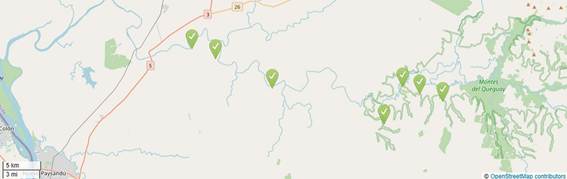
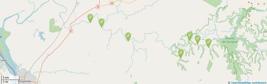
A total of 30 honey samples were collected, 16 from the 2022 harvest and 14 from the 2023 harvest. These were obtained from seven different georeferenced regions within Montes del Queguay in the department of Paysandú (Figure 1).
3.2 Melissopalynological analysis
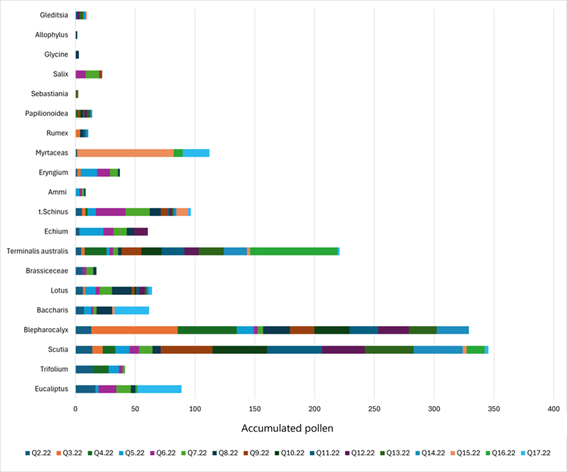
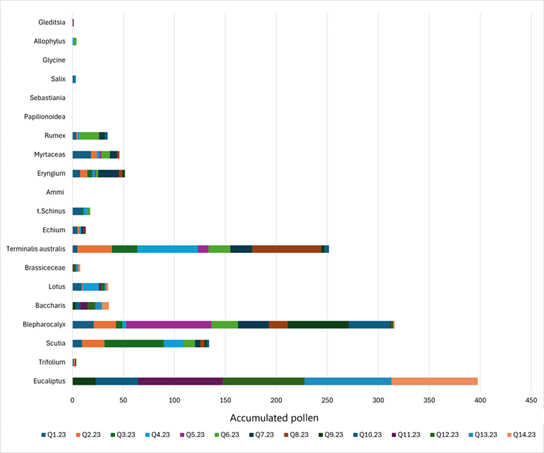
The two-year sampling conducted in the region yielded a significant representation of the floral characteristics of the area. Figure 2 and Figure 3 present the results, illustrating the accumulated pollen content for each sample.
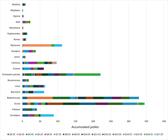
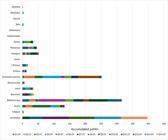
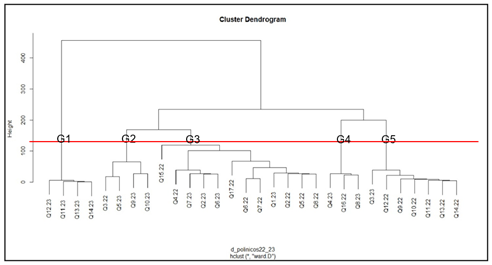
Using hierarchical cluster analysis with Euclidean distances, the dendrogram was analyzed, and five groups were identified based on the chosen cut-off point: G1 (Eucalyptus sp.), G2 (Blepharocalyx salicifolius), G3 (Multifloral), G4 (Terminalis australis), and G5 (Scutia buxifolia) (Figure 4).
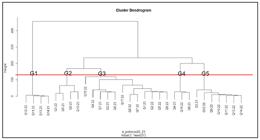
Dendrogram of the samples (Q2:17.22 from 2022 and Q1:14.23 from 2023) grouped according to their dominant pollen content by the Ward method
3.3 Physicochemical analysis
The results of the physicochemical analysis are presented in Table 1. Free acidity values ranged from 14.1 to 43.1 meq/Kg, the hydroxy-methylfurfural (HMF) content varied from 19.07 to 66.14 mg/Kg, and electrical conductivity measured from 693.2 to 1217.7 µS/cm. The pH of the honeys ranged from 3.84 and 5.09, and the color was measured between 73.3 and 119.7 mm Pfund, classifying the honeys as Amber on the Pfund Scale.
3.4 Total phenolic content
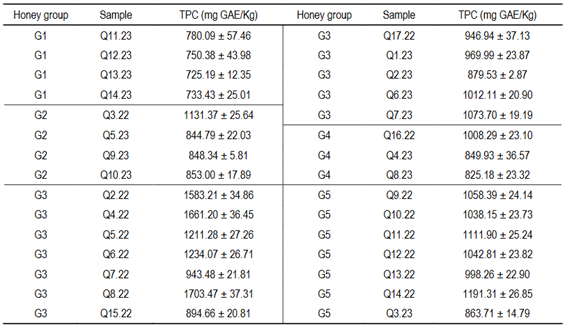
Table 2 presents the total phenolic content of the samples, with values ranging from 725.19 to 1703.47 mg of gallic acid per kilogram of honey.
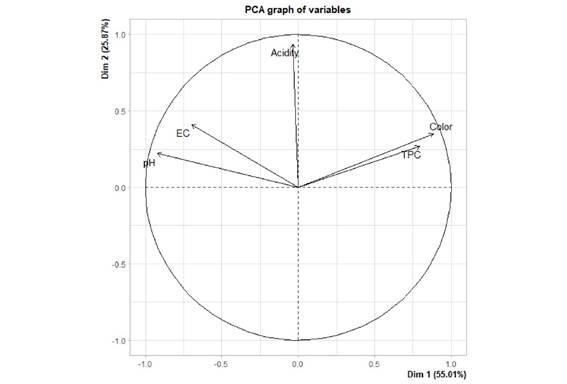
Additionally, physicochemical parameters -including pH, free acidity, electrical conductivity, and color- were analyzed alongside the total phenolic content (TPC) using Principal Component Analysis (PCA) (Figure 5 and Figure 6). This analysis aimed to assess whether the relationships among these parameters could effectively differentiate the honey samples studied, successfully accounting for 81% of the accumulated variance. A positive relationship was observed between the color parameters and TPC concerning component 1. In contrast, pH and conductivity showed a positive correlation with each other but a negative relationship with component 1. On the other hand, free acidity did not exhibit a significant correlation and appeared as an independent parameter from the others analyzed.
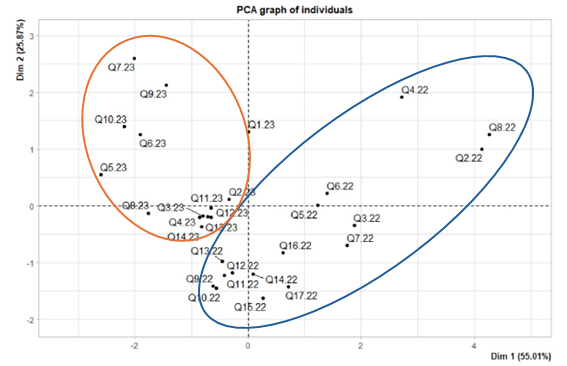
In the PCA sample distribution (Figure 6), it can be seen how samples Q2, Q4, and Q8 from 2022 clustered together due to their high TPC and color content. Samples from group G1 (Eucalyptus sp.) are more clustered in the lower left quadrant due to their lower TPC content, while Multifloral honeys (G3) are more dispersed due to the diversity in their composition. Additionally, groupings based on the harvest year of the samples are highlighted in red -2023- and blue -2022-.
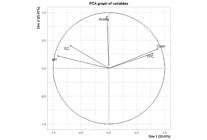
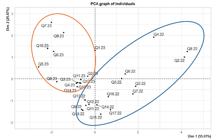
Principal component analysis illustrating honey samples based on the physicochemical studies
3.5 Antimicrobial activity
3.5.1 Minimum Inhibitory Concentration (MIC)
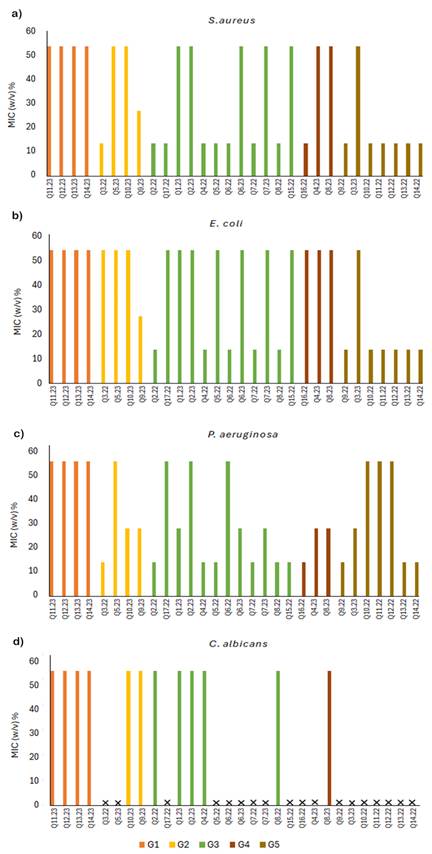
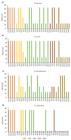
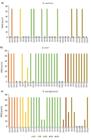
The results of the Minimum Inhibitory Concentration (MIC) tests are presented in Figure 7, detailing the antimicrobial activity of the 2022 and 2023 harvest samples. For S. aureus, the 2022 samples exhibited a general MIC of 13.3 % (w/v), except for sample Q15.22, which had a MIC of 53.3% (w/v). In 2023, most of the honeys samples displayed a MIC of 53.3% (w/v), except for Q9.23, which recorded a MIC of 26.7% (w/v). For E. coli, the 2022 honey samples had MIC values ranging from 13.3 to 53.3% (w/v), with 13.3% (w/v) values for samples Q2.22, Q4.22, Q6.22 - Q14.22, while samples Q3.22, Q5.22, Q15.22, and Q16.22 showed MIC values of 53.3% (w/v). In 2023, all samples had a MIC of 53.3% (w/v), except for Q9.23, which had a value of 26.7%. For P. aeruginosa, the MIC values in 2022 were 13.3% (w/v) for samples Q2.22 - Q5.22, Q7.22 - Q9.22, Q13.22 - Q16.22, while the remaining samples exhibited a MIC of 53.3% (w/v). In 2023, MIC values for P. aeruginosa ranged from 26.7 to 53.3% (w/v). Regarding C.albicans, the 2022 samples primarily showed no inhibitory effects at the evaluated concentrations, with the exception of Q2.22, Q4.22, and Q8.22, which had a MIC of 53.3% (w/v). In 2023, samples were classified into those that exhibited antimicrobial activity (MIC = 53.3%), Q1.23, Q2.23, Q6.23, Q11.23 - Q14.23, and those that demonstrated no inhibition at the evaluated concentrations.
According to the hierarchical cluster analysis, Group 1 (Eucalyptus sp.) exhibited high MIC values against all tested microorganisms. In contrast, Group 2 (B. salicifolius) displayed more variability, with several samples demonstrating MIC values as low as 26.7% (w/v) against S. aureus and E. coli. Group 3 (multifloral) also showed moderate antimicrobial activity, particularly against S. aureus and P. aeruginosa. Group 4 (T. australis) demonstrated lower MIC values against P. aeruginosa and S. aureus, suggesting greater efficacy, while MIC values for E. coli and C. albicans were predominantly at 53.3%(w/v). Finally, Group 5 (S. buxifolia) exhibited minimal antimicrobial activity, with most samples showing MIC values concentrated at 53.3% (w/v) or no inhibition against P. aeruginosa and C. albicans.
3.5.2 Minimum Microbicidal Concentration (MMC)
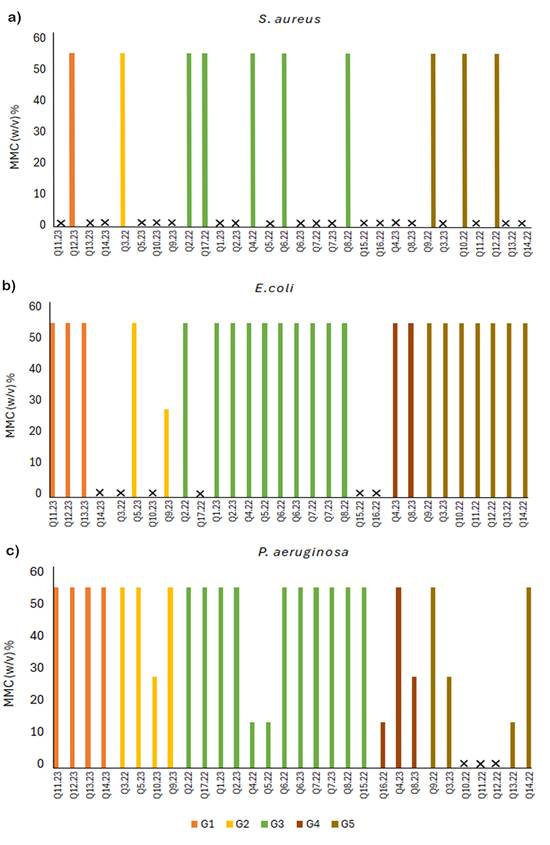
Results of the Minimum Microbicidal Concentration (MMC) for each sample against the evaluated bacteria are shown in Figure 8. The 2022 samples demonstrated bactericidal effects against the three bacteria strains, while most 2023 samples did not show bactericidal effects against S. aureus, with the exception of Q12.23. For E. coli, no significant differences were observed between the harvests, with MMC values of 53.3% for most samples. Exceptions included Q3.22, Q15.22, Q16.22, Q17.22, and Q14.23, which exhibited no bactericidal activity, and sample Q9.23, which showed a lower MMC value of 26.7% (w/v). The sensitivity of P. aeruginosa to the 2022 samples was variable, with MMC values ranging from 13.3 to 53.3% (w/v), while the 2023 samples exhibited MMC ranging from 26.7 to 53.3% (w/v). None of the samples demonstrated microbicidal activity against C. albicans at the evaluated concentrations.
According to the hierarchical cluster analysis, Group 4 (T. australis) did not exhibit microbicidal effect against S. aureus, whereas 42% of the samples from the Multifloral group (G3) demonstrated this effect. Some samples from Group 5 (S. buxifolia), Group 1 (E. sp.) and Group 2 (B. salicifolius) also exhibited a microbicidal effect against S. aureus. All samples from Group 5 displayed microbicidal activity against E. coli, while not all samples in the other groups showed this effect. Regarding P. aeruginosa, greater variability was observed in the results: all samples from Group 1 demonstrated high MMC values, while one sample from Group 2 recorded a value of 26.7%. Groups 3, 4, and 5 included some samples with lower MMC values, ranging from 26.7 to 13.3% (w/v), and three samples from Group 5 did not exhibit microbicidal activity against P. aeruginosa.
4. Discussion
The melissopalynological analysis underscored the significance of the region's native flora as a nectar source. Monofloral honeys were identified from native species such as Scutia buxifolia, Blepharocalyx salicifolius, and Terminalia australis, indicating that native plants play a crucial role in the ecosystem and that beekeeping may positively influence biodiversity preservation through pollination.
Approximately 60% of the analyzed samples contained a predominant pollen species, defined as constituting at least 37% of the total pollen identified in the sample. These findings suggest a strong dependence of bees on specific floral resources during the collection period, likely influenced by seasonal abundance or the attractiveness of these species33. Conversely, the remaining 40% of the samples were classified as multifloral, indicating a more balanced pollen composition without the clear dominance of a single floral species.
Among the groups analyzed, Group 1 was composed of four samples (Q11-Q14.23), and had an average of 84% of Eucalyptus sp. pollen, indicating a pronounced dependence of foraging bees on these exotic plantations. The high concentration of Eucalyptus sp. pollen suggests that these trees, likely located near the protected area, served as a primary floral resource for the bees during the sampling period. This predominance may be partly attributed to the drought conditions recorded in the region, which prompted the Ministry of Livestock, Agriculture, and Fisheries to declare an agricultural emergency in October 2022, affecting several productive sectors, including beekeeping34. Under water stress conditions, the flowering of many native species is often reduced or delayed, while eucalyptus species, known for their high tolerance to these adverse conditions35)(36) , continue to bloom and provide nutritional resources. This likely led to an increased reliance of bees on Eucalyptus sp. as a food source, highlighting the significant influence of this introduced species on bee foraging dynamics
Group 2, comprising samples Q3.22, Q5.23, Q9.23, and Q10.23, averaged 66% of B. salicifolius pollen. This result underscores the importance of this native species in the floral supply of the study area and its relevance as a resource for honeybees. Meanwhile, the multifloral group G3 included 12 samples containing pollen from various species, both native and exotic, with a predominance of B. salicifolius, S. buxifolia, Schinus sp., and T. australis. This reflects the utilization of multiple floral resources, suggesting high floral richness and a preference for a varied diet among foraging. Group 4, consisting of samples Q4.23, Q16.22, and Q8.23, had an average of 67.5% T. australis pollen as predominant. This native species, commonly associated with riparian zones, provided a substantial source of floral resources during the fall period24.
Group 5, comprising seven samples (Q3.23, Q12.22, Q9.22, Q10.22, Q11.22, Q13.22, and Q14.22), contained an average of 44% S. buxifolia pollen. The high presence of this species in the honeys analyzed indicates its significance as a food source for bees in the region.
In terms of physicochemical properties, free acidity, moisture content, and hydroxymethylfurfural (HMF) content were evaluated in accordance with the National Food Regulations. Except for the HMF value in sample Q2.22 (HMF > 60 mg/kg), all results were within the established limits1. However, for electrical conductivity, which is not regulated by these standards, the obtained results exceeded the maximum value assigned for floral honeys by the Codex Alimentarius (≤ 800 µS/cm)37. Most of the honey samples studied exhibited values above this limit, aligning with studies that report conductivities greater than 1100 µS/cm in chestnut honeys38)(39) . In Uruguay, honeys sourced from natural forests and native flora have also been documented with conductivity values exceeding those established by the Codex Alimentarius39)(40)41. Notably, these honeys are not classified as honeydew honeys, as the significant presence of pollen in the samples indicates they are floral honeys. These results suggest a need for further study into of the characteristics of Uruguayan soils and their mineral content, which could influence the elevated conductivity values of the honeys relative to their geographic origin.
Concerning TPC, it exhibited significant variation among the honey sample groups analyzed, with values ranging from 725.19 to 1703.47 mg of gallic acid per kilogram of honey. These values are comparable to, or even exceed, those reported by previous studies42)(43)44, which also investigated the influence of polyphenol content on the antimicrobial activity of various honeys.
Among the groups analyzed, multifloral honeys (G3) stood out with the highest total phenolic content, significantly surpassing the monofloral Eucalyptus sp. honeys (G1). The floral complexity of Group 3 honeys may enhance the diversity of phenolic compounds, thereby improving their bioactive properties, which could lead to greater antioxidant and antimicrobial capacities43. In contrast, Groups G2 (B. salicifolius), G4 (T. australis), and G5 (S. buxifolia), composed of native flora honeys, exhibited intermediate TPC values that did not significantly differ from one another. This lack of significant differences may be attributed to the high standard deviation, reflecting intragroup variability. Principal Component Analysis (PCA) was performed on the results obtained for the physicochemical parameters (pH, free acidity, electrical conductivity, and color), along with TPC. In the PCA distribution (Figure 6), samples Q2, Q4, and Q8 from 2022 clustered together due to their high total phenolic content (TPC) and intense color, which correlated with their antibacterial activity against S. aureus, E. coli, and P. aeruginosa, as well as their inhibitory activity against C. albicans. Samples from Group G1 (Eucalyptussp.) were more tightly clustered in the lower left quadrant, reflecting their lower TPC levels, whereas multifloral honeys (G3) displayed greater dispersion due to their compositional diversity. Additionally, the red and blue clusters represent groupings by harvest year, highlighting physicochemical variability influenced by the climatic conditions of each year. The 2022 samples are associated with higher TPC and more intense coloration, along with lower EC, whereas the 2023 samples show lower TPC and color, but higher EC and pH values.
Regarding antimicrobial activity of the evaluated honey samples, it showed variations across different harvests and floral groupings, underscoring the influence of botanical diversity and annual variability on the MIC and MMC results. These factors appear to significantly impact honey’s efficacy in inhibiting and eliminating microorganisms due to fluctuations in their chemical compositions. Overall, most of the 2022 samples exhibited higher antimicrobial activity compared to those from 2023. Moreover, this range of concentrations aligns with the results obtained from honey samples of different botanical origins against the microorganisms evaluated in this study (S. aureus and P. aeruginosa, as reported by Bucekova and others44; S. aureus, P. aeruginosa, E. coli, and C. albicans, as reported by Bazaid and others8).
Similarly, the analysis of floral groups revealed that multifloral honeys and those from S. buxifolia (groups G3 and G5) presented a higher proportion of bactericidal activity against S. aureus. Another clinically relevant microorganism, E. coli, showed more consistent MIC and MMC results across harvests, with a MIC of 53.3% (w/v) in most samples from both years, indicating moderate efficacy compared to other honeys studied where the MIC range was between 6.25 and 50% (w/v)45. Additionally, the analysis of floral groups highlighted the bactericidal activity of S. buxifolia honeys against E. coli, emphasizing the antimicrobial properties of these honeys. MIC results against P. aeruginosa were similar to those reported by Bazaid and others8, Bucekova and others44, and Faúndez and others41. MMC values followed a similar pattern, with native species-pollen-rich groups (G2, G3, G4, and G5) presenting samples with lower values of 53.3% (w/v), which could indicate higher microbicidal efficacy from species like B. salicifolius, T. australis, S. buxifolia, and their mixes with other botanical species. Although Eucalyptus sp. samples exhibited inhibitory activity, none of them showed microbicidal activity against C. albicans under the evaluated conditions. These results align with previous studies indicating that the antifungal properties of honey are often more limited or require higher concentrations to be effective against yeasts8)(46)47.
5. Conclusions
The melissopalynological and physicochemical analysis of honey samples from Montes del Queguay highlights the crucial role of native flora, such as Scutia buxifolia, Blepharocalyx salicifolius, and Terminalia australis. The prevalence of Eucalyptus sp. in some samples further emphasizes the impact of exotic species, particularly under adverse conditions. The elevated electrical conductivity suggests that honey from this region may have distinct properties due to local soil mineral content, warranting further investigation. The statistical analysis revealed a clear differentiation of honey samples by TPC, color, and harvest year, which were linked to their antimicrobial activity. Overall, the antimicrobial efficacy was greater in the 2022 samples, with multifloral honeys and those from Scutia buxifolia showing the highest bactericidal activity against S. aureus and E. coli. However, the antifungal properties against C. albicans were limited.
This study underscores the influence of native floral resources on honey composition, as well as the importance of environmental factors in shaping honey’s physicochemical and antimicrobial properties. These findings offer valuable insights into the ecological and potential therapeutic applications of regional honeys, highlighting the need for further research into their unique properties.
Acknowledgements:
We gratefully acknowledge the support and guidance provided by BSc. Gloria Daners from the School of Science of the University of the Republic (Udelar). This work was supported by the Directorate of Research and Development of the Technological University (UTEC), Uruguay, and the University of the Republic (Udelar), Uruguay, and the Program for the Development of Basic Sciences (Pedeciba).
References
-
1. Reglamento Bromatológico Nacional: Decreto Nº 315/994 de fecha 05/07/1994 anotado y concordado con apéndice informativo. 5a ed. Montevideo: IMPO; 2012 (cited 2025 Jan 02). 648p. Available from: Available from: https://montevideo.gub.uy/sites/default/files/biblioteca/bromatologico5a.edicion.pdf
» https://montevideo.gub.uy/sites/default/files/biblioteca/bromatologico5a.edicion.pdf -
2. Nolan VC, Harrison J, Cox JAG. Dissecting the antimicrobial composition of honey. Antibiotics (Basel). 2019;8(4):251. Doi: 10.3390/antibiotics8040251.
» https://doi.org/10.3390/antibiotics8040251 -
3. Mudenda S, Hikaambo CN, Chabalenge B, Mfune RL, Mufwambi W, Ngazimbi M, Matafwali S, Daka V. Antibacterial activities of honey against Escherichia coli and Staphylococcus aureus: a potential treatment for bacterial infections and alternative to antibiotics. J Pharmacogn Phytochem. 2023;12(3):6-13. Doi: 10.22271/phyto.2023.v12.i3a.14655.
» https://doi.org/10.22271/phyto.2023.v12.i3a.14655 -
4. WHO. WHO methods and data sources for country-level causes of death 2000-2021 (Internet). 2024 (cited 2025 Jan 02). 55p. Available from: Available from: https://cdn.who.int/media/docs/default-source/gho-documents/global-health-estimates/ghe2021_cod_methods.pdf?sfvrsn=dca346b7_1
» https://cdn.who.int/media/docs/default-source/gho-documents/global-health-estimates/ghe2021_cod_methods.pdf?sfvrsn=dca346b7_1 -
5. Pandey R, Mishra SK, Shrestha A. Characterisation of ESKAPE pathogens with special reference to multidrug resistance and biofilm production in a Nepalese hospital. Infect Drug Resist. 2021;14:2201-12. Doi: 10.2147/IDR.S306688.
» https://doi.org/10.2147/IDR.S306688 -
6. WHO fungal priority pathogens list to guide research, development, and public health action (Internet). Geneva: WHO ; 2022 (cited 2025 Jan 02). 33p. Available from: Available from: https://www.who.int/publications/i/item/9789240060241
» https://www.who.int/publications/i/item/9789240060241 -
7. Raffaelli S, Abreo E, Altier N, Vázquez Á, Alborés S. Bioprospecting the antibiofilm and antimicrobial activity of soil and insect gut bacteria. Molecules. 2022;27(6):2002. Doi: 10.3390/molecules27062002.
» https://doi.org/10.3390/molecules27062002 -
8. Bazaid AS, Aldarhami A, Patel M, Adnan M, Hamdi A, Snoussi M, Qanash H, Imam M, Monjed MK, Khateb AM. The antimicrobial effects of saudi sumra honey against drug resistant pathogens: phytochemical analysis, antibiofilm, anti-quorum sensing, and antioxidant activities. Pharmaceuticals (Basel). 2022;15(10):1212. Doi: 10.3390/ph15101212.
» https://doi.org/10.3390/ph15101212 -
9. Schencke C, Vásquez B, Sandoval C, Del Sol M. El rol de la miel en los procesos morfofisiológicos de reparación de heridas. Int J Morphol. 2016;34(1):385-95. Doi: 10.4067/s0717-95022016000100056.
» https://doi.org/10.4067/s0717-95022016000100056 -
10. Escuredo O, Silva LR, Valentão P, Seijo MC, Andrade PB. Assessing Rubus honey value: pollen and phenolic compounds content and antibacterial capacity. Food Chem. 2012;130(3):671-8. Doi: 10.1016/j.foodchem.2011.07.107.
» https://doi.org/10.1016/j.foodchem.2011.07.107 -
11. Johnston M, McBride M, Dahiya D, Owusu-Apenten R, Nigam PS. Antibacterial activity of Manuka honey and its components: an overview. AIMS Microbiol. 2018;4(4):655-64. Doi: 10.3934/microbiol.2018.4.655.
» https://doi.org/10.3934/microbiol.2018.4.655 -
12. Stefanis C, Stavropoulou E, Giorgi E, Voidarou CC, Constantinidis TC, Vrioni G, Tsakris A. Honey's antioxidant and antimicrobial properties: a bibliometric study. Antioxidants (Basel). 2023;12(2):414. Doi: 10.3390/antiox12020414.
» https://doi.org/10.3390/antiox12020414 -
13. Nishio EK, Ribeiro JM, Oliveira AG, Andrade CG, Proni EA, Kobayashi RK, Nakazato G. Antibacterial synergic effect of honey from two stingless bees: Scaptotrigona bipunctata Lepeletier, 1836, and S. postica Latreille, 1807. Sci Rep. 2016;6:21641. Doi: 10.1038/srep21641.
» https://doi.org/10.1038/srep21641 - 14. Márquez J, Vásquez P, Carvajal F, Díaz I, Castillo C. Antimicrobial activity of honeys from Apis mellifera L. produced in the Region del Maule, Chile, against Escherichia coli, Staphylococcus aureus, and Candida albicans. Cienc Tecnol Aliment. 2014;10:75-82.
- 15. Montenegro G, Salas F, Peña RC. Actividad antibacteriana y antifúngica de mieles monoflorales de Quillaja saponaria, especie endémica de Chile. Phyton. 2009;78:141-6.
-
16. Feknous N, Boumendjel M. Natural bioactive compounds of honey and their antimicrobial activity. Czech J Food Sci. 2022;40(3):163-78. Doi: 10.17221/247/2021-cjfs.
» https://doi.org/10.17221/247/2021-cjfs -
17. Combarros-Fuertes P, Fresno JM, Estevinho MM, Sousa-Pimenta M, Tornadijo ME, Estevinho LM. Honey: another alternative in the fight against antibiotic-resistant bacteria? Antibiotics (Basel) . 2020;9(11):774. Doi: 10.3390/antibiotics9110774.
» https://doi.org/10.3390/antibiotics9110774 -
18. Sindi A, Chawn MVB, Hernandez ME, Green K, Islam MK, Locher C, Hammer K. Anti-biofilm effects and characterisation of the hydrogen peroxide activity of a range of Western Australian honeys compared to Manuka and multifloral honeys. Sci Rep. 2019;9(1):17666. Doi: 10.1038/s41598-019-54217-8.
» https://doi.org/10.1038/s41598-019-54217-8 -
19. Estevinho L, Pereira AP, Moreira L, Dias LG, Pereira E. Antioxidant and antimicrobial effects of phenolic compounds extracts of Northeast Portugal honey. Food Chem Toxicol. 2008;46(12):3774-9. Doi: 10.1016/j.fct.2008.09.062.
» https://doi.org/10.1016/j.fct.2008.09.062 -
20. Bisang R, Lachman J, López A, Pereyra M, Tacsir E. Primeros pasos hacia la diferenciación de la producción de miel uruguaya. (place unknown): BID; 2022. 53p. Doi: 10.18235/0004216.
» https://doi.org/10.18235/0004216 - 21. Montenegro G, Pizarro R, Avila G, Castro R, Ríos C. Origen botánico y propiedades químicas de las mieles de la región mediterránea árida de Chile. Cienc Investig Agrag. 2003;30(3):161-74.
-
22. International Trade Centre. Lista de los países exportadores para el producto seleccionado en 2023: Producto 0409 Miel natural. In: Trade Map: estadísticas del comercio para el desarrollo internacional de las empresas (Internet). Geneva: ITC; (cited 2025 Jan 02). Available from: https://www.trademap.org/Country_SelProduct.aspx?nvpm=3%7c%7c%7c%7c%7c0409%7c%7c%7c4%7c1%7c1%7c2%7c1%7c1%7c2%7c1%7c1%7c1
» https://www.trademap.org/Country_SelProduct.aspx?nvpm=3%7c%7c%7c%7c%7c0409%7c%7c%7c4%7c1%7c1%7c2%7c1%7c1%7c2%7c1%7c1%7c1 -
23. Tamaño G, Cora S. Caracterización y valorización de mieles de un área protegida de Uruguay. INNOTEC. 2022;23:e598. Doi: 10.26461/23.03.
» https://doi.org/10.26461/23.03 - 24. Brussa C, Grela I. Flora arbórea del Uruguay: con énfasis en las especies de Rivera y Tacuarembó. Montevideo: COFUSA; 2007. 544p.
- 25. Louveaux J, Vorwohl G. Methods of melissopalynology. Bee World. 1970;51(3):125-38.
-
26. Bogdanov S. Harmonised methods of the International Honey Commission (Internet). (place unknown): International Honey Commission; 2009 (cited 2025 Jan 02). 63p. Available from: Available from: https://www.ihc-platform.net/ihcmethods2009.pdf
» https://www.ihc-platform.net/ihcmethods2009.pdf -
27. United States standards for grades of extracted honey (Internet). Washington: USDA; 1985 (cited 2025 Jan 02). 12p. Available from: Available from: https://www.ams.usda.gov/sites/default/files/media/Extracted_Honey_Standard%5B1%5D.pdf
» https://www.ams.usda.gov/sites/default/files/media/Extracted_Honey_Standard%5B1%5D.pdf -
28. Singleton VL, Rossi JA. Colorimetry of total phenolics with phosphomolybdic-phosphotungstic acid reagents. Am J Enol Vitic. 1965;16:144-58. Doi: 10.5344/ajev.1965.16.3.144.
» https://doi.org/10.5344/ajev.1965.16.3.144 -
29. Sancho MT, Pascual-Maté A, Rodríguez-Morales E, Osés SM, Escriche I, Periche Á, Fernández-Muiño MA. Critical assessment of antioxidant-related parameters of honey. Int J Food Sci Technol. 2016;51(1):30-6. Doi: 10.1111/ijfs.12988.
» https://doi.org/10.1111/ijfs.12988 - 30. Clinical and Laboratory Standards Institute. Methods for dilution antimicrobial susceptibility tests for bacteria that grow aerobically: approved standard. 10th ed. Wayne: CLSI; 2015. 92p.
- 31. Clinical and Laboratory Standards Institute. Reference method for broth dilution antifungal susceptibility testing of filamentous fungi: approved standard. 3rd ed. Wayne: CLSI ; 2017. 14p.
-
32. Estevez MB, Casaux ML, Fraga M, Faccio R, Alborés S. Biogenic silver nanoparticles as a strategy in the fight against multi-resistant salmonella enterica isolated from dairy calves. Front Bioeng Biotechnol. 2021;9:644014. Doi: 10.3389/fbioe.2021.644014.
» https://doi.org/10.3389/fbioe.2021.644014 -
33. Santos E. Fortalecimiento de las capacidades para la gestión ambientalmente adecuada de plaguicidas, incluyendo COPs (Internet). Montevideo: Ministerio de Salud; 2020 (cited 2025 Jan 02). 57p. Available from: Available from: https://bit.ly/3ZFF8St
» https://bit.ly/3ZFF8St -
34. Cortelezzi Á, Rava C, Gutiérrez Silva S, Mila F, Gorga L, Laguna H, Barboza N, Ackermann MN. Impactos del cambio climático en el sector agropecuario. In: Anuario OPYPA 2023 (Internet). Montevideo: MGAP; 2023 (cited 2025 Jan 02). 12p. Available from: Available from: https://descargas.mgap.gub.uy/OPYPA/Anuarios/Anuarioopypa2023/estudios/1/e1web/1EImpactos.pdf
» https://descargas.mgap.gub.uy/OPYPA/Anuarios/Anuarioopypa2023/estudios/1/e1web/1EImpactos.pdf -
35. Corbella E, Cozzolino E, Ramallo G, Maidana M. Conjugar criterios y esfuerzos para fomentar prácticas agropecuarias que tengan en cuenta la biodiversidad, de la cual tanto depende la apicultura: calidad de mieles de Uruguay. El País Agropecuario (Internet). 2002 (cited 2025 Jan 02);8(92):25-8. Available from: Available from: https://ainfo.inia.uy/digital/bitstream/item/10611/1/92.pdf
» https://ainfo.inia.uy/digital/bitstream/item/10611/1/92.pdf -
36. Robinson N, Harper RJ, Smettem KRJ. Soil water depletion by Eucalyptus spp. integrated into dryland agricultural systems. Plant Soil. 2006;286:141-51. Doi: 10.1007/S11104-006-9032-4.
» https://doi.org/10.1007/S11104-006-9032-4 -
37. FAO, WHO. Codex Alimentarius: general requirements (food hygiene) (Internet). Rome: FAO; 2001 (cited 2025 Jan 02). Available from: Available from: https://www.fao.org/fao-who-codexalimentarius
» https://www.fao.org/fao-who-codexalimentarius -
38. Ucurum O, Tosunoglu H, Takma Ç, Birlik PM, Berber M, Kolaylı S. Distinctive properties of the pine, oak, chestnut, and multifloral blossom and honeydew honeys. Eur Food Res Technol. 2024;250(7):1765-74. Doi: 10.1007/s00217-024-04520-0.
» https://doi.org/10.1007/s00217-024-04520-0 -
39. Sánchez-Martín V, Morales P, González-Porto AV, Iriondo-DeHond A, López-Parra MB, Del Castillo MD, Hospital XF, Fernández M, Hierro E, Haza AI. Enhancement of the antioxidant capacity of thyme and chestnut honey by addition of bee products. Foods. 2022;11(19):3118. Doi: 10.3390/foods11193118.
» https://doi.org/10.3390/foods11193118 -
40. Cracco P, Cabrera C, Cadenazzi M, Galietta G, Moreni A, Santos E, Zaccari F. Uruguayan honey from different regions: characterization and origin markers. Agrocienc Urug. 2022;26(1):e947. Doi: 10.31285/agro.26.947.
» https://doi.org/10.31285/agro.26.947 -
41. Faúndez X, Báez ME, Martínez J, Zúñiga-López MC, Espinoza J, Fuentes E. Evaluation of the generation of reactive oxygen species and antibacterial activity of honey as a function of its phenolic and mineral composition. Food Chem . 2023;426:136561. Doi: 10.1016/j.foodchem.2023.136561.
» https://doi.org/10.1016/j.foodchem.2023.136561 -
42. Kunat-Budzyńska M, Rysiak A, Wiater A, Grąz M, Andrejko M, Budzyński M, Bryś MS, Sudziński M, Tomczyk M, Gancarz M, Rusinek R, Ptaszyńska AA. Chemical composition and antimicrobial activity of new honey varietals. Int J Environ Res Public Health. 2023;20(3):2458. Doi: 10.3390/ijerph20032458.
» https://doi.org/10.3390/ijerph20032458 -
43. Alevia M, Rasines S, Cantero L, Sancho MT, Fernández-Muiño MA, Osés SM. Chemical extraction and gastrointestinal digestion of honey: influence on its antioxidant, antimicrobial and anti-inflammatory activities. Foods. 2021;10(6):1412. Doi: 10.3390/foods10061412.
» https://doi.org/10.3390/foods10061412 -
44. Bucekova M, Jardekova L, Juricova V, Bugarova V, Di Marco G, Gismondi A, Leonardi D, Farkasovska J, Godocikova J, Laho M, Klaudiny J, Majtan V, Canini A, Majtan J. Antibacterial activity of different blossom honeys: new findings. Molecules. 2019;24(8):1573. Doi: 10.3390/molecules24081573.
» https://doi.org/10.3390/molecules24081573 -
45. Brudzynski K, Abubaker K, St-Martin L, Castle A. Re-examining the role of hydrogen peroxide in bacteriostatic and bactericidal activities of honey. Front Microbiol. 2011;2:213. Doi: 10.3389/fmicb.2011.00213.
» https://doi.org/10.3389/fmicb.2011.00213 -
46. Faúndez X, Báez ME, Martínez J, Zúñiga-López MC, Espinoza J, Fuentes E. Evaluation of the generation of reactive oxygen species and antibacterial activity of honey as a function of its phenolic and mineral composition. Food Chem . 2023;426:136561. Doi: 10.1016/j.foodchem.2023.136561.
» https://doi.org/10.1016/j.foodchem.2023.136561 -
47. Fernandes L, Ribeiro H, Oliveira A, Sanches Silva A, Freitas A, Henriques M, Rodrigues ME. Portuguese honeys as antimicrobial agents against Candida species. J Tradit Complement Med. 2020;11(2):130-6. Doi: 10.1016/j.jtcme.2020.02.007.
» https://doi.org/10.1016/j.jtcme.2020.02.007