Population mapping and morphological variability of Eugenia involucrata (Myrtaceae, Myrteae) in Uruguay
Abstract:
Eugenia involucrata DC. (Myrtaceae, Myrteae), cereza de monte, cerejeira, is a subtropical species that inhabits Argentina, Brazil, Bolivia, Paraguay, and Uruguay. However, Uruguayan collections are scarce, and floristic reports indicate that its occurrence is sporadic, and the species has been categorized as a priority for conservation due to its rarity. This species produces edible fleshy fruits with excellent organoleptic and nutraceutical properties, positioning it as a native fruit with high potential in regional fruit-growing programs. The objective of this study is to verify the presence of Eugenia involucrata in Uruguay and to evaluate the morphological variability within the species’ southernmost distribution area. The Cuareim river basin was explored, and flowering herbarium specimens and fruit samples from identified populations were collected for morphological analysis. Descriptive measurements were obtained, and multivariate statistical analyses were conducted for 7 leaf variables, 19 flower variables, and 7 fruit variables. The results indicate low interpopulation variability at the southern edge of its distribution, although some morphological characteristics and phenological data distinguish these populations from those in other areas. The identified populations show a promising scenario for reproductive success and gene flow in the area, while also representing a native phytogenetic resource with unique characteristics that could be valuable for incorporation into fruit production systems.
Keywords:
biodiversity; native forests; flora; native fruits; phytogenetic resources
Resumen:
Eugenia involucrata DC. (Myrtaceae, Myrteae), cereza de monte, cerejeira, es una especie subtropical que habita en Argentina, Brasil, Bolivia, Paraguay y Uruguay. Las colectas uruguayas son escasas, los reportes florísticos indican una ocurrencia esporádica y fue categorizada como especie prioritaria para la conservación por su rara presencia. Posee frutos carnosos comestibles, con muy buenas condiciones organolépticas y nutracéuticas que la han posicionado como una especie frutal nativa de alto potencial en programas frutícolas de la región. El objetivo de este trabajo consistió en verificar la presencia de Eugenia involucrata en Uruguay y evaluar la diversidad morfológica que presenta en el área de distribución más austral para la especie. Se exploró el área de la cuenca del río Cuareim, se colectaron muestras de herbario en flor de las poblaciones identificadas y muestras de frutos para el análisis de la diversidad morfológica. Se obtuvieron medidas descriptivas y se realizó análisis estadístico multivariado para 7 variables de hojas, 19 de flores y 7 de frutos. Los resultados revelan baja variabilidad interpoblacional para el límite austral de su distribución, pero con algunas características particulares que las diferencian con los reportes para el resto del área, tanto a nivel morfológico como fenológico. Las poblaciones identificadas muestran un escenario promisorio para el éxito reproductivo y el flujo génico en el área, al mismo tiempo que representa un recurso fitogenético nativo con características particulares para incorporar a sistemas de producción frutícola.
Palabras clave:
biodiversidade; bosques nativos; flora; frutos nativos; recursos fitogenéticos
Resumo:
Eugenia involucrata DC. (Myrtaceae, Myrteae), cereja-do-mato, cerejeira, é uma espécie subtropical que habita Argentina, Brasil, Bolívia, Paraguai e Uruguai. As coletas uruguaias são escassas; os registros florísticos indicam uma ocorrência esporádica, e ela foi categorizada como uma espécie prioritária para a conservação devido à sua rara presença. Possui frutos carnosos comestíveis com excelentes propriedades organolépticas e nutracêuticas, que a posicionaram como uma espécie frutífera nativa com alto potencial em programas frutícolas da região. O objetivo deste estudo foi verificar a presença de Eugenia involucrata no Uruguai e avaliar a variabilidade morfológica que apresenta na área de distribuição mais austral da espécie. A área da bacia do Rio Cuareim foi explorada, exemplares de herbário em flor e amostras de frutos foram coletadas nas populações identificadas para a análise da diversidade morfológica. Medidas descritivas foram obtidas, e análise estatística multivariada foi realizada para sete variáveis de folhas, 19 de flores e sete de frutos. Os resultados revelaram uma baixa variabilidade interpopulacional no limite sul da sua distribuição, mas com algumas características morfológicas e dados fenológicos que diferem dos registros para a restante área de distribuição. As populações identificadas apresentam um cenário promissor para o sucesso reprodutivo da espécie e o fluxo gênico na área, ao mesmo tempo em que representam um recurso fitogenético com características interessantes para a sua incorporação em sistemas de produção de frutíferas nativas.
Palavras-chave:
biodiversidade; florestas nativas; flora; frutíferas nativas; recursos fitogenéticos
1. Introduction
Among the 313 woody species that comprise the flora of Uruguay, Myrtaceae ranks second after Leguminosae, when considering both tree and shrub species1. Native Myrtaceae are represented by 26 species of both growth habits1, which are characterized by the production of fleshy, usually edible fruits, that typically retain remnants of the calyx at maturity. Within this family, the genus Eugenia P. Micheli ex L. is the second most species-rich genus among tree species worldwide2, with ca. 1100 species3 distributed from Mexico to Uruguay3)(4) . Eight species were initially reported for Uruguay5)(6) , but the number increased to ten after Hexachlamys was included in the synonymy of Eugenia 4)(7) .
Eugenia involucrata DC., commonly known as cereza de monte or cerejeira, is a subtropical species8 that naturally occurs in South America, specifically in Argentina, Brazil, Bolivia, Paraguay, and Uruguay9)(10)11. In floristic treatments for Uruguay, it is reported for the gallery forests along the Cuareim and Uruguay rivers in the departments of Artigas, Salto, and Paysandú5)(12) . However, Legrand notes that it is a sporadic species, almost always found in a “sterile” state (lacking flowers or fruits). Records of collections in national herbaria are extremely scarce and primarily date back to the early 20th century, with no specimens at MVHC, only two at MVFQ, one of them cultivated and the another without locality, four specimens at MVJB, five at MVM (two of which are duplicates of MVJB), and only one at MVFA herbarium. The specimens were collected on the shores of Cuareim river and Zapallo and Queguay island of Uruguay river. All of these lack reproductive structures, only one specimen from MVM includes fruits, though it is missing date and locality information. The limited records of this species in Uruguay have led to its presence being labeled as uncertain within the flora6. According to the IUCN Red List13, E. involucrata is categorized as of “Least Concern,” since it has a wide distribution in its natural area and the absence of evidence indicating current or future risks that could threaten it. On the other hand, Marchesi and others14 argue that it is a priority species for conservation in Uruguay, given its rarity in the country, and its restricted geographical distribution.
Eugenia involucrata is reported as either a shrub12 or a small tree5, reaching heights of 3 to 5 meters10. It has smooth, deciduous bark that ranges from brown to greenish. The leaves have petioles of 3-10 mm long, blades are 3.5-8×1.2-3 cm, elliptic-lanceolate to oblong leaves, with membranous to chartaceous consistency depending on their maturity. Flowers are subtended by small and early-deciduous bracts and prominent and persistent leafy bracteoles 10-15 mm long (highly variable in width), ovate to cordate. The sepals are 8-12×2.5-4 mm, oblong, remaining erect in the mature fruit. Fruits are berries, 1-1.5 cm long, oblong, oval, or ellipsoid, turning red to purplish-violet when ripe9)(10)12. Morphometric studies carried out by Bünger and others11 on 700 Brazilian accessions found that the species exhibits high morphological variability in its wide distribution in Brazil, occurring in diverse environments ranging from the coastal regions in the Atlantic Forest to gallery forests in the Cerrado. This wide distribution is also associated with significant phenological variation, with flowering periods ranging from August to November and fruiting from November to December9)(10) .
Eugenia involucrata has been identified as possessing medicinal and nutraceutical qualities across various plant organs, leading to its prominence in numerous research projects in recent years. Its leaves, seeds, and fruits contain high levels of phenolic compounds with significant antioxidant, antimicrobial, antifungal, antitumor, and anti-inflammatory activities15)(16)17)(18)19)(20)21)(22) . The favorable qualities of its fruits for fresh consumption and industrial use have established it as an interesting native fruit tree on a regional level8)(23)24)(25)26)(27)28. Evidence suggests that E. involucrata was part of the diet of the Guaraní indigenous people in the Misiones forests29, and it remains a subject of study as a native fruit tree in various institutions in the region8)(23)26)(27)30. In Uruguay, the species has been incorporated into the Native Fruit Tree Selection Program, conducted by the Facultad de Agronomía (Fagro), the Instituto Nacional de Investigación Agropecuaria (INIA), and the Ministerio de Ganadería Agricultura y Pesca (MGAP). In the Program’s introduction gardens, materials under agronomic evaluation28 have been obtained from exchanges with local residents and producers who cultivate the species as an ornamental and/or fruit curiosity. However, materials directly sourced from wild populations are lacking. To obtain these materials, it is crucial to identify areas where wild plants grow, understand the characteristics of their populations, and determine their occurrence in Uruguayan territory.
Our objectives are to identify wild populations of Eugenia involucrata in Uruguay and assess the morphological variability within the species’ southernmost distribution area. These results will contribute to determining the conservation status of the species in Uruguay and enhance local understanding of the morphological and phenological variability of these wild populations. This knowledge will be integrated into the agronomic evaluation gardens of the Native Fruit Tree Selection Program with commercial potential.
2. Materials and Methods
2.1 Mapping of Populations and Sample Collection
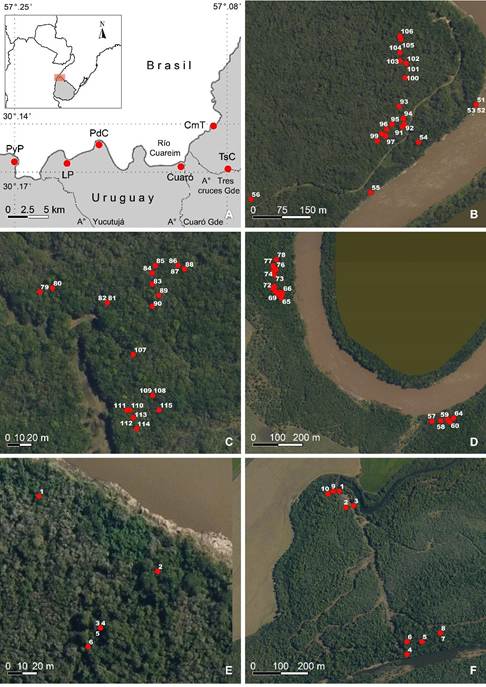
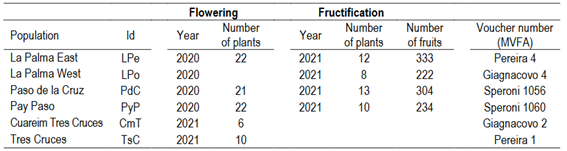
The potential occurrence sites of Eugenia involucrata in Uruguay were identified based on information gathered from local community members, prior collection records from national herbaria, and photointerpretation of the Cuareim river’s margins, along with its tributaries, the Tres Cruces and Cuaró streams in Artigas Department in northern Uruguay. Of the six visited sites -La Palma, Paso de la Cruz, Pay Paso, Cuareim Tres Cruces, Tres Cruces, and Cuaró-, populations of the species were found at the first five locations (Table 1). Geolocation of the collected plants was accomplished using open-source geographic information system QGIS31. Flowering periods were monitored, and in October 2020, flowering herbarium specimens (n > 20) were collected for morphometric analysis of vegetative and floral traits in three populations. Fruit development was monitored in the same populations, and in November 2021, fruits were collected for morphometric analysis. In La Palma population, fruits were collected from two sub-areas, La Palma East and West. Since the wild trees of the species are very tall, the woody stems were manually shaken to make the fruits fall onto a cloth spread on the ground. From the fallen fruits, the ripe ones were selected for further measurements. In October 2021, flowering samples were also collected in two new populations, although with a n < 20 due to the limited number of flowering plants present (Table 1). Herbarium vouchers from all populations were deposited at MVFA herbarium. Herbarium acronyms follow Thiers32.
2.2 Analysis of morphological variability
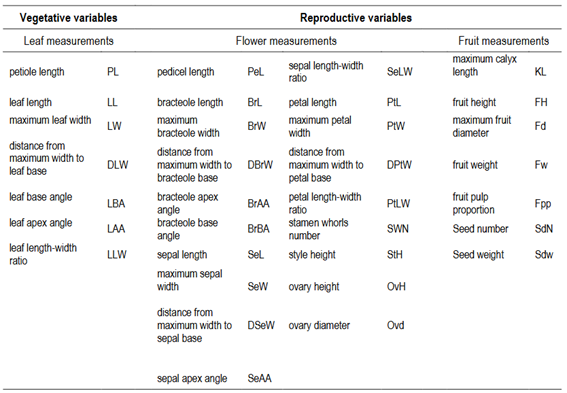
Vegetative variability was assessed using seven leaf traits (Table 2). Five leaves per plant were scanned at 600 dpi using an Epson Expression 10000XL scanner adapted for herbarium specimens. Measurements were then extracted from the images using the open-source vector graphics editor, Inkscape (https://inkscape.org). For the 19 floral variables (Table 2), up to five flowers per plant were selected, preferably in the anthesis stage, rehydrated in boiling water for one minute, arranged on a millimeter grid, and photographed for measurement. Linear measurements were calibrated using the millimeter grid, angles were measured using Inkscape, and ovary diameter and height were measured using a digital caliper (Precision measuring 0-150 mm ± 0.02 mm). For both leaf and floral traits, estimates followed the methods described by Ellis and others33. For fruit morphological variability, up to 30 ripe and undamaged fruits per plant were selected, and seven variables were measured (Table 2). Linear dimensions were obtained using a digital caliper, while fruit and seed mass were determined with an Ohaus Scout SPX123 precision scale (0-120 g ± 0.001 g). The pulp proportion was estimated as the difference between fruit and seed mass.
Descriptive statistics were calculated for all the variables analyzed, including mean, standard deviation, coefficient of variation, minimum and maximum values, both for the entire set of sites and for each of the five identified populations. Box plots were generated using means and standard deviations for each variable, categorized by population. Analysis of variance (ANOVA) was conducted on the variables listed in Table 2 to compare the effect of the three populations with 20 or more flowering specimens collected, with a significance level of 5% (α = 0.05). Type III sum of squares were used to account for the imbalance among populations. ANOVA assumptions were addressed with diagnostic plots and through statistical test. To check residuals normality Shapiro-Wilk test and QQ plot were performed. Variables that did not meet the normality assumption were log-transformed for analysis, and results were back-transformed for presentation. Homoscedasticity was held through Levene test and residual versus fitted values plot. In case of a significant result, mean comparisons were performed using Tukey's test. Letters indicating significant differences among populations were added to boxplot.
A multivariate statistical analysis was conducted for the vegetative, floral and fruit variables. A correlation matrix was generated using the Pearson correlation coefficient to establish the linear association between the measurements of each variable type. Correlations were classified as strong (≥ 0.7), moderate (0.3 to 0.7), and weak (≤ 0.3). From the correlation matrix, measurements for inclusion in the principal component analysis (PCA) were selected, avoiding those with strong correlations to facilitate clearer graphical representation in the Bi-plot. All statistical analyses were conducted using R statistical software34, using packages “agricolae”35, “car”36, “dplyr”37, “emmeans”38, “factoextra”39, “FactoMineR”40, “GGally”41 and “ggplot2”42.
Abbreviations used for the morphological variables of leaves, flowers and fruits analyzed in wild populations of Eugenia involucrata in Uruguay
3. Results
3.1 Localization of Wild Populations
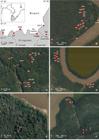
Among the six sites explored in the Cuareim river area, five contained wild populations of Eugenia involucrata (Figure 1), each with more than 50 plants and an estimated height range of five to nine meters. The distribution of these populations was not uniform across the surveyed area but occurred in discontinuous patches (Figure 1). The flowering period during both years of study was recorded in the second half of October, while fruiting occurred in the first half of November. The number of samples collected during flowering and for fruit analysis in each period is shown in Table 1.
3.2 Vegetative Variables
The variability of the seven vegetative characters analyzed, as expressed by the coefficient of variation, did not exceed 23% when considering all populations collectively (Table 3). The vegetative measurement with the greatest variation was petiole length, while the leaf length-width ratio exhibited the least variation (14%). This ratio is associated with leaf length, maximum leaf width, and the distance from maximum width to leaf base, all of which displayed similar coefficients of variation (18%, 20%, and 19%, respectively) and are indicative of leaf shape.
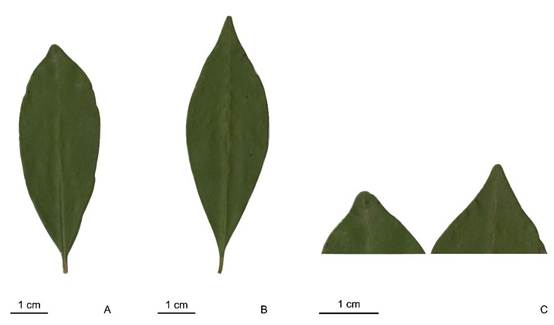
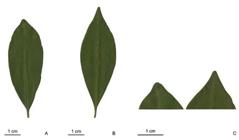
Leaf shape was elliptical in 79% of the samples analyzed across all populations, with the remaining samples exhibiting obovate shape (Figure 2). The base was acute in all samples, and the apex was also acute in nearly all (99.5%). The emarginate condition observed at a low frequency in the apex (0.5%) appears to be due to a growth anomaly rather than a natural morphological trait.
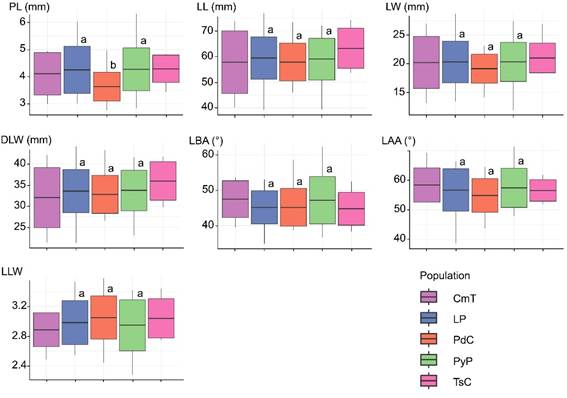
The mean and standard deviations of the vegetative variables were similar across populations (Figure 3). However, petiole length in the Paso de la Cruz population was significantly smaller than in the other populations. This difference emerged when comparing only those populations with more than 20 specimens analyzed.
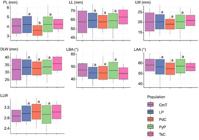
Mean and standard deviations for the seven leaf variables analyzed in five wild populations of Eugenia involucrata in Uruguay (CmT, Cuareim Tres Cruces; LP, La Palma; PdC, Paso de la Cruz; PyP, Pay Paso; TsC, Tres Cruces) Comparison of means was performed only for those populations with more than 20 plant specimens. Different letters indicate significant differences (p< 0.05) among them.
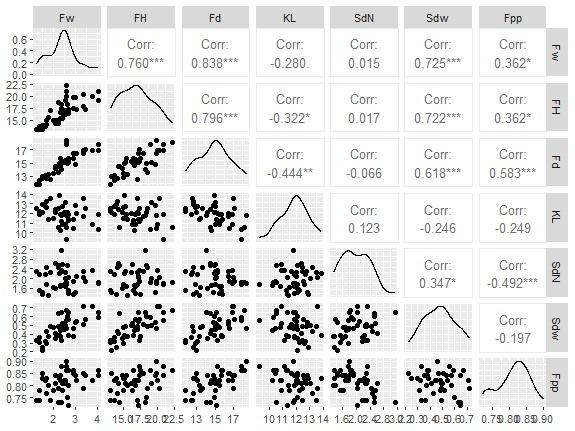
Correlation analysis of vegetative variables (see Figure S1 in the Supplementary material) revealed a strong positive correlation between leaf length and width (r=0.715) and between the distance from maximum width to leaf base (r=0.937). A moderate positive correlation between maximum leaf width and the distance from maximum width to leaf base (r=0.694), as well as between both leaf angles (r=0.634). Additionally, a strong negative correlation was found between the leaf length-width ratio and both the leaf base angle (r=-0.788) and apex angle (r=-0.869). These findings, along with the aforementioned positive correlations, further support the elliptical shape of the leaf.
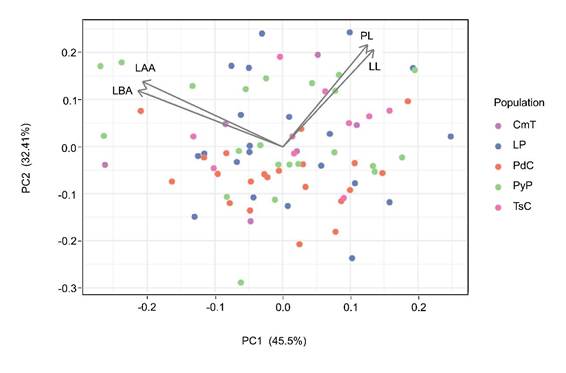
In the principal component analysis (PCA), components 1 and 2 explain 77.3% of the variability related to petiole length, leaf length, and leaf base and apex angles (Figure 4). The clustering of petiole length and leaf length suggests a positive correlation between these variables, similar to the relationship observed between the leaf apex and base angles. The distance of these variables from the origin indicates a strong representation when reducing the dimensionality to two components. In this analysis, the studied plants are generally distributed evenly across the four quadrants, though some populations, such as Paso de la Cruz, tend to cluster in the lower quadrants.
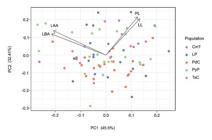
Biplot resulting from principal component analysis (PCA) for four of the seven vegetative variables analyzed in wild populations of Eugenia involucrata in Uruguay (CmT, Cuareim Tres Cruces; LP, La Palma; PdC, Paso de la Cruz; PyP, Pay Paso; TsC, Tres Cruces)
3.3 Floral Variables
The distance from the maximum width to the sepal base showed a coefficient of variation of 151% (Table 4), which can be attributed to the bimodal distribution of this variable, reflecting the variation in sepal base shape. Some sepals exhibited their maximum width at the base (truncated base), while others had it further from the base. The variability of the remaining 18 floral characters analyzed did not exceed 34% across all populations (Table 4). The highest variability was observed in pedicel length, followed by maximum bracteole width and ovary height, both with a coefficient of variation of 33%. The lowest variation was found in the androecium, specifically in the number of stamen whorls (11%).
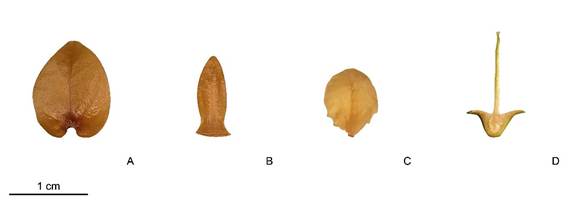
The bracteoles accompanying the flower were obovate in 99% of the samples analyzed and elliptical in the remaining 1% (Figure 5). The base was cordate in 93% of the observations, with obtuse and acute angles appearing at lower frequencies (6 and 1%, respectively). The apex angle was acute in 73% of the samples, followed by obtuse (26%), and slightly emarginate in just 1% of the cases. Regarding the morphology of the calyx and corolla, the sepals were ovate in 70% of the material, featuring a wide, truncated base and an acute apex (Figure 5). The petals were elliptical in 74% of the cases, followed by ovate (21%) and obovate (5%).
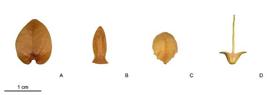
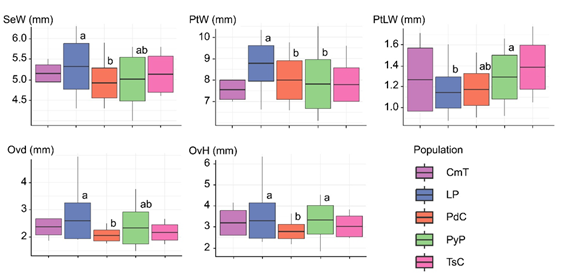
When comparing the means of floral variables among populations with more than 20 specimens analyzed, only five variables exhibited significant differences (Figure 6) and the remaining 14 did not (see Figure S2 in the Supplementary material). The maximum sepal width was significantly smaller in the Paso de la Cruz population. Conversely, the maximum petal width was significantly larger in the La Palma population, and the petal length-width ratio was significantly smaller in this population. Additionally, the ovary diameter and height were significantly smaller in the Paso de la Cruz population, which also showed less variability in these measurements.
With the exception of the petal length-width ratio, the La Palma population displayed opposite trends to those observed in the Paso de la Cruz population. In contrast, there were no significant differences between the Paso de la Cruz and Pay Paso populations for most of the measured variables, except for ovary height.
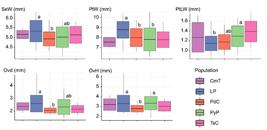
Mean and standard deviations for the five floral variables that showed significant differences between wild populations of Eugenia involucrata in Uruguay (CmT, Cuareim Tres Cruces; Lp, La Palma; PdC, Paso de la Cruz; PyP, Pay Paso; TsC, Tres Cruces)
The correlation analysis of floral variables revealed 153 potential correlations, of which 53 were statistically significant (see Figure S3 in the Supplementary material). Among these, the petal length and the distance from maximum width to the petal base exhibited a strong correlation (r=0.732), which is closely associated with the frequently observed elliptical shape. Of the remaining correlations, 34 were moderate and 21 were weak.
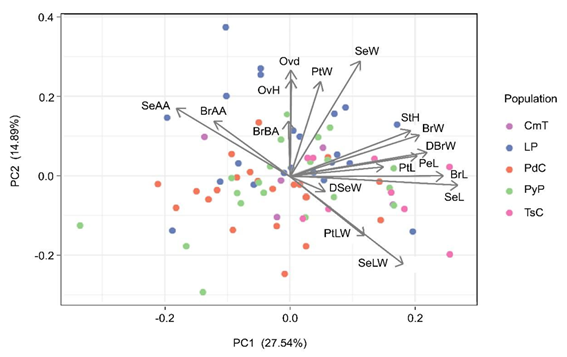
In the PCA (Figure 7), components 1 and 2 account for 38.2% of the total variability. Variables with low coefficients of variation, such as the number of stamen whorls, and the distance from maximum width to petal base, which is highly correlated with petal length and included in the PCA, were excluded from this analysis. Similar to the vegetative variables, the specimens do not exhibit clear distribution patterns in the quadrants. However, plants from the Tres Cruces population are predominantly located in the right quadrants, indicating that this population has the highest values for bracteole and sepal length, and the lowest values for bracteole and sepal apical angles.
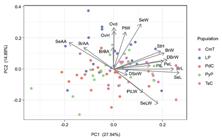
Biplot resulting from principal component analysis (PCA) for floral variables analyzed in wild populations of Eugenia involucrata in Uruguay (CmT, Cuareim Tres Cruces; LP, La Palma; PdC, Paso de la Cruz; PyP, Pay Paso; TsC, Tres Cruces)
3.4 Fruit variables
Among the seven fruit variables studied, seed weight exhibited the highest coefficient of variation, followed by the number of seeds, as shown in Table 5. These variables demonstrated the greatest variation across all populations and variables studied. In contrast, the lowest variability was observed in the fruit pulp proportion, maximum diameter, height, and sepal length.
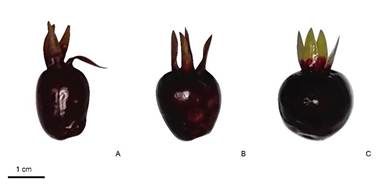
The fruit shape was cylindrical in 41% of the samples studied, followed by obovoid (29%) and spherical (14%) (Figure 8). Most fruits had one or two seeds, although the recorded range was between zero and seven seeds (Table 6).
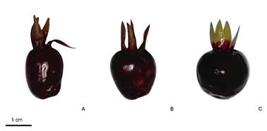
Absolute and relative frequency of seed number per fruit in Uruguayan wild populations of Eugenia involucrata
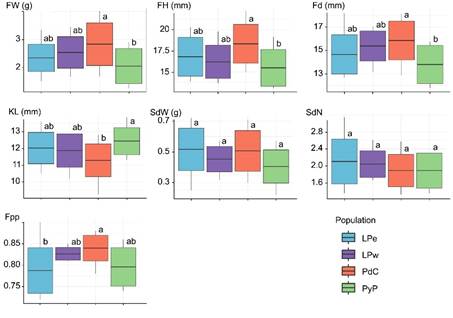
When comparing the means of the seven fruit variables among populations with more than 20 specimens analyzed (including eastern and western areas of the La Palma population), five variables showed significant differences in their means (Figure 9). Specifically, the Paso de la Cruz population exhibited significantly larger fruit size, including greater weight, height, and diameter, as well as higher fruit pulp proportion. Conversely, the sepal length was significantly smaller in this population. No significant differences were found between populations for the number or weight of seeds. For most variables (fruit weight, fruit height, fruit diameter, and calyx length), the Paso de la Cruz population exhibited a pattern opposite to that observed in the Pay Paso population.
In the correlation analysis of the fruit variables, 21 potential correlations were obtained, 13 of which were significant and ranged from strong to moderate (see Figure S4 in the Supplementary material). Five correlations were strong, including those between the fruit diameter and height, fruit diameter and weight, fruit weight and height, fruit weight and seed weight, and seed weight and fruit height. Of the eight moderate correlations, five were positive: seed weight correlated positively with fruit diameter and number of seeds, and fruit pulp proportion correlated positively with fruit weight, diameter, and height. The remaining three moderate correlations were negative, notably the one between fruit pulp proportion and seed number.
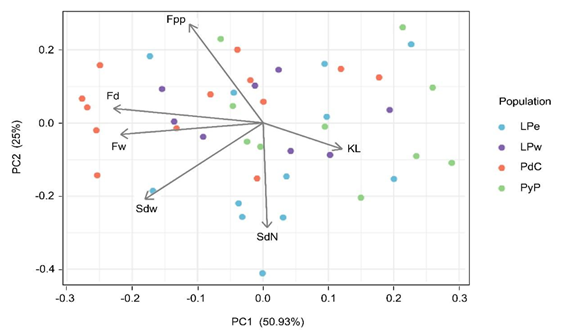
In the PCA (Figure 10), components 1 and 2 account for 75.93% of the variability. The fruit height variable was excluded from this analysis due to its high correlation with maximum fruit diameter and weight, which are included in the PCA. Similar to other variables, the fruit variables do not show clear distribution patterns in the quadrants. However, most observations in the Pay Paso population are located in the right quadrants (positive values of PC1), indicating higher values for the calyx length that persists in the mature fruit and lower values for fruit diameter, weight, and seed weight. Conversely, observations from the Paso de la Cruz population show an opposite pattern.
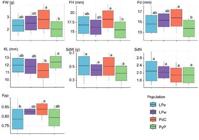
Mean and standard deviations for the seven fruit variables analyzed in four wild populations of Eugenia involucrata in Uruguay (LPe, La Palma east; LPw, La Palma west; PdC, Paso de la Cruz; PyP, Pay Paso)
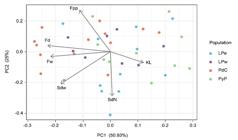
Biplot resulting from principal component analysis (PCA) for six of seven fruit variables analyzed in wild populations of Eugenia involucrata in Uruguay (LPe, La Palma east; LPw, La Palma west; PdC, Paso de la Cruz; PyP, Pay Paso)
4. Discussion
This study confirms the presence of wild populations of Eugenia involucrata in the explored area along the Cuareim river and its tributaries. Across its extensive distribution in South America, E. involucrata thrives in diverse forest types, showcasing high adaptability. In Brazil, it is found in semideciduous forests of the Atlantic Rainforest from Rio Grande do Sul to Bahia, in Araucaria forests in Paraná44, in the Cerrado Domain forests of Goiás, Mato Grosso, Minas Gerais, and São Paulo, and in the Espinhaço Range forests of Bahia11. In Argentina, it is prominent in the Misiones Forest29, and the hygrophilous forests of northern Corrientes province45.
In Uruguay, natural populations occur in floodplain forests of broadleaved trees46, which are periodically flooded by the overflow of the Cuareim river and its tributaries. The main tributaries, namely the Tres Cruces, Cuaró, and Yucutujá streams, are characterized by their torrential flows and dense vegetation47. Although the Tres Cruces and Cuaró streams were explored in the study, wild populations of E. involucrata were identified only along the Tres Cruces stream. This observation underscores the need for further sampling to better understand the species’ distribution in the region.
The identified populations distribution exhibit an aggregated distribution along the watercourses rather than a continuous one48, consistent with observations in the seasonal forests of Santa Maria, Rio Grande do Sul (Brazil), by Tonetto and others49. These findings conclusively confirm the presence of wild populations of E. involucrata in Uruguay.
The distribution of Eugenia involucrata is closely linked to the Río de la Plata basin through the Uruguay river. The presence of plants on the Queguay and Zapallo islands aligns with its capacity for extensive dispersion via river currents. Although occurrences on these islands are infrequent12)(50) , they reflect similar dispersal patterns observed in other woody species from the Paranaense flora carried by the Uruguay river5. Systematic expeditions are essential to assess the status of these island populations, including their size, genetic variability, and reproductive potential. Furthermore, it is crucial to confirm the presence of wild populations in the departments of Salto and Paysandú, where distribution records exist, but with no support from herbarium collections. Earlier reports for the species in these areas may have originated from ambiguous or repeated information in Legrand’s work12 on the distribution of Myrtaceae in Uruguay. Legrand assigns E. involucrata to Zone I of the Uruguay river, encompassing Artigas, Salto, Paysandú, and Río Negro, but describes the species as scarce, citing collections only from Artigas and Paysandú, based on the same herbarium specimens analyzed in this study.
The phenological data collected over two years reveal a shorter flowering-to-fruiting period for Eugenia involucrata in this study area compared to other regions of its distribution. In the area between 30°14'-30°17' south latitude and 57°08'-57°25' west longitude analyzed in this study, flowering occurred in the second half of October in both years. This timing contrasts with reports from other regions: July to August in the ombrophilous forest of Paraná25, early September in the Araucaria forests of Paraná51, September to November in Santa Catarina9, September in Rio Grande do Sul49, and August to November in Argentina10. In this study, fruiting occurred 20 to 30 days after flowering, in November. By contrast, in Paraná and Santa Catarina, fruiting occurs 45 to 60 days after flowering9)(25)51. While regional studies have identified Eugenia involucrata as one of the earliest fruiting species in Myrtaceae25)(26) , our findings suggest an even shorter flowering-to-fruiting interval. This difference may be associated with the climatic conditions prevailing at the southern limit of the species distribution.
The height of the trees in the identified populations surpasses the previously reported local maximum of five meters5)(10)12 and approaches the lower ranges reported for the flora of Santa Catarina by Legrand and Klein9. The studied morphological variables generally showed low interpopulation variability. Mean leaf dimensions, including petiole length and leaf size, fall within the ranges described for the species9)(10)12, except in the Paso de la Cruz population, which displayed significantly shorter petioles. Leaf shape was consistently elliptical across all populations, differing from the broader range of forms described for the species9)(10)12 and the pronounced morphological variability noted by Bünger and others11) in Brazil. Similarly, the leaf texture was uniformly chartaceous, consistent with southeastern Brazilian populations, and diverged from the coriaceous texture reported in northwestern Brazil11. This variation reflects Eugenia involucrata’s wide geographic distribution and the environmental heterogeneity associated with it52.
The flowers of Eugenia involucrata in the study area featured conspicuous bracteoles, ovate with a cordate base, which were larger in length and width than averages reported elsewhere9)(10)11)(12) . The sepals were similarly ovate with a truncate base, aligning with the trend of larger floral structures in the region. However, a detailed comparison of petal dimensions across different regions is still needed to confirm these observations. Among populations, significant differences in floral morphology included larger petals in the La Palma population and smaller sepals and ovaries in the Paso de la Cruz population. Despite variations in floral structures size, there was no direct correlation with fruit characteristics, as flowers and fruits were collected in different years.
Fruits from the Paso de la Cruz population exhibited significantly greater mass, height, diameter, and pulp proportion compared to other populations. Pulp proportion, fruit height and diameter showed the lowest coefficient of variation, whereas seed mass and fruit mass had the highest variability. This suggests that fruit mass is primarily influenced by seed mass, with minimal impact on pulp proportion. The number of seeds ranged from one to two, occasionally reaching up to seven, without significant differences between populations. Seed mass also remained consistent across populations. Fruit shapes were categorized into three -cylindrical, obovoid, and spherical-, with no variation in shape observed among populations.
Geographic variability is a hallmark of species with broad distribution ranges53. For Eugenia involucrata, Bünger and others11 documented significant gradient in leaf size, shape, consistency, and bracteole size across Brazil. However, morphological analyses of the three Uruguayan populations reveal low interpopulation variability at the southern edge of the species’ range. Despite this, these populations exhibit distinct morphological and phenological traits compared to populations in other regions. Understanding these differences is essential for assessing the genetic variability of wild populations of this commercially valuable species. This knowledge is also critical for evaluating its local conservation status and to implement future conservation and management strategies.
From an agronomic perspective, recognizing the geographic origin and sources of local variability is key54. The fruit variables analyzed in this study reveal several desirable traits for agronomic and commercial purposes, such as favorable fruit size, a high pulp proportion, and a low number of seeds, aligning with consumer preferences. Additionally, the presence of diverse fruit shapes offers potential for market differentiation and further agronomic evaluation. These insights are vital for maximizing the commercial value of Eugenia involucrata and supporting its integration into regional markets.
In terms of conservation, the Eugenia involucrata populations found in the floodplain forests of broadleaved trees along the Cuareim river hold significant conservation value. These forests, which have been barely studied1, likely harbour unexplored genetic and ecological variability. The E. involucrata populations in this region represent a vital genetic reservoir with unique traits distinguishing them from other populations. While the species is also recorded on the islands of the Uruguay river, the Cuareim river populations play a pivotal role in preserving genetic variability and ensuring reproductive success. The destruction of these habitats could disrupt gene flow between populations, leading to a loss of the southern genetic variability, critical to the species’ resilience and long-term survival.
5. Conclusions
Eugenia involucrata reaches the southernmost limit of its distribution in Uruguay, with sparse reports from the islands and riversides of the Uruguay river. These occurrences reflect the typical dispersal patterns of species from the Misiones Forest via rivers basins in the region. This study confirms the presence of wild populations in the floodplain forest of broadleaved trees along the Cuareim river. These populations, which are healthy and abundant, create a promising scenario for reproductive success and gene flow, supporting genetic continuity and adaptation at the southern range of the species’ distribution.
Although the analyzed morphological variables indicate low interpopulation variability, the Uruguayan populations exhibit distinctive traits compared to populations in other parts of the range, underscoring their phytogenetic importance. This variability is critical for conservation initiatives and offers valuable potential for incorporation into selection and breeding programs of native fruit trees.
To gain a comprehensive understanding of the species’ variability and to inform conservation strategies, systematic studies are necessary. These should focus on assessing the abundance, frequency, and genetic variability of Eugenia involucrata within this unique forest ecosystem.
Acknowledgements:
Authors thank the Comisión Sectorial de Investigación Científica (CSIC), Facultad de Agronomía of the Universidad de la República (Udelar), and the Centro Latinoamericano de Biotecnología (CABBIO) for the financial support. We also express our gratitude to Antolín Peralta, Gustavo Centomo and Robert Rodríguez for their invaluable assistance in the field trips. This study is part of final degree project of Agustín Giagnacovo and José Luis Pereira to obtain their Agronomist University Degree (Udelar) and they are equal first authors.
References:
-
1. Haretche F, Mai P, Brazeiro A. Woody flora of Uruguay: inventory and implication within the Pampean regio. Acta Bot Brasilica. 2012;26(3):537-52. Doi: 10.1590/S0102-33062012000300004.
» https://doi.org/10.1590/S0102-33062012000300004 -
2. Beeche E, Rivers M, Oldfield S, Smith PP. Global TreeSearch: the first complete global database of trees species and country distributions. J Sustain For. 2017;36(5):454-89. Doi: 10.1080/10549811.2017.1310049.
» https://doi.org/10.1080/10549811.2017.1310049 -
3. Mazine FF, Faria JEQ, Giaretta A, Vasconcelos T, Forest F, Lucas E. Phylogeny and biogeography of the hyper-diverse genus Eugenia (Myrtaceae: Myrteae), with emphasis on E. sect. Umbellatae, the most unmanageable clade. Taxon. 2018;67(4):752-69. Doi: 10.12705/674.5.
» https://doi.org/10.12705/674.5 -
4. Mazine FF, Souza VC, Sobral M, Forest F, Lucas E. A preliminary phylogenetic analysis of Eugenia (Myrtaceae: Myrteae), with a focus on Neotropical species. Kew Bull. 2014;69:9497. Doi: 10.1007/S12225-014-9497-X.
» https://doi.org/10.1007/S12225-014-9497-X - 5. Brussa CA, Grela IA. Flora arbórea del Uruguay: con énfasis en las especies de Rivera y Tacuarembó. Montevideo: Cofusa; 2007. 544p.
- 6. Jolochin G. Revisión de Myrtaceae Adans. de la Flora Uruguaya (bachelor's thesis). Montevideo (UY): Universidad de la República, Facultad de Agronomía; 2008. 200p.
-
7. Cruz F, Turchetto-Zolet AC, Veto N, Mondin CA, Sobral M, Almerão M, Margis R. Phylogenetic analysis of the genus Hexachlamys (Myrtaceae) based on plastid and nuclear DNA sequences and their taxonomic implications. Bot J Linn Soc. 2013;172:532-43. Doi: 10.1111/boj.12036.
» https://doi.org/10.1111/boj.12036 - 8. Raseira MCB, Antunes LEC, Trevisan R, Gonçalves ED. Espécies frutíferas nativas do sul do Brasil. Pelotas: Embrapa Clima Temperado; 2004. 124p.
- 9. Legrand D, Klein RM. Mirtaceae. In: Reitz PR. Flora Ilustrada Catarinense. I parte: Fasc.: Mirt. Itajaí: Conselho Nacional de Pesquisas; 1969. 216p.
- 10. Rotman AD. Las especies argentinas del género Eugenia (Myrtaceae). Bol Soc Argent Bot. 1995;31(1-2):69-93.
-
11. Bünger MO, Einsehlor P, Figueiredo MLN, Stehmann JR. Resolving species delimitations in the Eugenia involucrata group (Eugenia sect. Phyllocalyx - Myrtaceae) with morphometric analysis. Syst Bot. 2015;40(4):995-1002. Doi: 10.1600/036364415X690030.
» https://doi.org/10.1600/036364415X690030 - 12. Legrand D. Las Mirtáceas del Uruguay, III. Boletín Facultad Agronomía. 1968;(101):80p.
- 13. UICN. Categorías y criterios de la Lista Roja de la UICN: Version 3.1. 2nd ed. Gland: UICN; 2012. 34p.
- 14. Marchesi E, Alonso E, Brussa C, Delfino L, García M, Haretche F. Plantas vasculares. In: Soutullo A, Clavijo C, Martínez-Lanfranco JA, editors. Especies prioritarias para la conservación en Uruguay: vertebrados, moluscos continentales y plantas vasculares. Montevideo: SNAP; 2013. p. 27-72.
- 15. Marin R, Apel MA, Limberger RP, Raseira MCB, Pereira JFM, Zuanazzi JAS, Henriques A. Volatile components and antioxidant activity from some Myrtaceous fruits cultivated in Southern Brazil. Lat Am J Pharm. 2008;27(2):172-7.
- 16. Bagetti M, Facco EMP, Piccolo J, Hirsch GE, Rodríguez-Amaya D, Kobori CN, Vizzotto M, Emanuelli T. Physiochemical characterization and antioxidant capacity of pitanga fruits (Eugenia uniflora L.). Ciénc Tecnol Aliment. 2011;31(1):147-54.
-
17. Infante J, Rosalen PL, Lazarini JG, Franchin M, Alencar SM. Antioxidant and anti-inflammatory activities of unexplored Brazilian native fruits. PLoS One. 2016;11(4):e0152974. Doi: 10.1371/journal.pone.0152974.
» https://doi.org/10.1371/journal.pone.0152974 -
18. Nicácio AE, Rotta EM, Boeing JS, Barizão EO, Kimura E, Visentainer JV, Maldaner L. Antioxidant activity and determination of phenolic compounds from Eugenia involucrata DC. fruits by UHPLC-MS/MS. Food Anal Methods. 2017;10:2718-28. Doi: 10.1007/s12161-017-0840-3.
» https://doi.org/10.1007/s12161-017-0840-3 -
19. Sato TS, Medeiros TM, Hoscheid J, Prochnau IS. Proposta de formulação contendo extrato de folhas de Eugenia involucrata e análise da atividade antimicrobiana. Rev Fitos. 2018;12(1):68-82. Doi: 10.5935/2446-4775.20180007.
» https://doi.org/10.5935/2446-4775.20180007 -
20. Girardelo JR, Munari EL, Dallorsoleta JCS, Cechinel G, Goetten ALF, Sales LR, Reginatto FH, Chaves VC, Smaniotto FA, Somacal S, Emanuelli T, Benech JC, Soldi C, Winter E, Conterato GMM. Bioactive compounds, antioxidant capacity and antitumoral activity of ethanolic extracts from fruits and seeds of Eugenia involucrata DC. Food Res Int. 2020;137:109615. Doi: 10.1016/j.foodres.2020.109615.
» https://doi.org/10.1016/j.foodres.2020.109615 -
21. Schulz M, Seraglio SKT, Brugnerotto P, Gonzaga LV, Costa ACO, Fett R. Composition and potential health effects of dark-colored underutilized Brazilian fruits: a review. Food Res Int . 2020;137:109744. Doi: 10.1016/j.foodres.2020.109744.
» https://doi.org/10.1016/j.foodres.2020.109744 -
22. Toledo AG, Souza JGL, Silva JPB, Favreto WAJ, Costa WF, Pinto FGS. Chemical composition, antimicrobial and antioxidant activity of the essential oil of leaves of Eugenia involucrata DC. Biosci J. 2020;36(2):568-77. Doi: 10.14393/BJ-v36n2a2020-48096.
» https://doi.org/10.14393/BJ-v36n2a2020-48096 -
23. Donadio LC, Moro FV. Potential of Brazilian Eugenia Myrtaceae: as ornamental and as a fruit crop. Acta Hort. 2004;(632):65-8. Doi: 10.17660/ActaHortic.2004.632.7.
» https://doi.org/10.17660/ActaHortic.2004.632.7 -
24. Vignale B, Bisio L. Selección de frutales nativos en Uruguay. Agrocienc Urug. 2005;9(1-2):35-9. Doi: 10.31285/AGRO.9.1383.
» https://doi.org/10.31285/AGRO.9.1383 - 25. Rego GM, Lavoranti OJ, Neto AA. Floração e frutificação da cerejeira-do-mato, em áreas fragmentadas da floresta ombrófila mista, no município de Colombo, PR. Colombo: Embrapa Florestas, 2006. 8p.
- 26. Degenhardt J, Franzon RC, Costa RR. Cerejeira-do-mato (Eugenia involucrata). Pelotas: Embrapa Clima Temperado , 2007. 31p.
- 27. Carvalho PER. Cerejeira-Eugenia involucrata. Colombo: Embrapa Florestas , 2009. 8p.
- 28. Vignale B, Cabrera D, Rodríguez P, Machado G. Selección de frutales nativos en Uruguay. Hortic Argent. 2016;35(87):19-29.
-
29. Martínez-Crovetto R. La alimentación entre los indios guaraníes de Misiones (República Argentina). Etnobiológica. 1968;4:1-24. Doi: 10.30972/etn.042151.
» https://doi.org/10.30972/etn.042151 - 30. Franzon RC, Raseira MCB. Características fenológicas e morfológicas, floração e maturação dos frutos de mirtáceas frutíferas nativas do sul do Brasil. In: Raseira MCB, Antunes LEC, Trevisan R, Gonçalves ED, editors. Espécies frutíferas nativas do sul do Brasil . Pelotas: Embrapa Clima Temperado ; 2004. p. 29-48.
-
31. QGIS. Geographic Information System Web Site (Internet). (Place unknown): QGIS Association; (cited 2025 May 27). Available from: https://qgis.org/es/site/
» https://qgis.org/es/site/ -
32. Index Herbariorum (Internet). New York: The New York Botanical Garden; (cited 2025 May 27). Available from: https://sweetgum.nybg.org/science/ih/
» https://sweetgum.nybg.org/science/ih/ - 33. Ellis B, Daly DC, Hickey LJ, Johnson KR, Mitchell JD, Wilf P, Wing SL. Manual of leaf architecture. New York: The New York Botanical Garden ; 2009. 201p.
-
34. R Core Team. R: a language and environment for statistical computing (Internet). Vienna: R Foundation for Statistical Computing; 2022 (cited 2025 May 27). Available from: Available from: https://www.R-project.org/
» https://www.R-project.org/ -
35. de Mendiburu F. agricolae: statistical procedures for agricultural research (Internet). Version 1.3-7. 2023 (cited 2025 May 27). Available from: Available from: https://CRAN.R-project.org/package=agricolae
» https://CRAN.R-project.org/package=agricolae - 36. Fox J, Weisberg S. An R companion to applied regression. 3rd ed. Thousand Oaks: Sage; 2019. 608p.
-
37. Wickham H, François R, Henry L, Müller K, Vaughan D. dplyr: a grammar of data manipulation (Internet). Version 1.1.4. 2023 (cited 2025 May 27). Available from: Available from: https://CRAN.R-project.org/package=dplyr
» https://CRAN.R-project.org/package=dplyr -
38. Lenth R. emmeans: estimated marginal means, aka least-squares means (Internet). Version 1.8.1-1. 2022 (cited 2025 May 27). Available from: Available from: https://CRAN.R-project.org/package=emmeans
» https://CRAN.R-project.org/package=emmeans -
39. Kassambara A, Mundt F. factoextra: extract and visualize the results of multivariate data analyses (Internet). Version 1.0.7. 2020 (cited 2025 May 27). Available from: Available from: https://CRAN.R-project.org/package=factoextra
» https://CRAN.R-project.org/package=factoextra -
40. Lê S, Josse J, Husson F. FactoMineR: an R package for multivariate analysis. J Stat Softw. 2008;25(1):1-18. Doi: 10.18637/jss.v025.i01.
» https://doi.org/10.18637/jss.v025.i01 -
41. Schloerke B, Cook D, Larmarange J, Briatte F, Marbach M, Thoen E, Elberg A, Crowley J. GGally: extension to 'ggplot2' (Internet). Version 2.2.1. 2024 (cited 2025 May 27). Available from: Available from: https://CRAN.R-project.org/package=GGally
» https://CRAN.R-project.org/package=GGally - 42. Wickham H. ggplot2: elegant graphics for data analysis. New York: Springer Verlag; 2016. 260p.
-
43. IDEuy: Infraestructura de Datos Espaciales de Uruguay (Internet). Montevideo: gub.uy; (cited 2025 May 27). Available from: https://www.gub.uy/infraestructura-datos-espaciales/geoportal-ide
» https://www.gub.uy/infraestructura-datos-espaciales/geoportal-ide - 44. Lorenzi H. Árvores brasileiras: manual de identificação e cultivo de plantas arbóreas nativas do Brasil. 6a ed. São Paulo: Instituto Plantarum de Estudos de Flora; 2014. 384p.
- 45. Barrett WH, Tressens SG. Estudio de la vegetación nativa en plantaciones de Eucalyptus grandis (Myrtaceae) en el norte de la provincia de Corrientes, República Argentina. Bonplandia. 1996;9(1-2):1-18.
- 46. Brazeiro A, Bentancourt A, Haretche F. Bosques nativos de Uruguay: distribución, diversidad y propuesta de clasificación. Plantæ. 2020;3:19-35.
- 47. Reolon L, Hill M, Martínez J. Monitoreo del río Cuareim: informe de datos de calidad de agua superficial. Montevideo: MVOTMA; 2017. 49p.
- 48. Matteucci SD, Colma A. Metodología para el estudio de la vegetación. Washington: Secretaría General de la Organización de los Estados Americanos; 1982. 164p.
-
49. Tonetto TS, Prado AP, Araujo MM, Sccoti MSV, Franco ETH. Dinâmica populacional e produção de sementes de Eugenia involucrata na Floresta Estacional Subtropical. Floram. 2013;20(1):62-9. Doi: 10.4322/floram.2012.072.
» https://doi.org/10.4322/floram.2012.072 - 50. Praderi R. Notas preliminares acerca de la vegetación del río Uruguay medio. Boletín de la Sociedad Taguató. 1959;1(2):33-45.
-
51. Danner MA, Citadin I, Sasso SAZ, Sachet MR, Ambrósio R. Fenologia de floração e frutificação de Mirtáceas nativas da floresta com araucária. Rev Bras Frutic. 2010;32(1):291-5. Doi: 10.1590/S0100-29452010005000008.
» https://doi.org/10.1590/S0100-29452010005000008 - 52. Dalastra CH, Sausen TL, Capellesso ES, Fornel R. Variations in leaf size and leaf shape in four species of Eugenia (Myrtaceae) using geometric morphometrics approach. Pesqui Bot. 2021;75:143-54.
- 53. Hidalgo R. Variabilidad genética y caracterización de especies vegetales. In: Franco TL, Hidalgo R. Análisis estadístico de datos de caracterización morfológica de recursos fitogenéticos. Cali: IPGRI; 2003. p. 2-26.
- 54. Chavez JL. Análisis estadístico de datos de caracterización morfológica. In: Franco TL, Hidalgo R. Análisis estadístico de datos de caracterización morfológica de recursos fitogenéticos . Cali: IPGRI ; 2003. p. 72-84.
Transparency of Data:
Author Contribution Statement:
Editors:
Supplementary Material
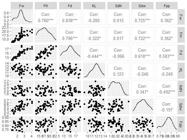
Correlation matrix for vegetative variables analyzed in wild population of Eugenia involucrata in Uruguay (*significant at 5%, **significant at 1%, ***significant at 0.1%)
Mean and standard deviations for the 14 floral variables that did not show significant differences between wild populations of Eugenia involucrata in Uruguay (CmT, Cuareim Tres Cruces; Lp, La Palma; PdC, Paso de la Cruz; PyP, Pay Paso; TsC, Tres Cruces)
Correlation matrix for floral variables analyzed in wild population of Eugenia involucrata in Uruguay (*significant at 5%, **significant at 1%, ***significant at 0.1%)