What are the dogs of Barros Blancos telling us about One Health? A prevalence study of zoonotic parasitic
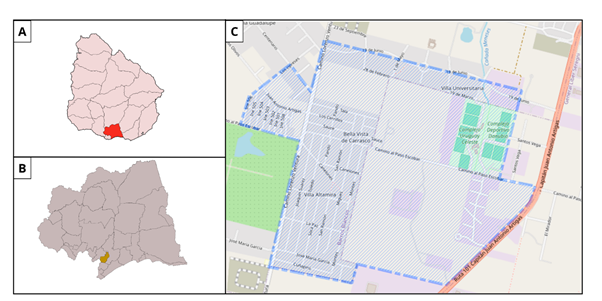
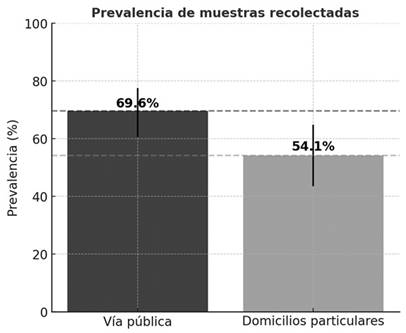
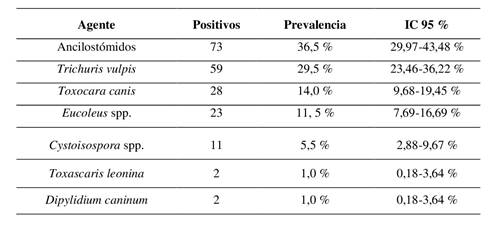
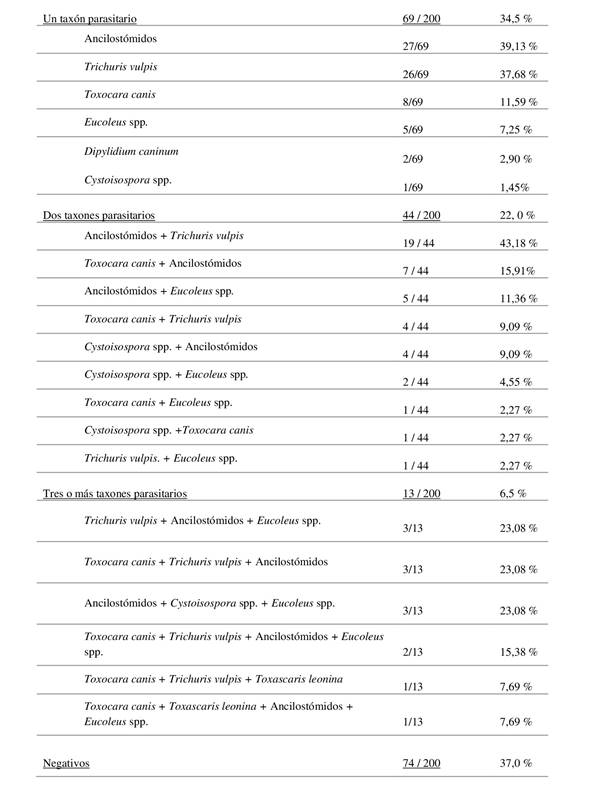
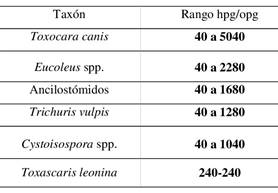
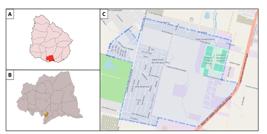
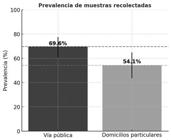
The prevalence of helminths with zoonotic potential was analyzed in canines from Barros Blancos (34° 46' 19.384'' S, 56° 0' 15.036'' O), Canelones, Uruguay. This research arose from the detection of a case of toxocariasis (visceral larva migrans) in a child from the area, which prompted the need to investigate the presence of Toxocara canis and other zoonotic parasites in the local canine population. As part of a social inclusion project funded by CSIC-Udelar, qualitative and quantitative coprological analyses were conducted on fecal samples from dogs collected from households and public spaces. Endoparasite prevalence across all samples was 63 %. The detected parasites were: hookworms (36.5 %), Trichuris vulpis (29.5 %), T. canis (14.0 %), Eucoleus spp. (11.5 %), Cystoisospora spp. (5.5 %), Toxascaris leonina (1 %), and Dipylidium caninum (1 %). Thirty-seven percent of the samples were negative. Thirty-four and a half percent showed a single parasitic taxon, 22 % had two taxa, and 6.5 % had three or more. The highest egg count was from T. canis, with an egg per gram (epg) of 5040. Significant differences (p<0.0261) were observed in prevalence between samples collected from public spaces (69.6 %) (80/115) and those from households (54.1 %) (46/85). The results reveal a high prevalence of zoonotic helminths in the canine population of Barros Blancos, posing a public health risk. This study underscores the importance of promoting responsible pet ownership, social inclusion, and community participation in the prevention of zoonotic diseases, as well as emphasizing the need for proper feces management and environmental control.
Keywords:
Public health; Zoonosis; Helminths; Social inclusion
 Thumbnail
 Thumbnail