Visceral leishmaniasis: description of hematologic, hepatic, and renal profiles in dogs naturally infected with Leishmania infantum in Salto city, Uruguay
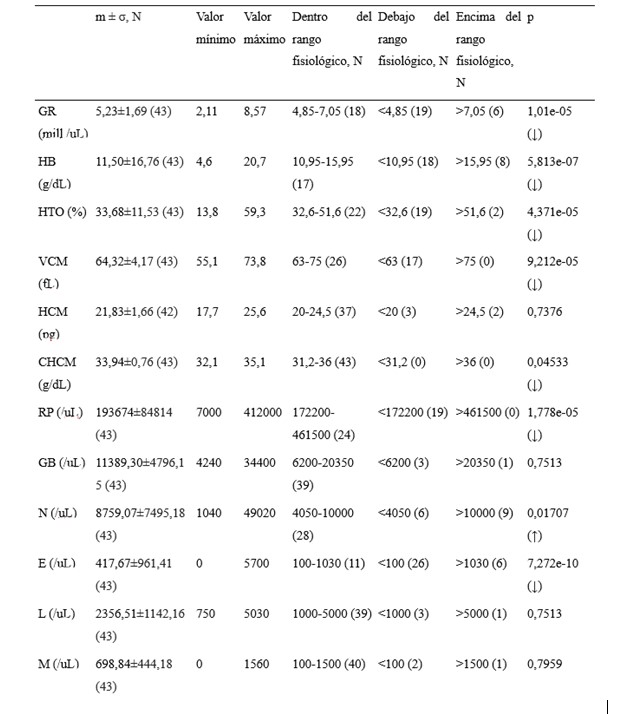
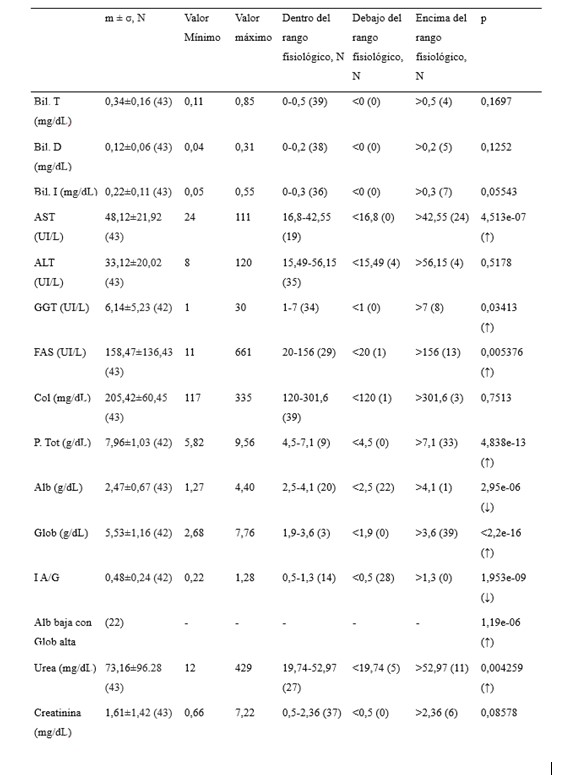
Visceral leishmaniasis caused by Leishmania infantum has spread to the south of the region and the infected dog with or without clinical manifestations constitutes the main reservoir. The most common clinical signs in dogs from Salto city, Uruguay were skin lesions, weight loss, pale mucous membranes and lymphadenomegaly. In the paraclinical, haematological and biochemical alterations related to the infection are mentioned and, consequently, it is important to analyze them in the current epidemiological situation of the disease. The objective of the work was to describe the haematological, hepatic and renal profiles in dogs naturally infected with L. infantum in the city of Salto, Uruguay, and to compare them with reference values. In a subpopulation of dogs with anti-L. infantum antibodies, haemogram values and liver and kidney biochemistry were determined. A significant decrease in erythrocytes, haemoglobin, haematocrit, haematometric indices, platelets, eosinophils, albumin and albumin/globulin ratio was detected as well as increased in total proteins, globulins, most liver enzymes and urea. Dogs with visceral leishmaniasis present a multisystem condition when verifying haematoloical, hepatic and renal alterations. Changes in the indicators, mainly the plasma protein profile, in a compatible epidemiological context, lead to the suspicion of L. infantum infection.
Keywords:
Canis familiaris; Leishmania infantum; Paraclinical profiles