Association of liver fibrosis using 2D shear wave elastography and APRI score
Introduction: Liver diseases are a prevalent problem worldwide. To date, liver biopsy has been the gold standard for assessing the degree of fibrosis; however, with the advent of new non-invasive, cost-effective methods for the healthcare system, we are resorting to it less and less. Shear wave elastography with biplanar imaging was recently introduced in our setting, which implies a learning curve for technicians.
Objective: To assess the association of the degrees of liver fibrosis determined by shear wave elastography with biplanar imaging (2D-SWE) and the APRI score in patients with liver disease treated in the hepatology service of the Pasteur Hospital.
Methodology: Patients with liver disease of any etiology, attended between 01/10/21 and 08/31/22, over 15 years of age, of both sexes and who have been evaluated with shear wave elastography with biplanar image were included. (2D-SWE) and blood analysis performed by the medical team of the aforementioned service in the last 6 months.
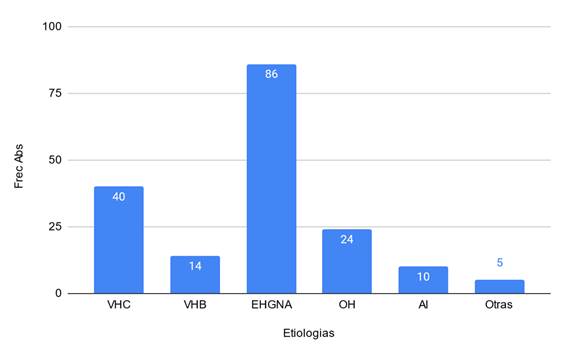
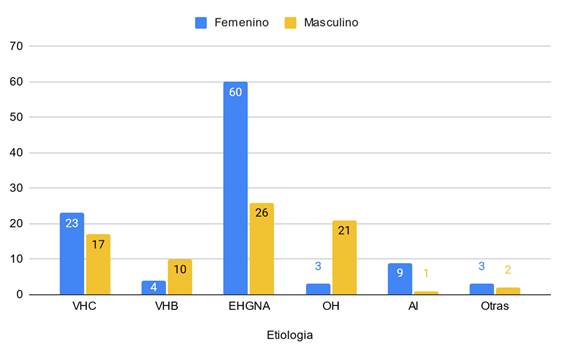
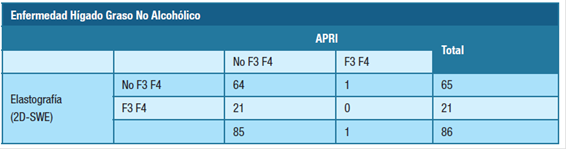
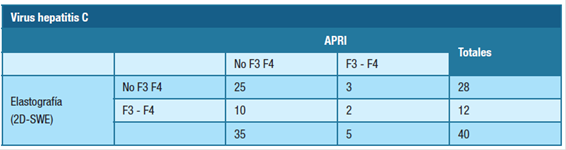
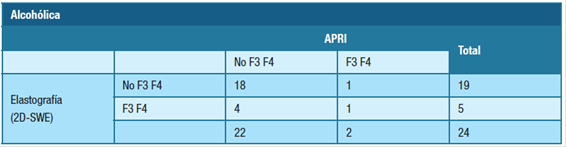
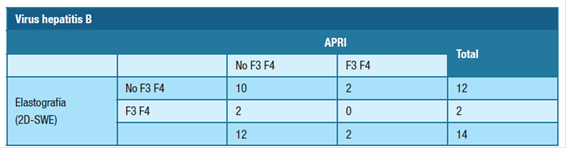
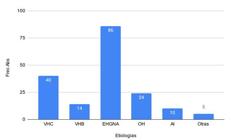
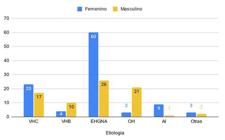
Results: 158 patients were included. A higher prevalence of liver disease was found in women, with a predominance of the etiology of nonalcoholic fatty liver disease (NAFLD) and hepatitis C virus (HCV) infection. A positive association was evident between elastography (2D-SWE) and the APRI score for the diagnosis or exclusion of advanced liver disease, with no statistically significant difference between the two hepatologists.
Conclusions: There is an association between SWE elastography and the APRI score for the diagnosis of advanced liver disease in the general population and by etiology.
Keywords:
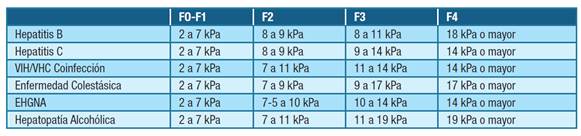
Advanced liver disease; APRI score; shear wave elastography with biplanar imaging; 2D-SWE; METAVIR scale
 Thumbnail
 Thumbnail