Comparison of the thrombin generation potential in postpartum delivery with postpartum cesarean section. Preliminary results
Introduction: Pregnancy is a state associated with profound changes in the hemostatic system, determining a state of hypercoagulability related to an increase in thrombin generation, and as such, a well-established risk factor for Venous Thromboembolic Disease. The objective of this work is to determine and compare the generation of thrombin in postpartum delivery with postpartum cesarean section. Evaluate the potential for thrombin generation as an additional risk factor to decide the thromboprophylaxis indication.
Methodology: Prospective observational analytical study carried out at the Pereira Rossell Hospital, from October 2018 to August 2019. The measurement of the endogenous potential of thrombin was carried out in the automated BCS® XP coagulation analyzer at the Hospital de Clínicas.
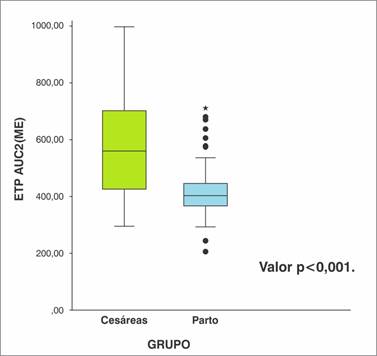
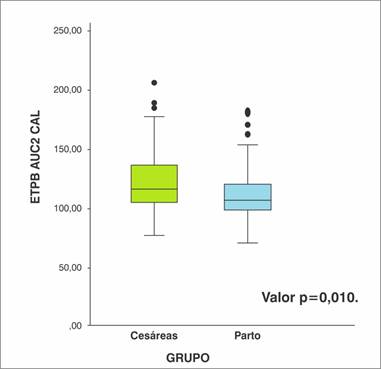
Results: 220 pregnant women, 70 cesarean sections (C) and 150 deliveries (P). The endogenous thrombin potential (ETP AUC2) was statistically lower in group P, p-value < 0.001. The maximum concentration of thrombin generation calculated (ETPB AUC2) was statistically lower in group P, p-value = 0.010.
Discussion: There is a statistically significant difference when we compare the ETP AUC2 and ETPB AUC2 parameters of the delivery vs. cesarean section groups, being lower for deliveries.
Conclusion: Caesarean sections have a higher ETP AUC2, ETPB AUC2 than deliveries. This would allow selecting patients with a higher risk of venous thromboembolic disease. Cesarean section was identified as a thrombin-generating event probably associated with the greater endothelial damage it produces.
Key words:
thrombin; postpartum period; obstetric delivery; caesarean section
 Thumbnail
 Thumbnail