Tobacco use in a population diagnosed with pulmonary tuberculosis, Uruguay - 2018
Introduction: Tuberculosis is a global public health problem. In Uruguay its incidence is increasing currently. Smoking is a risk factor to develop tuberculosis. It is also associated with lower negativization rates of bacilloscopies. This study evaluated the relationship between tuberculosis and smoking status in Uruguay. The objetives was to characterize the study population with diagnosis of pulmonary tuberculosis according to smoking status and to establish the association between smoking and the negativization of the bacilloscopies.
Methodology: An analytical, observational, retrospective cohort study was performed, using the data from 2018 of the Comisión Honoraria para la Lucha Antituberculosa y Enfermedades Prevalentes.
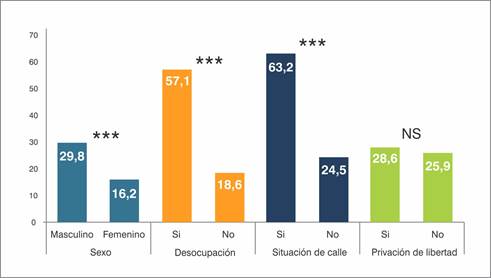
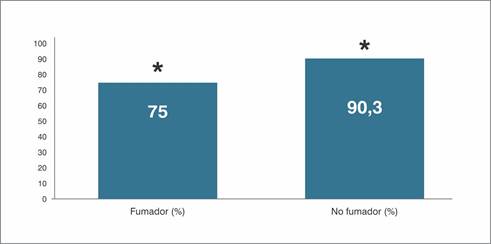
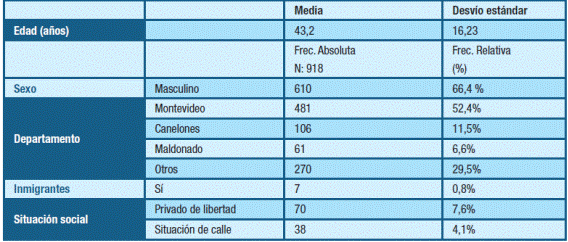
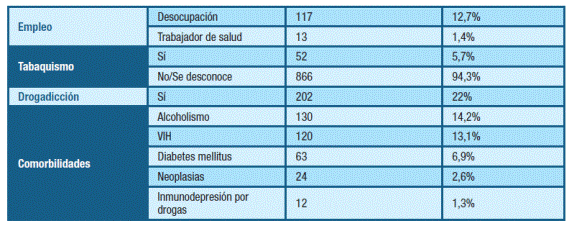
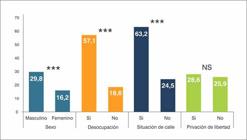
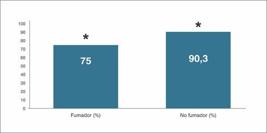
Results: 918 subject data were analyzed. The frequency of smoking was 5,7% and 94,3% had no smoking status specifically reported. Among men, 29,8% of subjects were drugs and tobacco users, while it reached 16,2% among women. Non-smokers had double chance of having negative bacilloscopies at 6 months of treatment compared to smokers, OR: 2,030; IC 95% (1,028-4,007). Alcohol users were found to smoke more. Deprived individuals had higher frequency of drugs and tobacco use.
Conclusions: the lower frequency of smoking found in patients with tuberculosis was due to underreporting. Smoking could be a risk factor for longer periods until biological cures. Socioeconomic vulnerabilty is associated to greater frequency of drugs and tobacco use among people with tuberculosis.
Key words:
tuberculosis; smoking; bacilloscopy
 Thumbnail
 Thumbnail
 Thumbnail