Nosocomial urinary tract infections in a university hospital: prevalence, predisposing factors and etiological agents in moderate care wards
Introduction: Nosocomial infections are one of the main health problems worldwide. One of the most frequent is urinary tract infection, whose frequency reported in Uruguay was 9.8% in Intensive Care Units in 2013. The objective was to determine the prevalence of nosocomial urinary tract infections in moderate care wards of a universitary hospital, know the risk factors associated with them and the microbiological profile of the causal microorganisms.
Methodology: Cross-sectional study, in moderate care wards of a tertiary and universitary hospital in Montevideo, from August 1, 2017 to July 31, 2018. Patients who met diagnostic criteria for nosocomial urinary tract infection were included, with compatible urine culture obtained after 3 days of admission. Variables collection was made through an interview with the patient and a review of the clinical history.
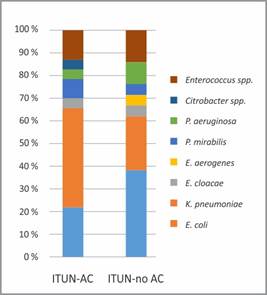
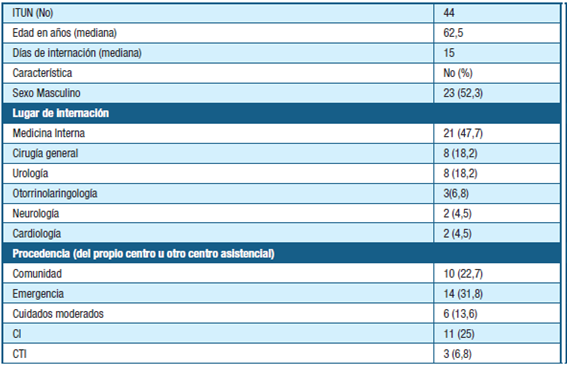
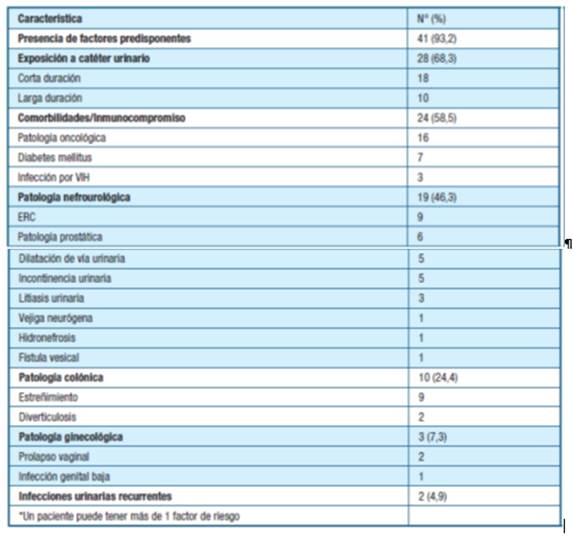
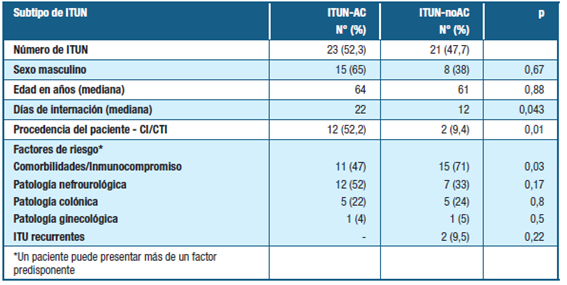
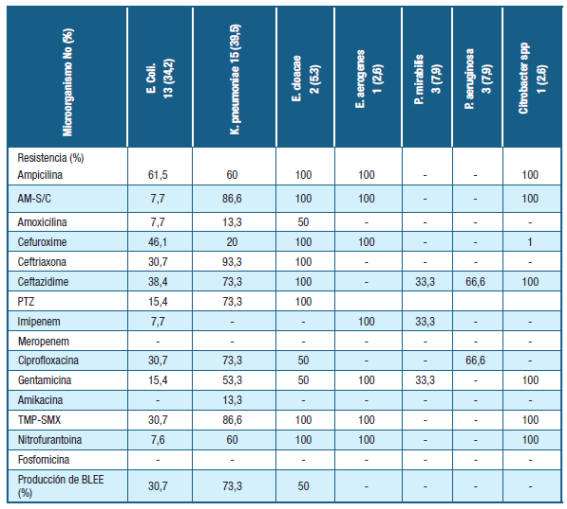
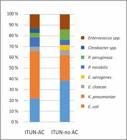
Results: The prevalence of nosocomial urinary tract infection was 1.08% during the study period. The median age was 62.5 years and 52.3% were male. The median hospital stay was 15 days, most of them in Internal Medicine wards. 93.2% presented at least one risk factor, highlighting exposure to urinary catheter in 68.3%. 52.3% of the cases presented catheter-associated urinary tract infection. The total of the microbiological isolates was bacterial, 84% of Gram negative bacteria. Klebsiella pneumoniae was the most prevalent (39.2%), followed by Escherichia coli (34.2%). The Gram-positive bacteria corresponded entirely to Enterococcus spp. Gram-negative bacteria showed resistance rates greater than 20% for multiple antibiotics from various categories and 42.1% had extended-spectrum beta-lactamase.
Conclusions: Nosocomial urinary tract infections in moderate care occur in patients with prolonged hospitalization and multiple comorbidities. Exposure to urinary catheter stands out, with a high percentage of infections associated with it. The causative microorganisms were highly resistant to multiple antibiotics.
Key Words:
nosocomial infections; urinary tract infections; point prevalence
 Thumbnail