Non-spontaneous bacterial infections in hospitalized cirrhotic patients, Central Hospital of the Armed Forces, March 2018-December 2020
Introduction: Bacterial infections in cirrhotic patients are a frequent complication, which occurs mainly in advanced stages of the disease. Non-spontaneous infections or infections not related to portal hypertension include mainly those of the urinary tract, acute pneumonia, and skin and soft tissue infections. They generate a significant impact on the evolution of the disease, since they increase morbidity and mortality, and are also the most common precipitating factor of acute over chronic liver failure, a serious condition with high short-term mortality. The objective of this work is to know the incidence, and describe the clinical, epidemiological, microbiological, and evolutionary characteristics of non-spontaneous bacterial infections, in patients with liver cirrhosis, admitted to the Military Hospital, in the period between March 2018 and December 2020.
Methodology: A cross-sectional, descriptive and single-center study was carried out, which included hospitalized patients, diagnosed with liver cirrhosis, who presented a bacterial infection not related to portal hypertension on admission or during hospital stay. Data were analyzed using frequency distribution and summary measures for the different variables. The incidence of non-spontaneous bacterial infections was calculated based on the total population of cirrhotic patients admitted during that period.
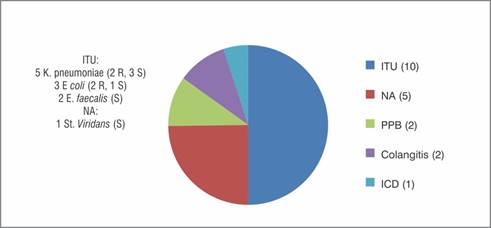
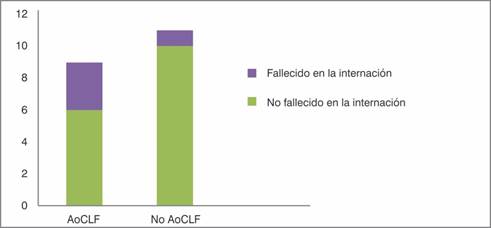
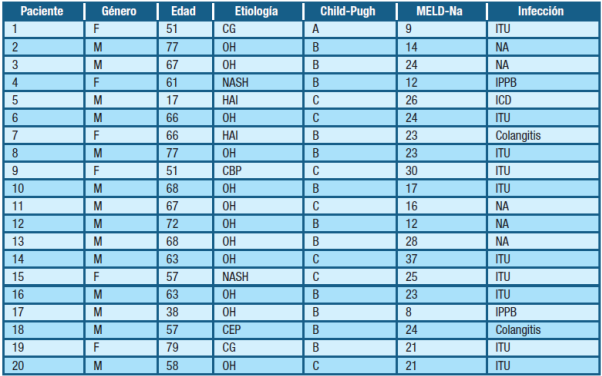
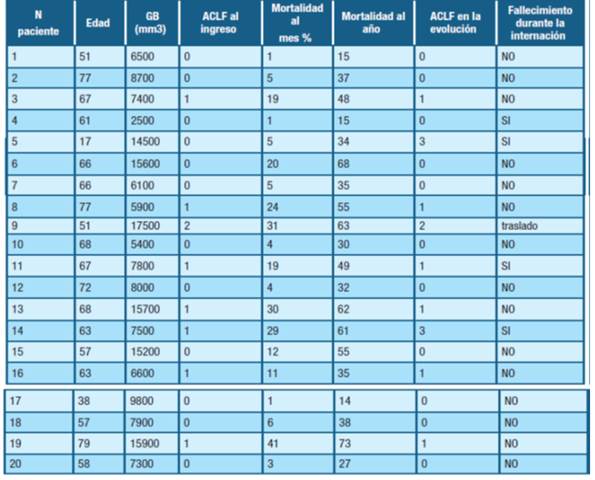
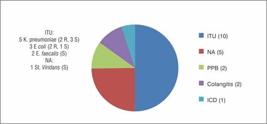
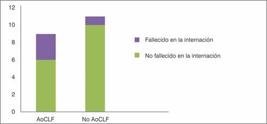
Results: Of the total number of cirrhotic patients admitted, 17.5% had a bacterial infection not linked to portal hypertension, with a mean age of 61 years, 70% being men. The main etiology of cirrhosis was alcoholic. The vast majority of patients (95%) presented an advanced stage of liver disease (60% Child-Pugh stage B and 35% stage C), with a mean MELD-Na of 21. The most frequent infection was that of the urinary tract (50%), followed by acute pneumonia (20%), skin and soft tissue infections (10%) and acute cholangitis (10%). The most prevalent microorganisms were gram negative bacilli such as Klebsiella pneumoniae and Escherichia coli. 40% of the patients presented acute-on-chronic liver failure at the time of admission and an additional 5% developed it during evolution. Of this group of patients, 20% died during hospitalization.
Conclusions: The present study constitutes an approximation to the knowledge of non-spontaneous infections in cirrhotic patients, being necessary the development of studies with a greater number of patients in order to establish a statistically significant association between the presence of bacterial infection and the development of acute on chronic liver failure, and from this with short-term mortality.
Key words:
cirrhosis; non-spontaneous bacterial infections; portal hypertension; epidemiology; acute-on-chronic liver failure
 Thumbnail
 Thumbnail