Repercussions of the COVID-19 pandemic in a population of COPD patients
Introduction: In 2020 and 2021 the COVID-19 pandemic had worldwide consequences. COPD patients are at risk of suffering severe COVID-19 disease. The WHO´s public health recommended measures were successful in reducing the spread of both SARS-CoV2 and other respiratory viruses.
Objective: To determine the consequences of the implementation of public health measures to mitigate the effects of the COVID-19 pandemic in a population of COPD patients assisted at Hospital Pasteur during 2020.
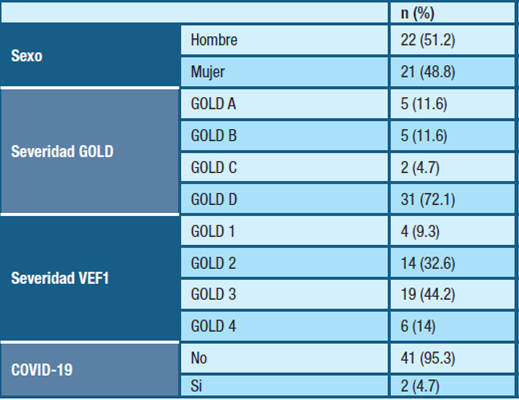
Methodology: Observational, analytical, longitudinal, retrospective historic cohort study. It included the 126 patients assisted at Hospital Pasteur´s COPD clinic between March 13th 2018 and March 12th 2021. A sample was selected by convenience; it considered those patients with spirometric COPD diagnosis, assisted at least once in the intrapandemic period (13/03/2020 - 12/03/2021) and with at least one registered visit in the electronic medical record in the prepandemic period (13/03/2018 - 12/03/2020). Data was obtained by the revision of medical records and through a telephone survey.
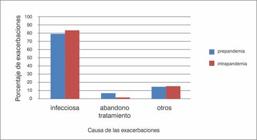
Results: 43 patients met the inclusion criteria. The mean of exacerbations per patient in the prepandemic and intrapandemic periods was 2.14 and 1.53 respectively, establishing a statistically significant difference (p=0.016). The infectious cause and mild exacerbations prevailed in both periods. In the intrapandemic period no severe exacerbations were registered. 36 patients answered the survey; the vast majority had complied with the public health recommended measures and were satisfied with the telephone assistance received.
Conclusions: Public health measures implemented during the COVID-19 pandemic seem effective in reducing chronic diseases´ exacerbations produced by respiratory pathogens, like those due to COPD. Telephone assistance might be a good option where medical assistance satisfaction is concerned.
Key words:
COPD; exacerbation; COVID-19; public health measures
 Thumbnail
 Thumbnail
 Thumbnail
 Thumbnail