Functional Results and Complications in Assisted Patients in UDA-ACV Rehabilitation Institute of Neurology - Hospital de Clínicas
Introduction: stroke is an important health problem due to its high morbidity and mortality; In Uruguay it represents the first cause of disability in the adult. Attention in interdisciplinary stoke units (SU), is associated with a decrease in morbi-mortality and improvement in independence at hospital discharged.
Objective: evaluation of the impact of an early, protocolized and sustained rehabilitation program, at the stroke unit where rehabilitation team take part.
Material and method: We carried out a prospective, descriptive, cohort study; with a group of SU patients (n = 79) versus historical group (HG) assisted in general hospital (n = 77). The following indicators were taken: hospitalization days, complications and functional impact of stroke.
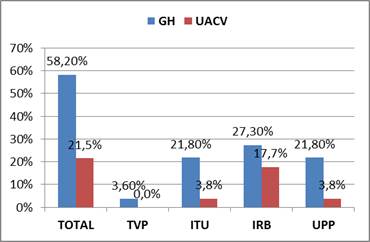
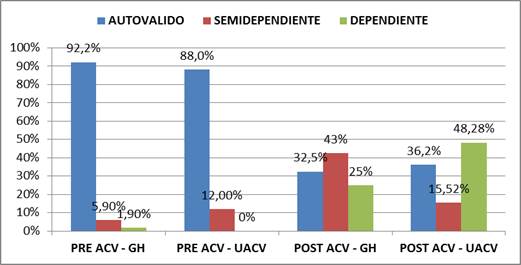
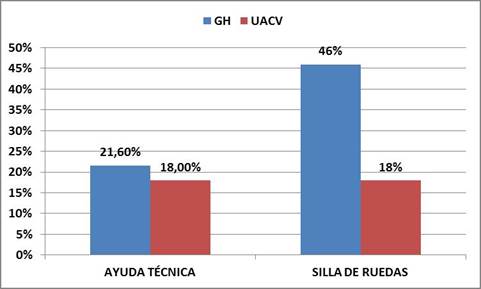
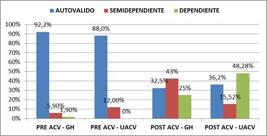
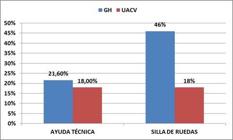
Results: Both samples were statistically comparable, considering α<0.05. In SU modality there was a frank reduction of extra-neurological complications (21.5% vs 58% of GH), especially of the urinary tract infections (3.8% vs. 21.8% HG) and respiratory infections (17.7% vs 27.3% HG); Mortality (5.06% vs 10.4% HG) and days of hospitalization (17.2 days vs 33.5 days of HG). The patients presented better functional results at hospital discharge requiring less prescription of technical aids: wheelchair (18% vs. 45.9% HG), walker or walking stick (18% vs 21.6% HG).
Conclusions: the approach through an exhaustive SU modality has positive effects in patient independence, assistance quality, care and social costs.
Keywords:
stroke; stroke units; rehabilitation.
 Thumbnail
 Thumbnail
 Thumbnail