
 Regionalism, political economy and geopolitics: tensions and challenges in the new search of international insertion of Mercosur
Mercosur is entering in a new phase of changes. The political emphasis, characteristic of the last decade, has been replaced by an agenda that prioritizes the bloc´s external insertion. In this framework, the main alternatives, not necessarily excluding, are: one Atlantic centered in the European Union; and another centered in the Asia-Pacific space. This article assumes that the evolution of regionalism and the political choices it faces are affected by systemic, geopolitical (traditional geographical orientation of the insertion) and political economy (interests, institutions and ideas) conditioning factors. Over this assumption the potential, limits and challenges of both alternatives are analyzed, through the study of the evolution of Mercosur and the trade relationships of Argentina and Brazil with Europe and Asia.
Keywords:
Mercosur; regionalism; international insertion; trade agreements; political economy, geopolitics
 Thumbnail
 Thumbnail
 Thumbnail
 Thumbnail
 Thumbnail
 Thumbnail
 Thumbnail
 Thumbnail
 Thumbnail
 Thumbnail
 Thumbnail
 Fuente: elaboración propia
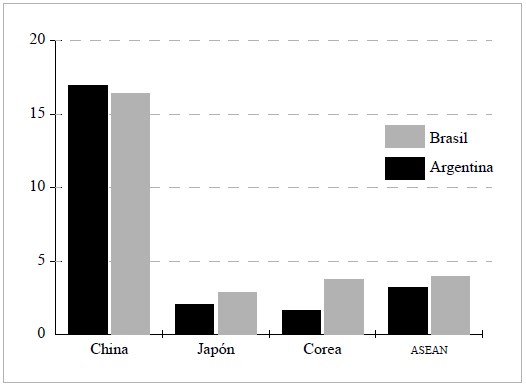 Fuente: elaboración propia
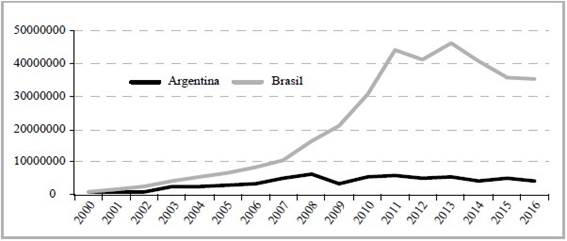 Fuente: elaboraciónpropia
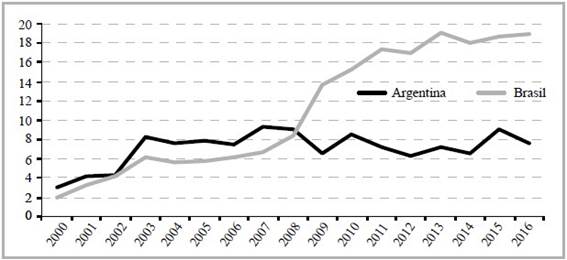 Fuente: elaboración propia
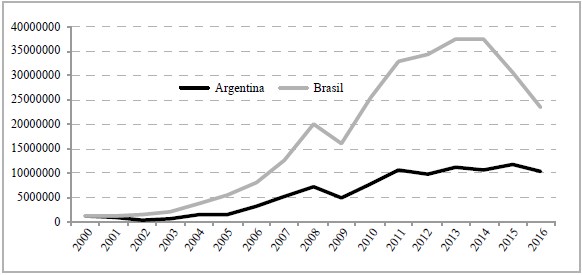 Fuente: elaboración propia
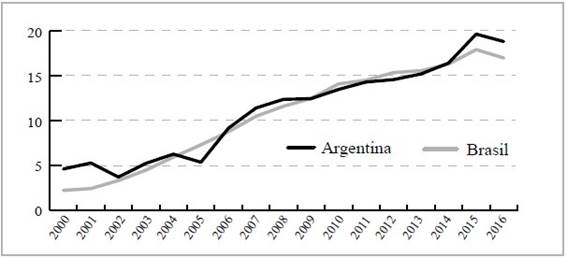 Fuente: elaboraciónpropia
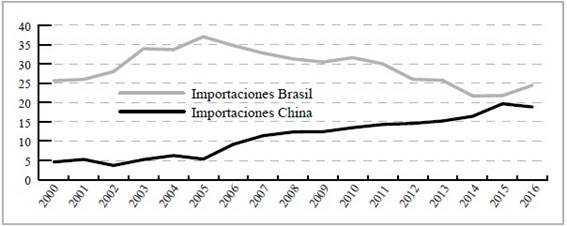 Fuente: elaboración propia
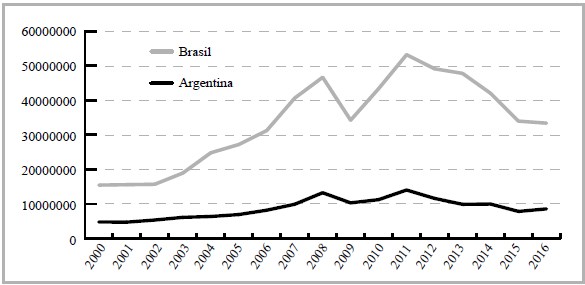 Fuente: elaboración propia
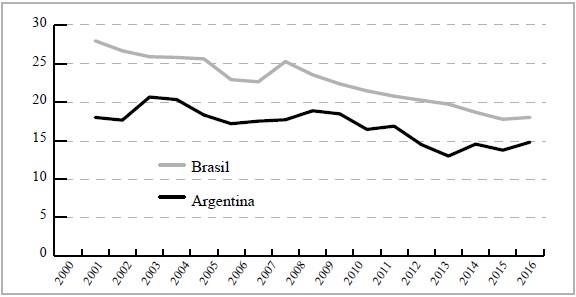 Fuente: elaboración propia
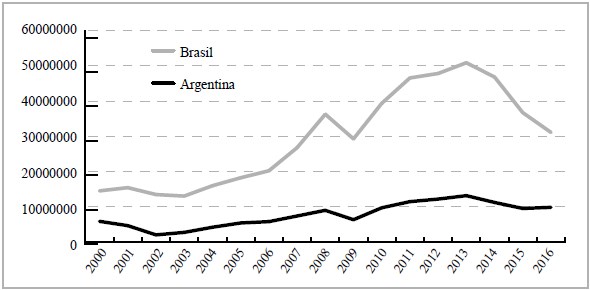 Fuente: elaboración propia
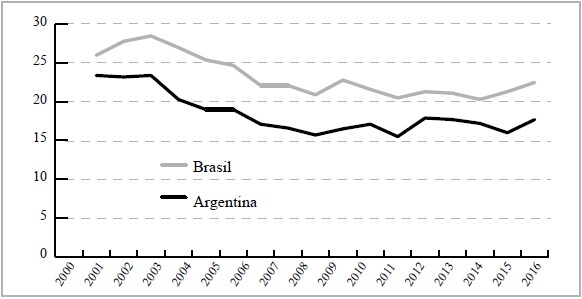 Fuente: elaboración propia