The Stick in the Craw: Public Opinion Polls and the 2009 Primaries
Abstract
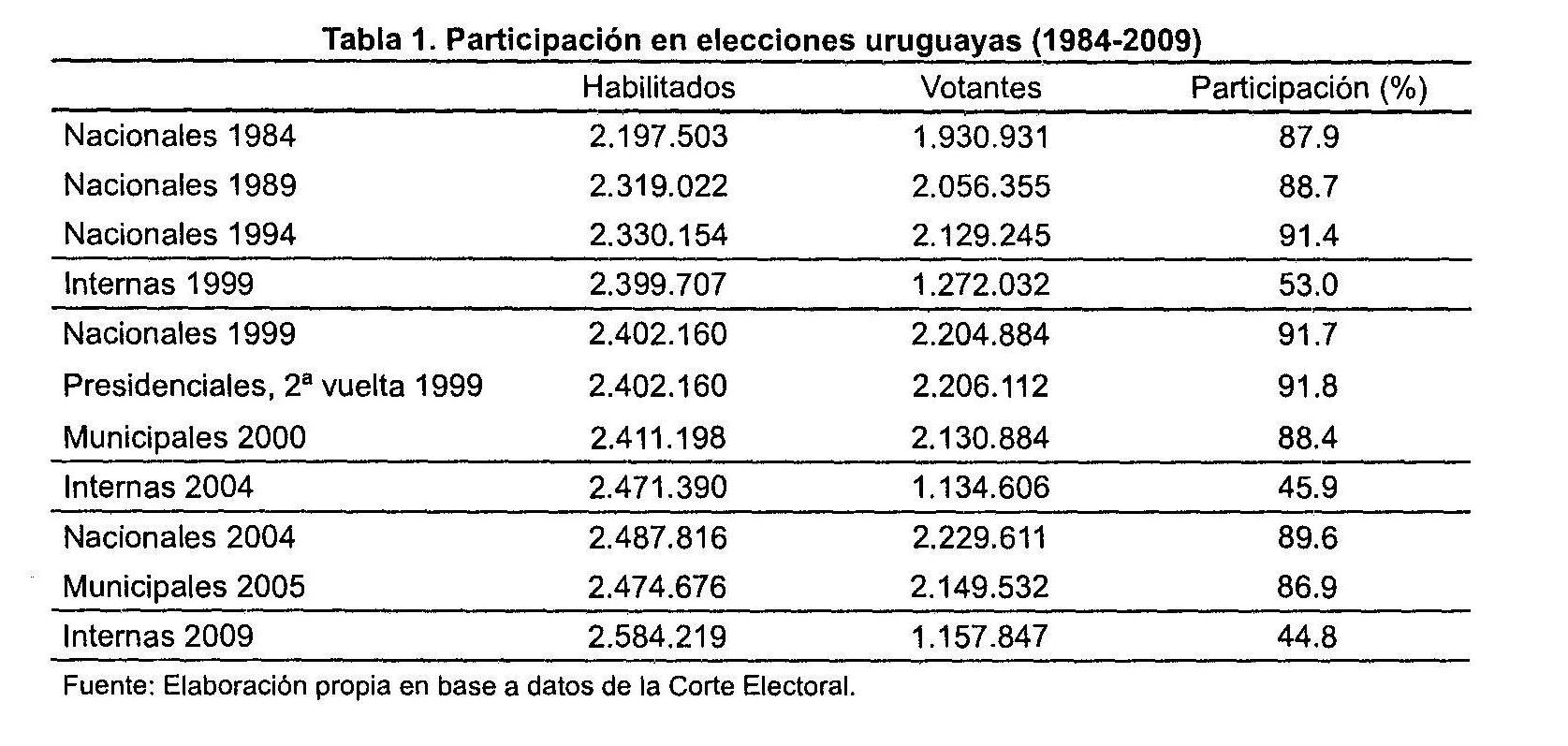
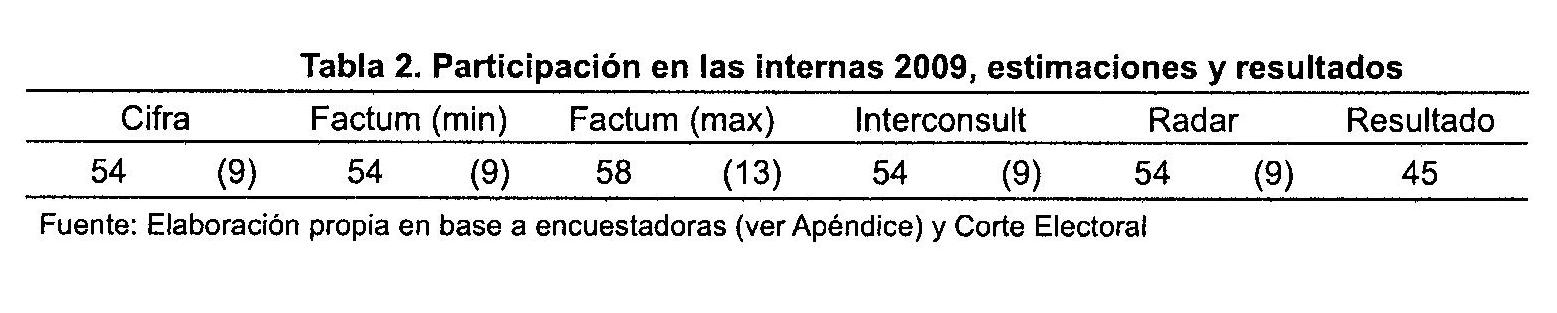
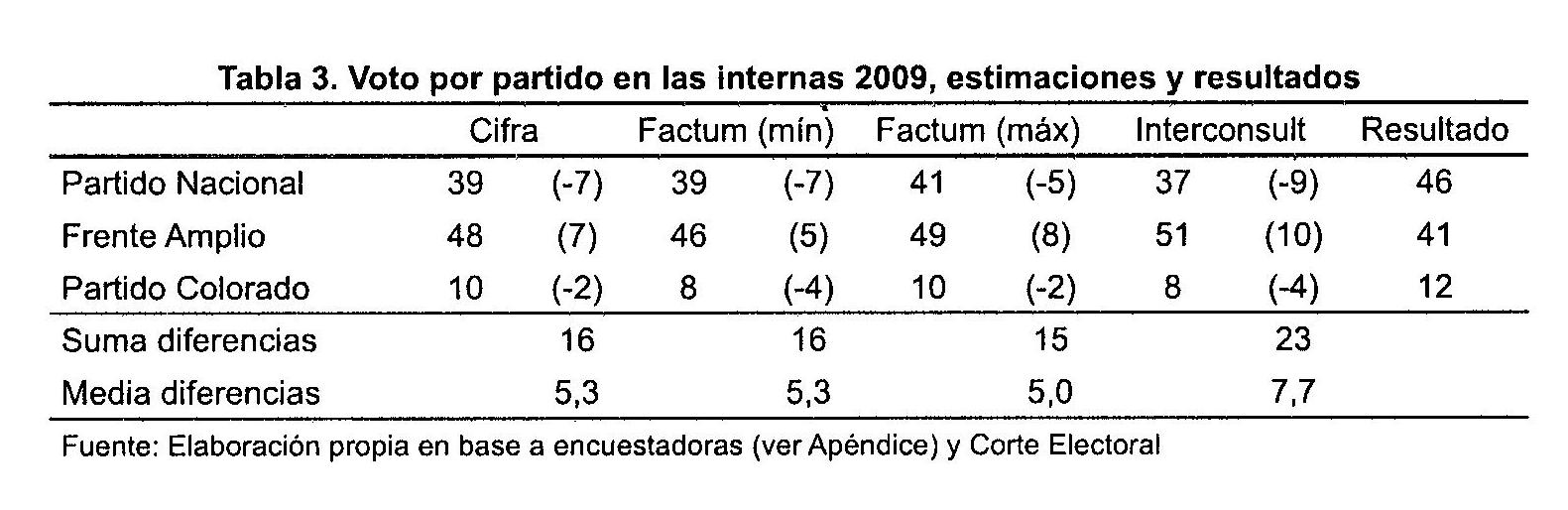
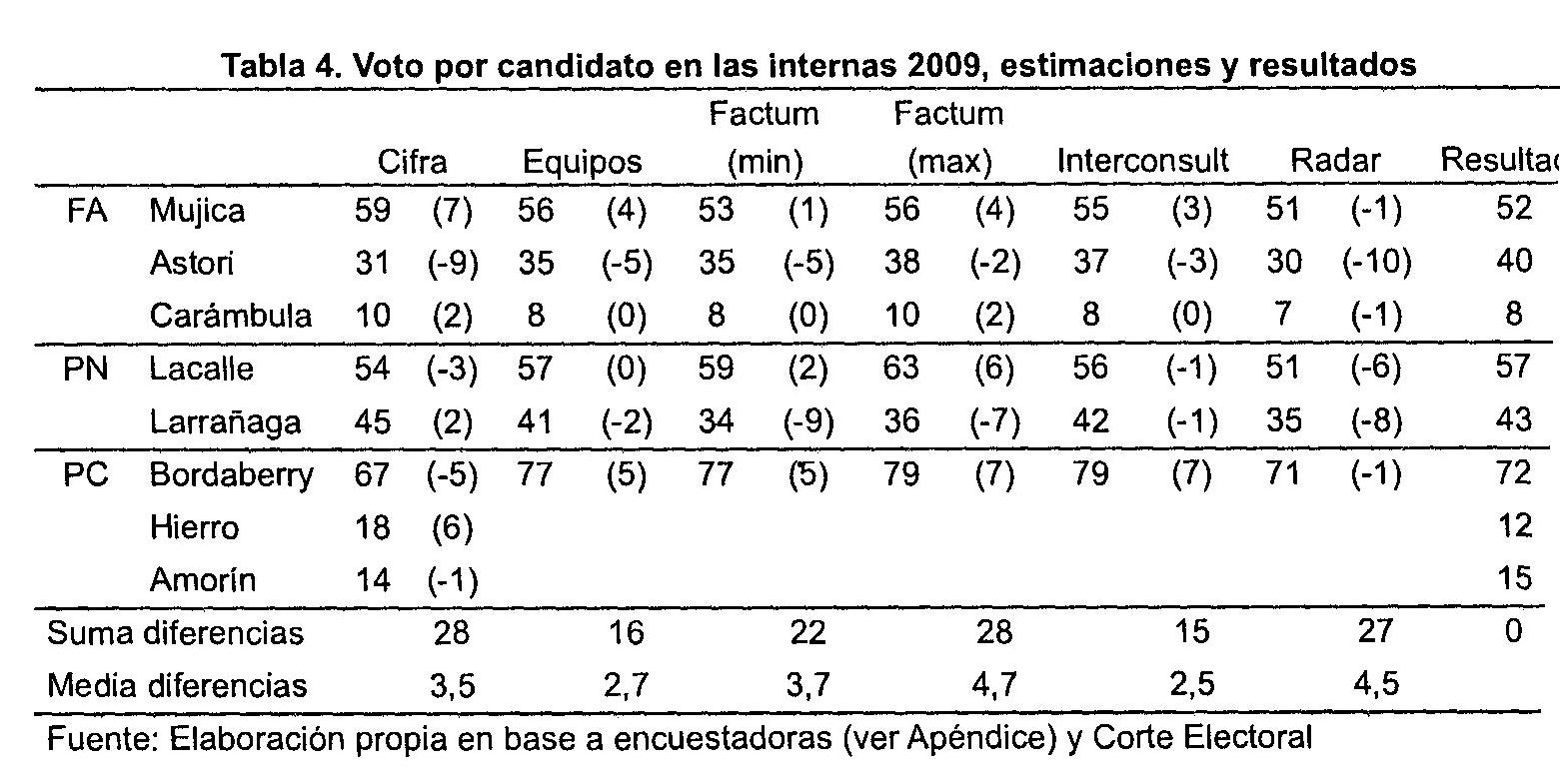
Prediction of the electoral results for the 2009 Uruguayan primaries proved to be the stick in the craw of public opinion polling companies. They accurately predicted the winners within each party, but were far from precise predicting participation levels and the vote share each political party obtained. In this article, we explore four main explanations to this poor performance by polling companies: the nature of the electoral rules, the role of political parties, the influence of surveys themselves, and the limitations inherent to public opinion research.
Polls; Primaries; Political Parties