Ecuador’s 2025 presidential elections: Realignment and two-party system without parties?
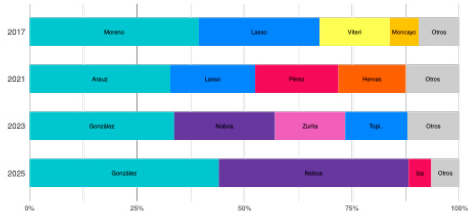
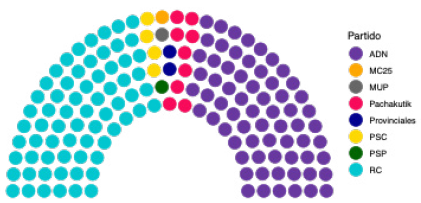
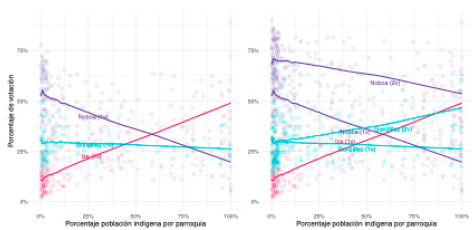
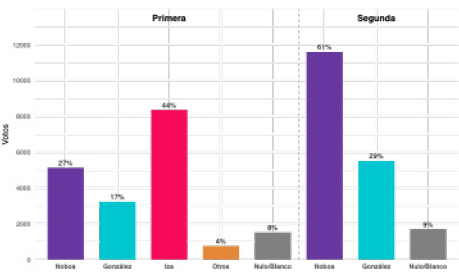
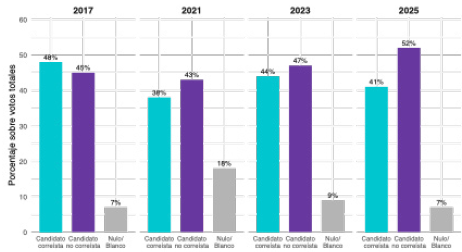
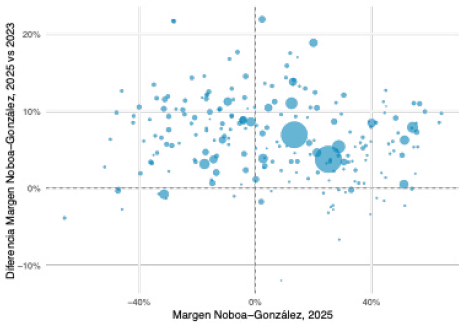
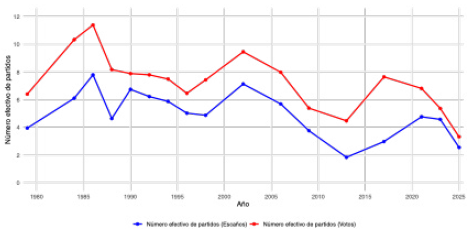
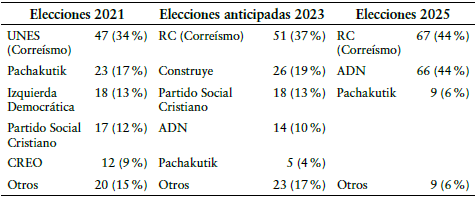
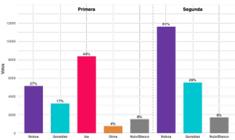
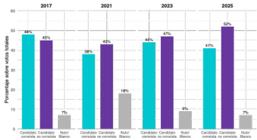
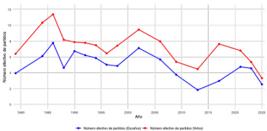
The 2025 presidential elections in Ecuador marked the third consecutive defeat of correísmo in a runoff, despite the strong performance of its candidate, Luisa González, in the first round. This article analyzes the electoral dynamics that led to Daniel Noboa’s victory and explores their implications for Ecuador’s party system. First, we argue that correísmo appears to have reached its electoral ceiling in the first round, limiting its capacity for growth in the second. Second, we show that the indigenous vote remains heterogeneous. Third, we contend that Ecuadorian politics has been reconfigured around two major blocs -correísta and anti-correísta- represented by personalist movements, leaving behind the multiparty system characteristic of previous decades without producing any institutional strengthening of the party system. Taken together, the elections reaffirm Rafael Correa’s polarizing centrality and suggest not a stable realignment, but rather the entrenchment of polarization within fragile party structures, with troubling implications for the quality and stability of Ecuadorian democracy.
Keywords:
Ecuador; presidential elections; correísmo; party system; indigenous vote; political polarization
 Thumbnail
 Thumbnail
 Thumbnail
 Thumbnail
 Thumbnail
 Thumbnail
 Thumbnail