Washington Consensus and Post-Neoliberalism in the Elections of Brazil, Chile, and Colombia: Is There a New Pink Tide?
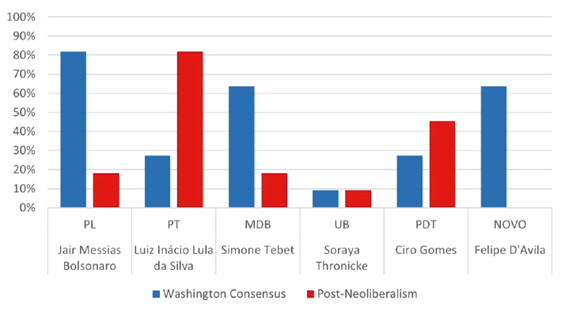
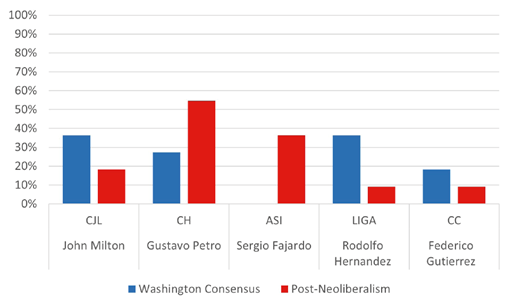
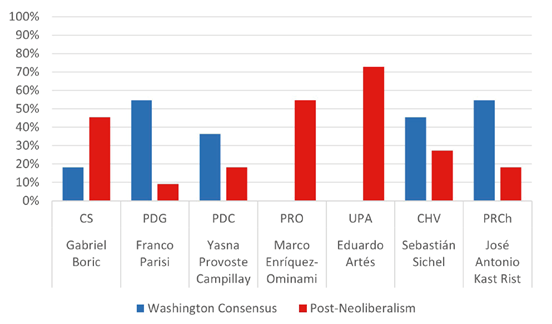
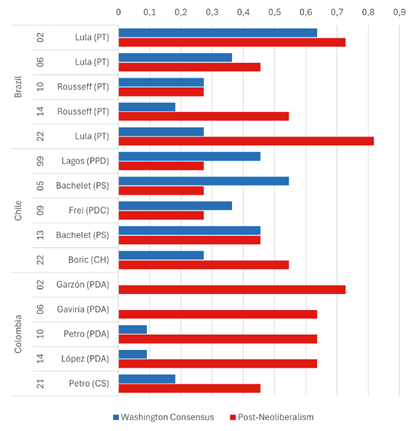
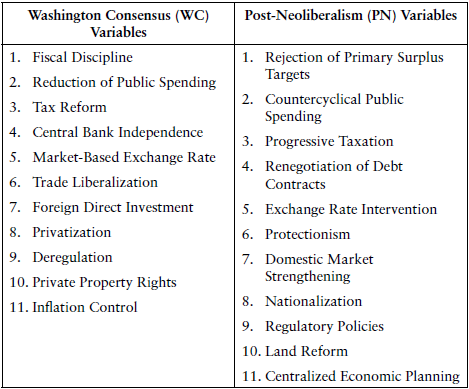
The Pink Tide in South America was a transnational political phenomenon, emerging as a regional response to neoliberalism. While shaped by national contexts, its political projects were post-neoliberal, seeking alternative development models. The 2021-2022 elections in Brazil, Chile, and Colombia raise the question of whether a new Pink Tide is underway. Using content analysis, this study finds that these presidential contests mobilized opposing economic visions. However, distinct ideological patterns emerge: Brazil reflects a strategic shift within a traditional leftist party, while Chile and Colombia highlight party innovation and the rise of post-material concerns. These findings suggest that the current cycle reflects nationally grounded transformations, where economic cleavages coexist with identity-based and cultural agendas, rather than a unified regional shift.
Keywords:
Washington Consensus; post-neoliberalism; Pink Tide; South America; presidential elections; political ideology
 Thumbnail
 Thumbnail
 Thumbnail
 Thumbnail