Evolution of welfare regimes (1980-2010): bismarckian and beveridgean models according to their profile of financing and spending on social protection
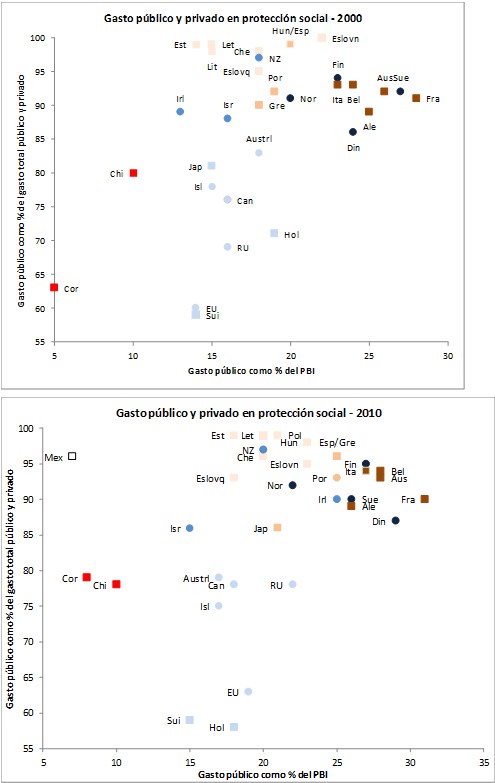
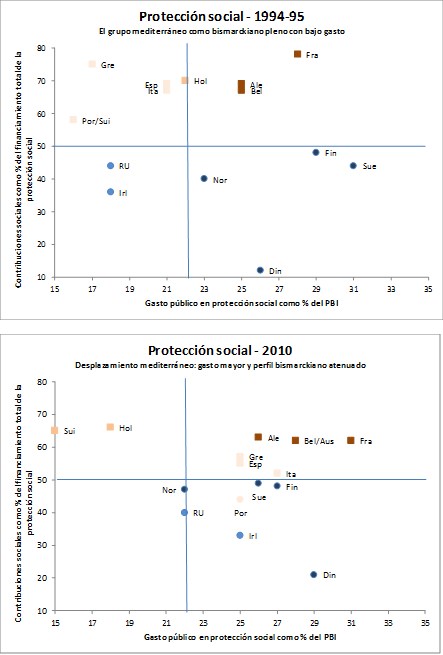
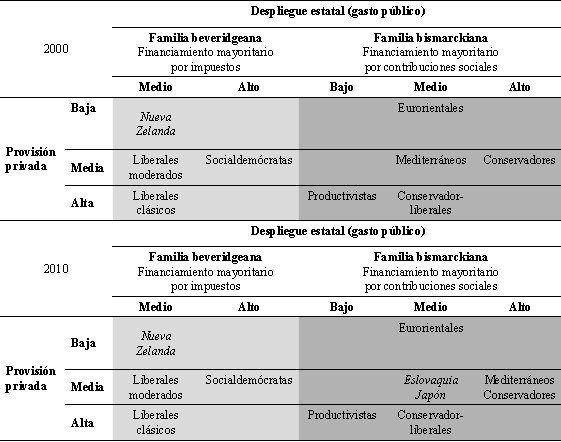
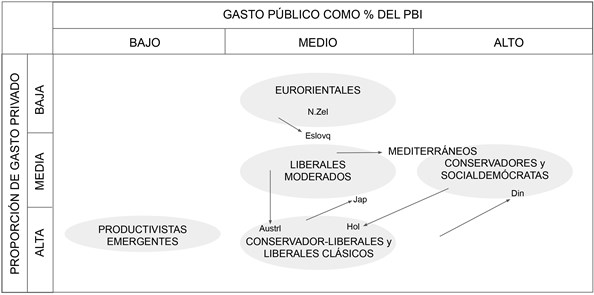
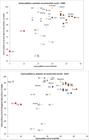
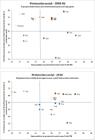
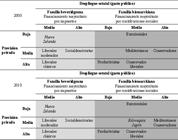
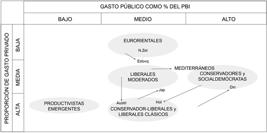
The article presents a classification of the oecd countries, describing their social protection spending structure according to three axes: public spending as a percentage of gdp, public and private spending as a percentage of the total, and predominance of financing by taxes or contributions on salary in the period 1980-2010. The results provide elements to the debate on classification of countries in welfare regimes, identifying three distinct groups in the Beveridgean family (Social Democratic, Classical Liberal and Moderate Liberal) and four in the Bismarckian (Conservative, Conservative-Liberal, Productivist and Eastern European). The model allows to identify as a regime in itself combinations of characteristics of difficult classification in previous typologies as well to analyze the trajectories of change at the level of groups and countries.
Keywords:
welfare regime; social protection; public and private spending
 Thumbnail
 Thumbnail
 Thumbnail
 Thumbnail