Punishment of incumbents and right-wing political cycle in Latin America
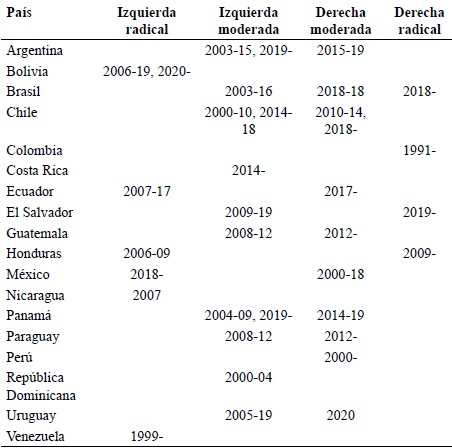
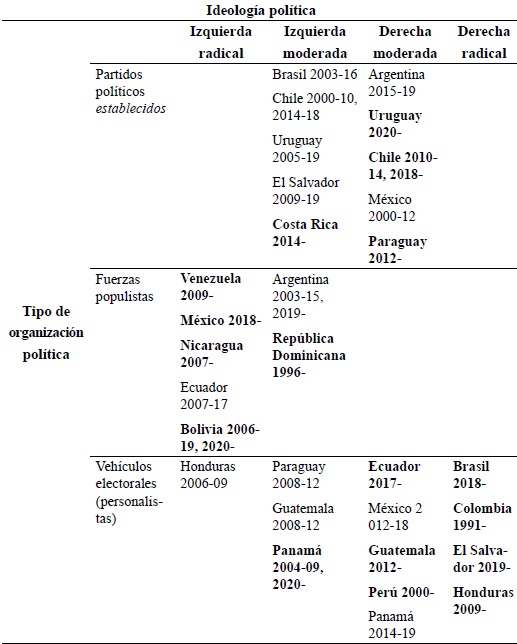
This article presents a characterization of three type of strategies (non-electoral, non-partisan electoral, and partisan) pursued by the right in contemporary Latin America. By analyzing the recent course of the party systems in the region, we also argue that the so-called turn to the right constitutes a process of power alternation generated by the punishment of incumbents of the last decade and a half (mostly on the left), rather than a structural ideological realignment. This alternation in power occurs in a context, in which established parties tend to disappear or become substantially weaker, and in which short-lived electoral vehicles are gaining traction. Finally, we argue that there does not seem to be space in the region today -especially because of the social crisis associated with the effects of the covid-19 pandemic- for the strengthening of a neoliberal right. However, the current context does seem propitious for the emergence of right-wing outsiders, capable of structuring a pro-order agenda that incorporates, in different proportions, ‘iron-hand’ policies, value conservatism, and market liberalism.
Keywords:
right; Latin America; political parties; outsiders; alternation in power