Uruguay and Contemporary Theories of Wage Coordination: Origins and Stabilization of Segmented Neocorporatism, 2005-2019
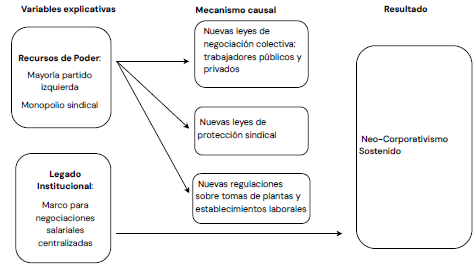
This study seeks to explain the rise and performance of «segmented neocorporatism» in Uruguay in light of contemporary theories of wage coordination, largely framed by the Varieties of Capitalism School and its recent critics. First it argues that the legacy of a centralized labor law framework, and a unified union movement, combined with Frente Amplio’s decisive labor empowerment from above to launch neocorporatist wage coordination in the 2005-2010 period. Second, it analyzes the stabilization of the coordinated model in 2013-2019, in times of sluggish growth and labor tensions, evinced in the control of inflation pressures and social conflict. The article concludes that the macroeconomic combination of supply-side and Keynesian policies and the inclusion of precarious workers shaped an egalitarian version of corporatism with important challenges ahead.
Keywords:
Political economy; neocorporativism; wage coordination; Uruguay
 Thumbnail
 Thumbnail
 Thumbnail
 Thumbnail
 Thumbnail
 Thumbnail
 Thumbnail