Parliamentary Control Tools from a Comparative Perspective. Application to the Argentine Case
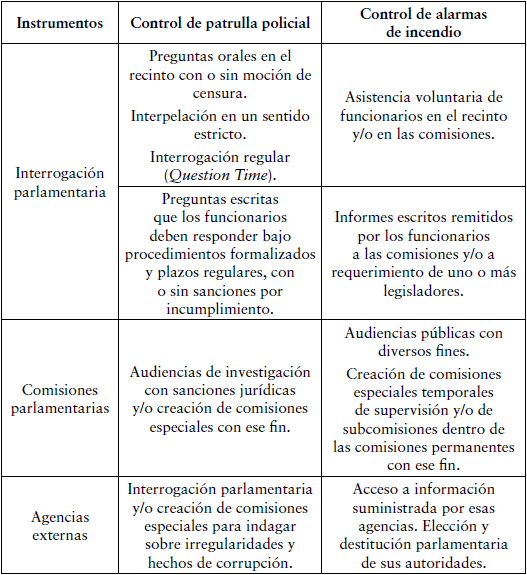
This article studies the main parliamentary control tools in international comparative politics, which are oral and written parliamentary questions, control in parliamentary committees, and information provided by external agencies. They are then classified by differentiating between tools that involve some sanction towards the official (police-patrol control) and those that do not (fire-alarm control). Finally, this classification is applied to the case of Argentina. This article concludes by highlighting that in this country parliamentary control has less to do with police patrol instruments than with fire alarm instruments.
Keywords:
Argentina; democracy; control tools; committees; policies