Loyalty and punishment: electoral behavior in Costa Rica
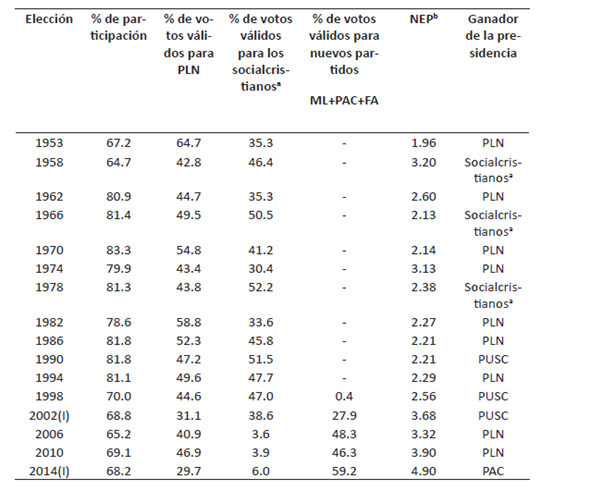
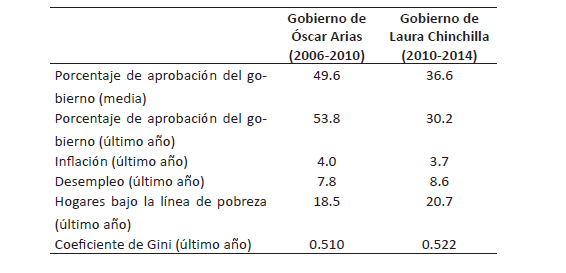
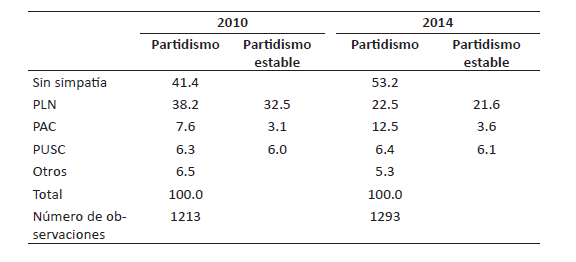
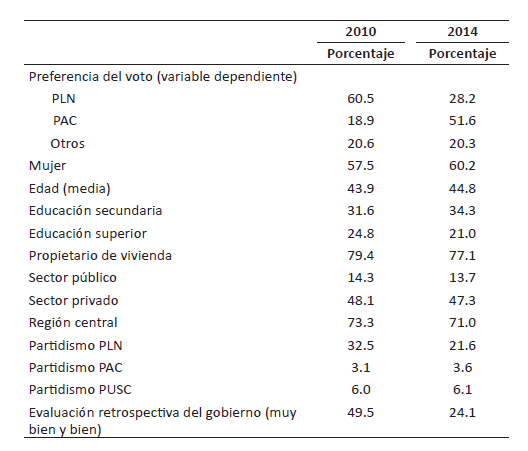
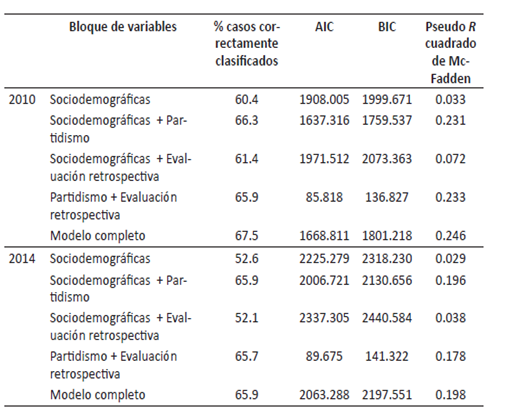
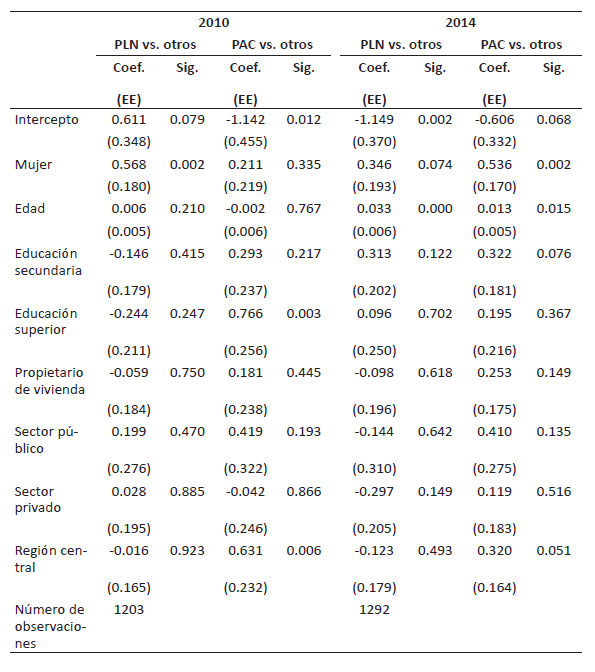
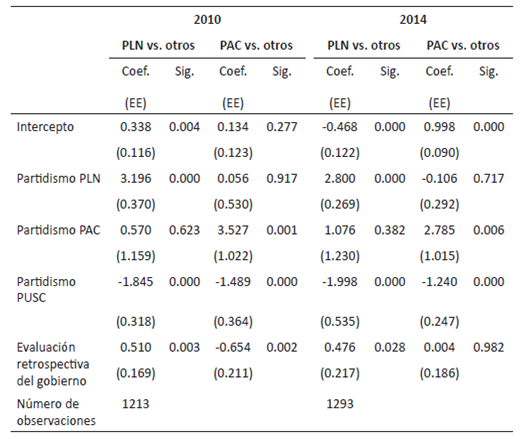
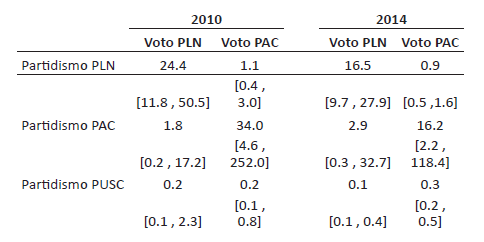
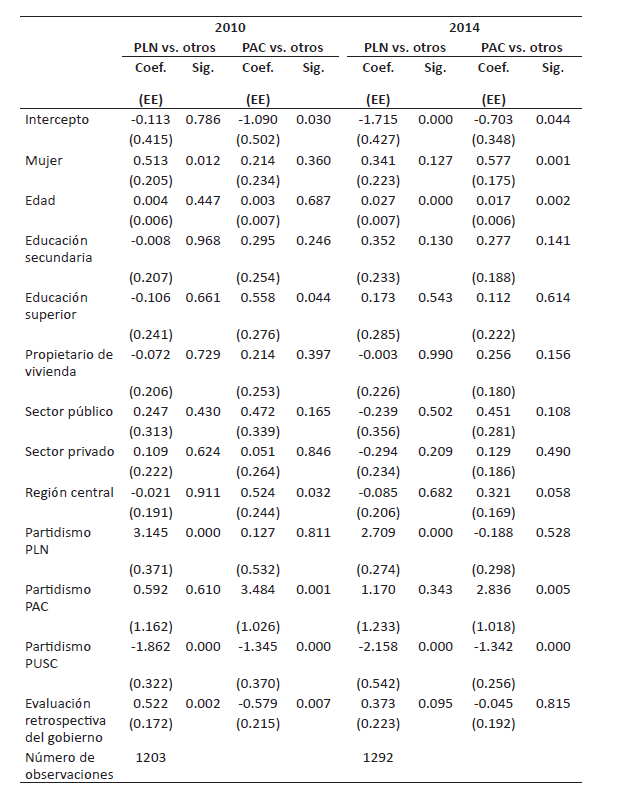
The vote choice is analyzed in the national elections of Costa Rica in 2010 and 2014, contrasting one case in which the ruling party is rewarded with the continuity with another in which it is punished by defeat. The voting choice is modeled including socio-demographic variables, partisanship, and retrospective government evaluation. It is found that the different socio-demographic factors explain less compared to a more parsimonious model composed by partisanship and retrospective evaluation. It is concluded that partisanship is relevant even in periods of dealignment and that also in countries without consecutive reelection the public opinion takes into consideration their satisfaction with the incumbent when voting.
ARTICULO ORIGINAL • Rev. Urug. Cienc. Polít. 26
(2)
• Nov 2017 • https://doi.org/https://doi.org/10.26851/RUCP.V26N2.1 copy