Arterial revascularization with bilateral internal mammary artery in patients with stable angina. National data
Introduction and objectives: there is a tendency to increase the benefits of surgery in coronary artery disease using both internal mammary arteries (BIMA). Our objective was to evaluate our long term national results in patients with stable coronary artery disease who receive isolated coronary artery bypass grafts (CABG) using BIMA.
Methods: patients operated between 2006 and 2015 were included. Patients’ demographic, operative and postoperative variables were extracted. The outcomes were operative mortality, deep sternal infection and survival. Our population was stratified by age in ?λτ; and ³ 65 years old. In order to decreased group heterogeneity, propensity match (PM) was performed.
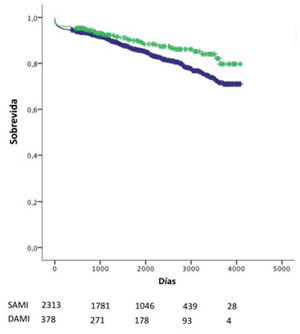
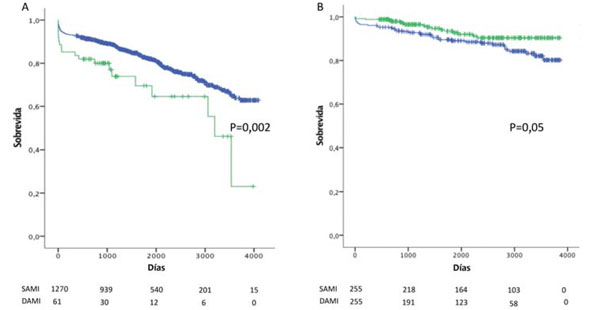
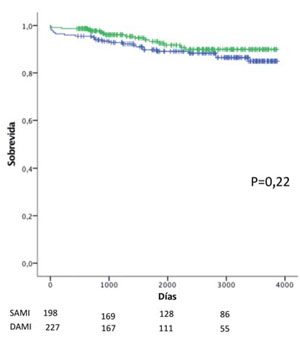
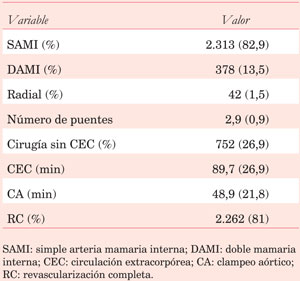
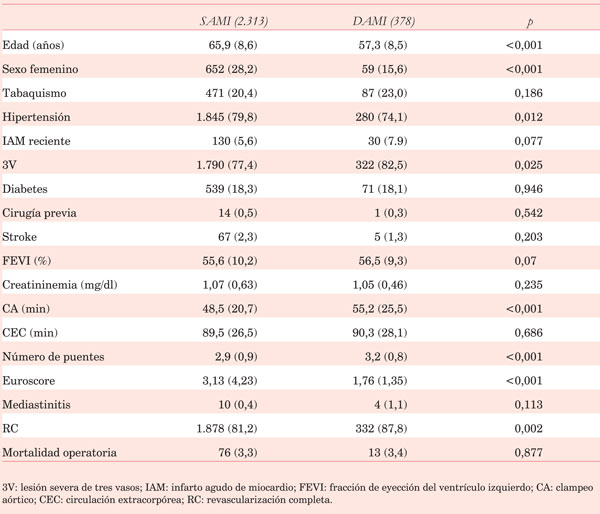
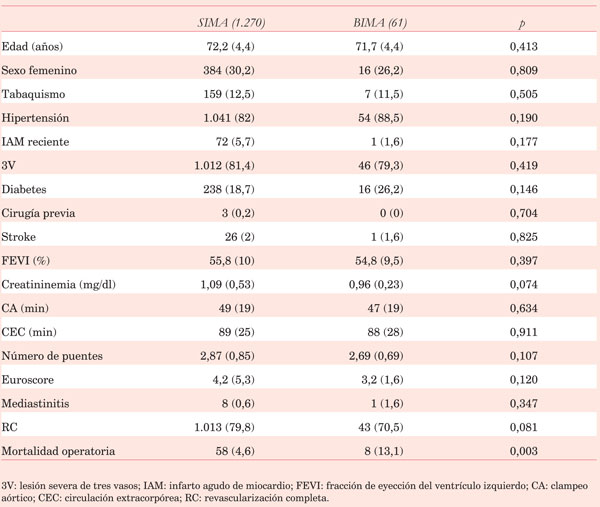
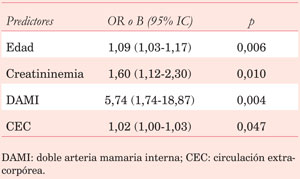
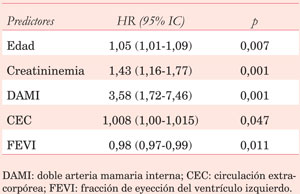
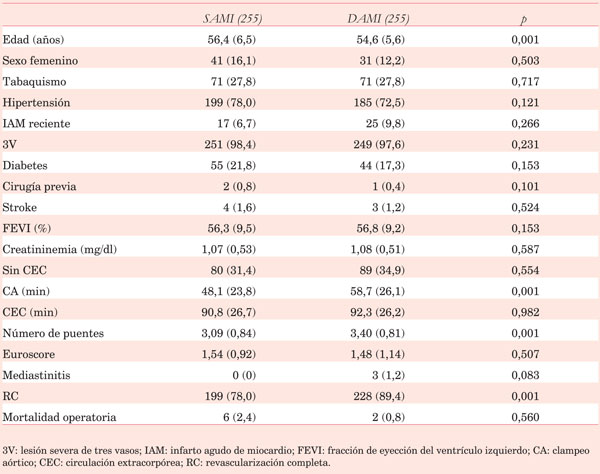
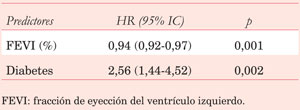
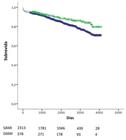
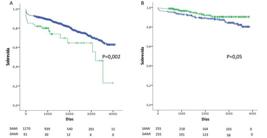
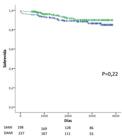
Results: 2.791 patients were included. Patients with BIMA were younger (57.3?8,5 vs 65,9?8,6 years old, p=0,001), lower incidence of females (15,6% vs 28,2%, p=0,001), of hypertension (74,1% vs 79,8%, p=0,012) and lower Euroscore (1,35 vs 4,23, p=0,001). In patients ³ 65 years old, BIMA was an independent predictor for worse operative mortality and survival. In PM patients ?λτ; 65 years old, BIMA was associated with improved survival but failed to be an independent predictor for it. Patients who received single internal mammary artery and had complete revascularization had similar survival to BIMA patients. Deep sternal infection was similar between groups in both strata.
Conclusions: the use of BIMA was found to be an independent predictor for worse outcomes in patients ³ 65 years old. BIMA has better results for patients ?λτ; 65 years old although its independent benefit is confused by other variables such as age and complete revascularization.
Key words:
Myocardial revascularization; Internal mammary artery; Survival
 Thumbnail
 Thumbnail
 Thumbnail