Valor del electrocardiograma en el diagnóstico y pronóstico del síndrome de Brugada
Abstract
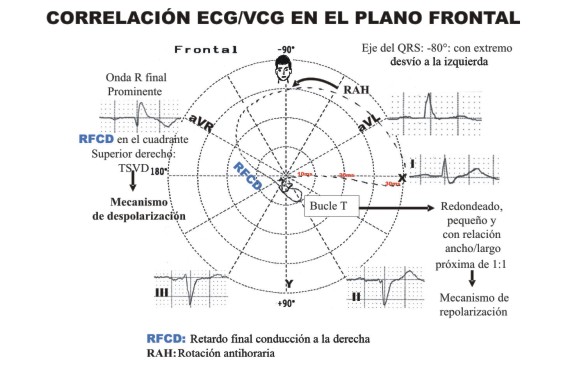
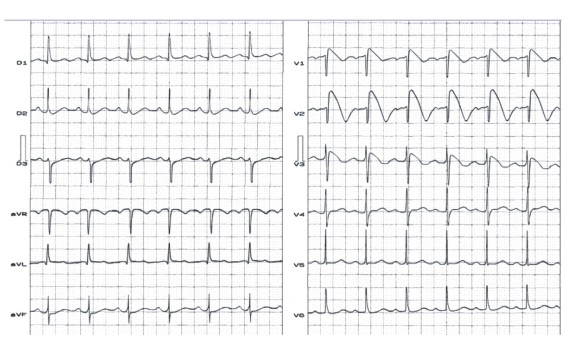
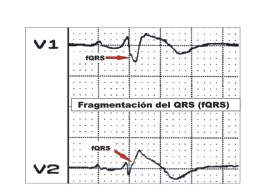
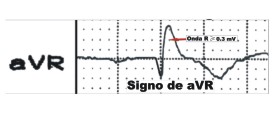
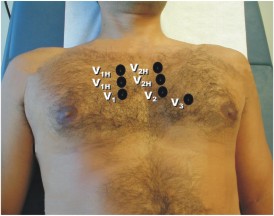
Twelve-lead ECG associated to high right parasternal accessory leads is the resource that yields a greatest number of diagnostic and prognostic information in patients carriers of BrS. By this simple, cheap, reproducible, and operator-independent method, depolarization alterations can be studied as well as ventricular repolarization aspects. The method allows diagnosing frequent episodes of atrial fibrillation and other supraventricular arrhythmias, as well as characterizing the different ventricular tachyarrhythmias. The analysis of the Frank VCG (F-VCG) of patients with BrS suggests the duality of the underlying physiopathological mechanisms of the Brugada Type-1 ECG pattern. F-VCG of patients with Brugada type-1 ECG pattern has distinctive characteristics from the F-VCG of individuals with RBBB pattern. The understanding of these mechanisms may help to guide future therapeutic efforts to control the channels dysfunction associated with this intriguing channelopaty.
ELECTROCARDIOGRAM; BRUGADA SYNDROME- diagnosis; BRUGADA SYNDROME- prognosis
 Thumbnail
 Thumbnail
 Thumbnail
 Thumbnail
 Thumbnail
 Thumbnail
 Thumbnail
 Thumbnail
 Thumbnail
 Thumbnail
 Thumbnail
 Thumbnail
 Thumbnail
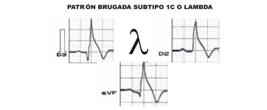 Thumbnail
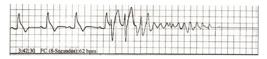 Thumbnail