Clinical relevance of transesophageal echocardiography in patients with ischemic stroke: Observational, analytical study
Abstract
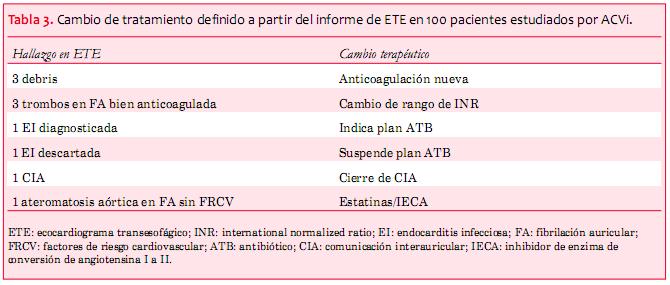
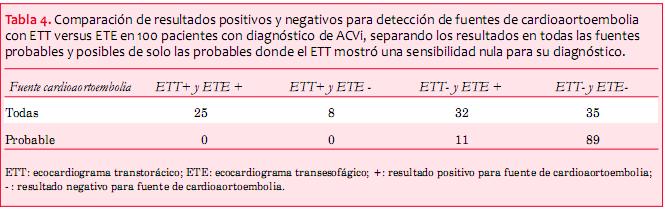
Background: search of cardiac and aortic source of emboli is crucial in managing acute cerebrovascular diseases (ACVD). Systematic use of transesophageal echocardiography (TEE) has not yet been defined, even though TEE is much more sensitive than transthoracic echocardiography (TTE). Purpose: to explore clinical relevance of systematic use of TEE in ACVD. Method: consecutive patients diagnosed with a new ischemic stroke or transient ischemic attack (TIA), have been assessed in-hospital between 2/2012 and 3/2014. Two independent cardiologists blinded to each other performed TTE and TEE. Another cardiologist, considering clinical history and TTE, determined embolic risk and established treatment according to clinical guidelines. Considering TEE result, these questions were answered: ¿Did TEE result change risk assessment? ¿Did TEE result change treatment indication (new drug indication, new goal for an old one or new intervention)?. It was considered as clinically relevant a needed number of TEE (NNT) £10 for risk assessment and £ 15 for treatment under each affirmative answer. Results: one hundred patients (50 men, age 64±12 years) were recruited; 18 patients with atrial fibrillation; 94 patients with stroke. NNT: 2,85 IC 95%(2,3- 3,9), to change one assessment and 10 IC 95%(6,3-24,3) to change one treatment. Diagnostic value of TTE vs TEE (as gold standard) was: TTE sensibility 43,9% (31,0-56,7) and specificity 81,4% (69,8-93,0). Conclusions: TEE gives clinically relevant information to change risk embolic assessment in TIA/stroke patients, but this information was not statistical significant in order to define treatment changes.
STROKE; TRANSESOPHAGEAL ECHOCARDIOGRAPHY
 Thumbnail