Use of a mobile electronic technology device for atrial fibrillation screening. Pilot study
Atrial fibrillation (AF) is a public health problem generating important morbidity and mortality mainly in > 65 years old population. Detection is key in the population at risk. This pilot study was designed to assess a mobile electronic technology device (METD) usefulness in AF screening.
Objective: evaluate validity and reliability of a METD in AF identification.
Secondary objective: to validate the process of collection, transmission, storage, method and interpretation of obtained data.
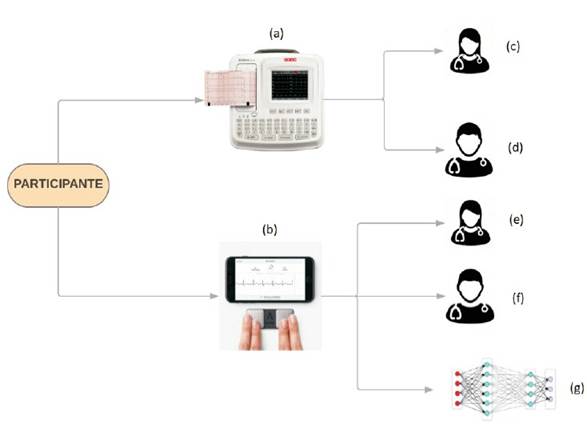
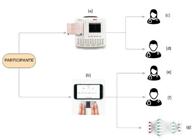
Method: participants in 5 Ibirapitá Plan workshops (October 15-November 30, 2018) were invited to participate in the study. A KardiaMobile Alive Cor® METD was used, whose ECG recording was compared with a 12L ECG taken almost at the same time. Automatic METD report was compared with 2 independent cardiologists report considering the METD recording and the 12L ECG.
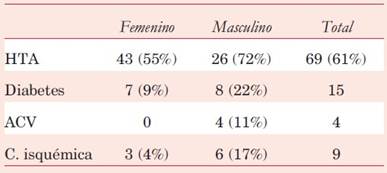
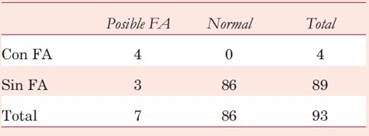
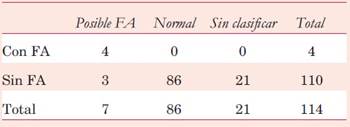
Results: 114 participants (78 female), mean age 72,5 y.o. (SD 5,36; range 53-87) were included. METD sensitivity for AF diagnosis was 100% with a 96.6% specificity (PPV=57,1% NPV=100%), and a 96.8% number of correct diagnosis. A 18.4% of recordings were catalogued as “unclassified” by the METD. Considering this, the proportion of correct diagnosis decreased to 78.9%; there were not false negatives.
Conclusions: AF screening with a METD in an older population is feasible and reliable. The finding of 18.4% METD recordings as “unclassified” raises the needs for experts review during diagnosis confirmation.
Key words:
Atrial fibrillation; Screening; Telemedicine; Cardiovascular prevention
 Thumbnail