Atrial fibrillation and its association with cognitive decline, cognitive impairment, and dementia in the absence of clinical stroke: a review of the evidence and possible mechanisms
Abstract
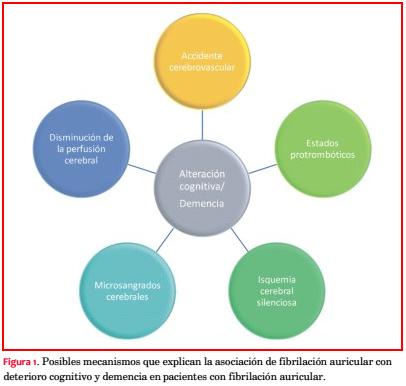
Atrial fibrillation (AF) is the most common arrhythmia in the adult population. AF is widely known to be associated with an increased risk of many adverse outcomes including stroke, heart failure, all-cause death, as well as sudden cardiac death. More recently, there has also been growing interest in the association of AF with cognitive impairment and dementia. In this narrative review, we describe the current evidence that supports the relationship of AF to cognitive decline, cognitive impairment, or dementia in patients without a history of stroke. The exact mechanisms underlying the association of AF with cognitive decline are unclear; however, proposed mechanisms include silent ischemia, pro-inflammatory state, cerebral microbleeds, and cerebral hypoperfusion. Further research is needed to elucidate the underlying mechanisms to facilitate discovery of prevention strategies.
ATRIAL FIBRILLATION; ATRIAL FIBRILLATION; prevention and control; DEMENTIA; DEMENTIA, MULTI-INFARCT; MILD COGNITIVE IMPAIRMENT; SILENT CEREBRAL ISCHEMIA
 Thumbnail