Diagnosis in systemic amiloydosis. Useful hematological bases for the clinical cardiologist
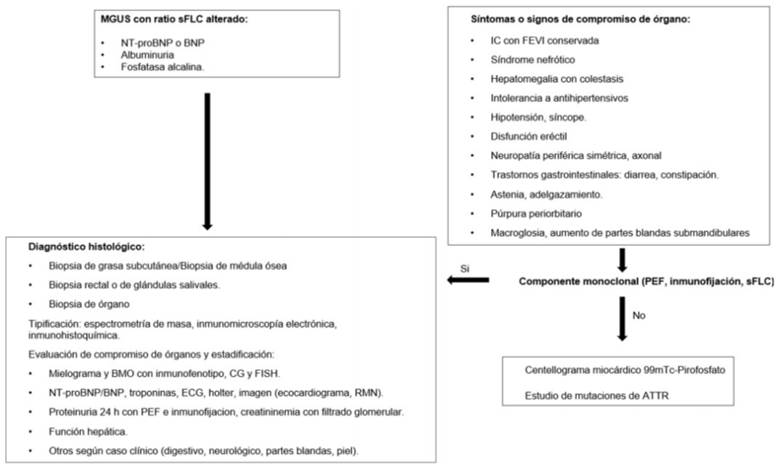
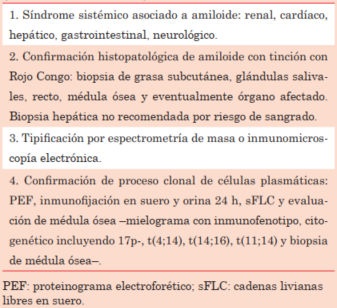
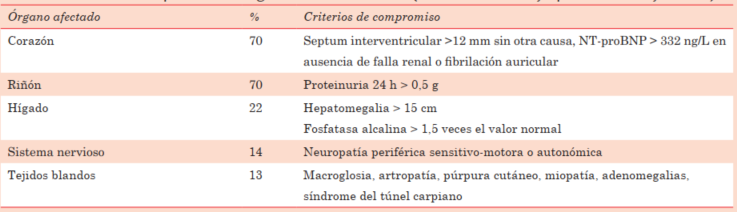
The amyloidoses are a heterogeneous group of diseases caused by the extracellular deposition of abnormally folded fibrillar proteins in organs and tissues, causing their dysfunction. The quality and life expectancy depend on the affected organ, with cardiac involvement being the main determinant of survival and quality of life. Diagnosis requires tissue biopsy and protein typing. Its late detection is associated with a lower prognosis and survival. The most common form of amyloidosis is caused by monoclonal light chain (AL) deposition, for which new immunological agents and chemotherapy aimed at suppressing plasma cell cloning have been shown to improve survival. For transthyretin amyloidosis (ATTR), the second in frequency, there are protein-stabilizing therapies and therapies aimed at stopping its synthesis through genetic silencing. This review focuses on the hematological bases for the clinical cardiologist.
Key words:
Amyloidosis; Light chain; Transthyretin; Restrictive cardiomyopathy; Heart failure
 Thumbnail