Mistic and Religious tourism: Conceptual differences from a subjective anthropologic point of view
Abstract
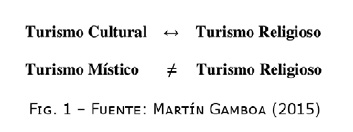
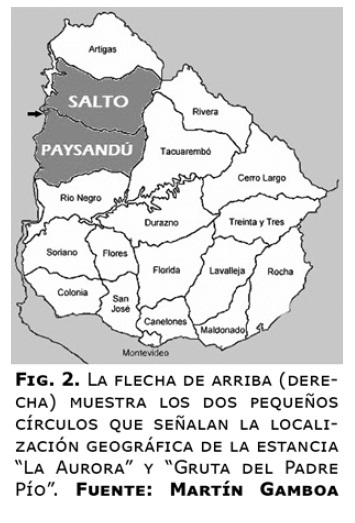
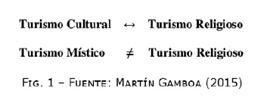
This article attempts to explain mystic tourism conceived as autonomous category. Such approach points to break traditional assumption within tourism studies where mystic tourism is view as a variant of religious tourism. The breaking involves many risks due to differences between religious tourism and mystic tourism is not clear at glance. Traditionally tourism studies have linked mystic tourism to religious tourism. In addition, many investigations have used interchangeably the words mystic-religious or esoteric-religious . Nowadays these concepts are disused and while tourism studies consider mystic tourism as separate category, it continues to be view as a variant of religious tourism. This axiomatic categorization proceeded through the comparison of diacritical features of both forms of tourism. Therefore, throughout a historical-genealogical journey of the two types of tourism a different historical itinerary of both concepts is found. Finally, the historical journey is analyzed through an ethnographic case study in Uruguay where the two forms of tourism are developed in the same territory
mystic tourism; religious tourism; power spots; new age
 Thumbnail
 Thumbnail
 Thumbnail
 Thumbnail