10 years after the anesthetic-surgical health emergency in Uruguay. Comparison of the results of the current offer with that projected in 2011
Introduction: during 2011 a simulation method was proposed to assess the needs and trends over time of anesthesiologists and establish possible scenarios.
Objective: compare the current situation with the projections formulated in 2011 by the simulation method to evaluate anesthesiologists’ supply and demand.
Material and methods: an update of the available databases was revised. The number and demographic distribution of the anesthesiologist workforce were recorded and compared with the proposed scenarios.
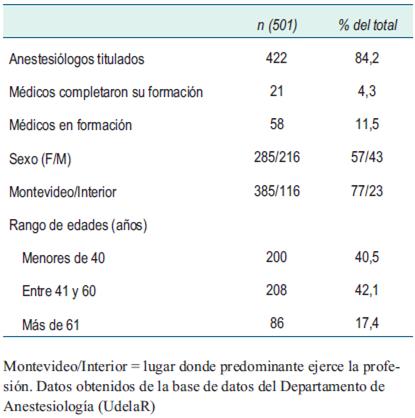
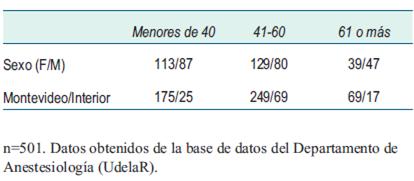
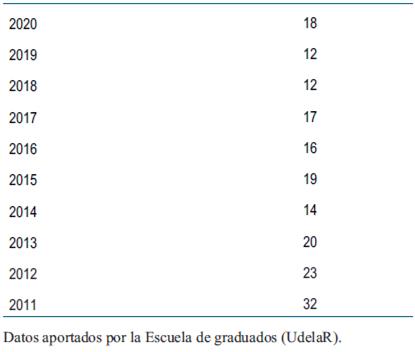
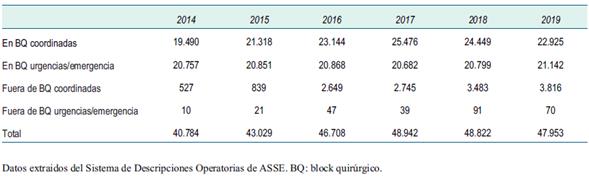
Results: the number of physicians with anesthesiology skills was 14.2/100.000, and wholly trained anesthesiologists were 12/100.000. The age distribution presented a median of 54 years, the central 90% were between 36 and 75 years old. 57% of the anesthesiologist are females. 21.8 workforce in anesthesiology/100.000 corresponds to Montevideo and the metropolitan area, against 7/100.000 in the rest of the country. There was an average increase of 50% in the number of positions for training, an increase in revalidation applications, and a rise of 17.5% in a surgical procedure in the public subsector.
Conclusions: the prediction of the number of anesthesiologists and their characteristics for 2020 coincided with two of the proposed scenarios. We verify a growth in female participation, a higher percentage in younger age groups, centralization of human resources in Montevideo and higher retirement age. The main limitation was access to reliable information.
Key words:
Anesthesiology; Anesthesiologists; Workforce; Statistical analysis; Physicians distribution