Usefulness of molecular biology techniques in neuroinfectious diseases
Introduction: a certain percentage of infections of the central nervous system have no etiological diagnosis. Nucleic acids amplification techniques by means of a polymerase chain reaction in real time may reduce this percentage.
Objective: to describe etiology of neuroinfectious diseases and assess the usefulness of molecular biology techniques in their diagnosis, as well as its impact on antimicrobial treatment.
Method: observational, descriptive, retrospective study based on clinical records which included patients older than 18 years old, who had been assisted in a public hospital in Montevideo for over 32 months and had undergone molecular biology techniques with cerebrospinal fluid (CSF) given the clinical suspicion of neuroinfection.
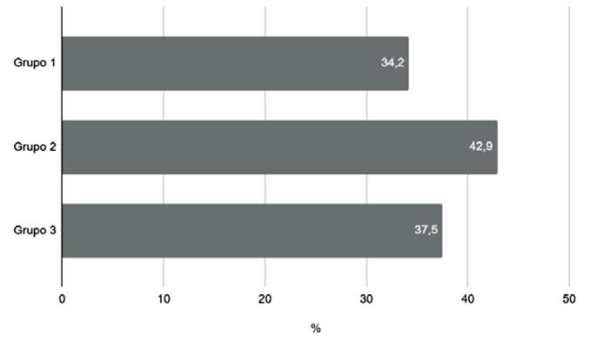
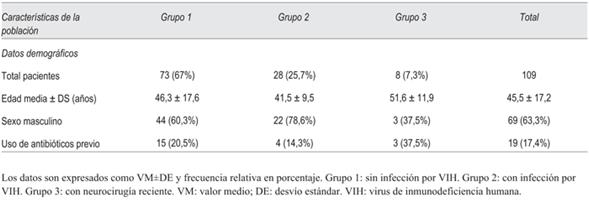
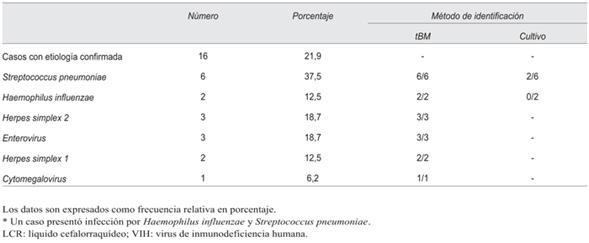
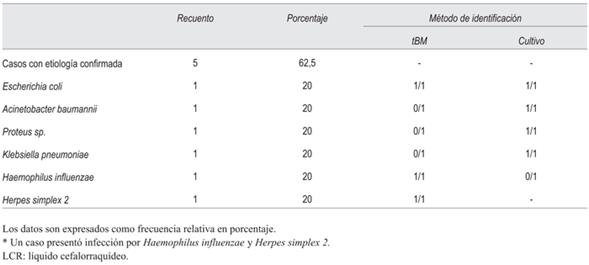
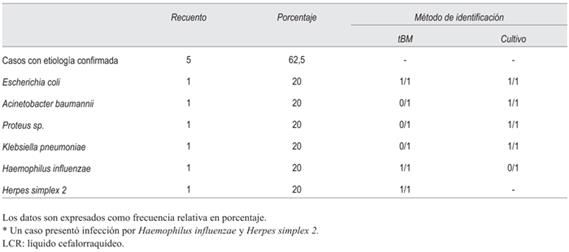
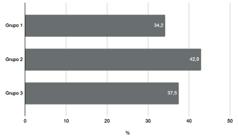
Results: 109 patients were included in the study. Among non-HIV infected patients who had not undergone neurosurgeries the responsible microorganism was identified in 16 cases (8 bacteria and 9 virus). They were all identified by molecular biology techniques by modifying the empiric antimicrobial therapy in 25 cases (34.2%). In carriers of HIV (25.7%), microorganisms were identified in 14 patients (50%). Six virus, 5 bacteria and 7 fungi (Cryptococcus neoformans). Molecular biology techniques defined the diagnosis of 17 microorganisms and modified the initial antimicrobial plan in 12 cases (42.9%). In patients with a history of recent neurosurgery (7.3%), 6 microorganisms were isolated, 3 of them exclusively through cultures. Treatment was modified in 3 cases (37.5%).
Conclusions: molecular biology techniques need to be regarded as a complement. The impact that have in diagnosis and therapy justify their use despite its higher cost.
Key words:
Central nervous system infections; Molecular biology; Meningitis
 Thumbnail