Two criteria to determine brain death in adults: a proposal to achieve a unified definition
The greater the advance in terms of knowing about acute encephalic injury (AEI) and its potential evolution to encephalic death (ED), the higher the possibilities of finding donors, with the corresponding reduction of waiting lists.
As we see it, intensivists must consider this possibility whenever they face victims of neuroinjury, regardless of its etiology. In addition to this, it is essential for them to know the pathophysiology of encephalic death syndrome, and the steps to be taken for a complete, thorough and strict neurologic exam.
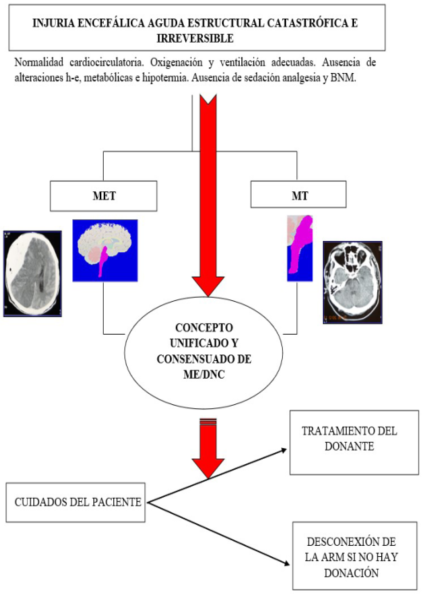
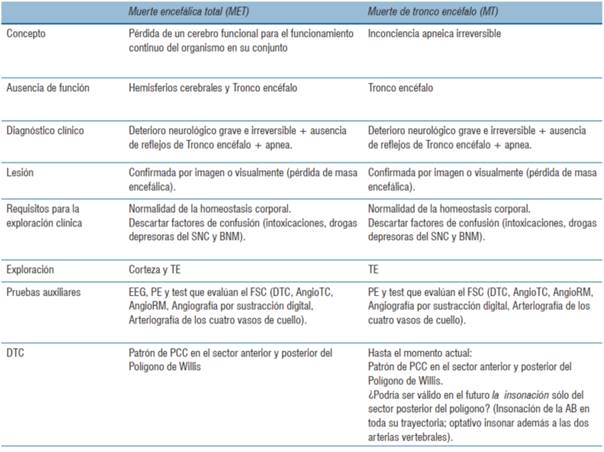
Today, there are two criteria to determine death according to neurologic criteria: “total brain death’’ (MET) and ‘’brainstem death’’ (MT). Despite the fact that both criteria are accepted by the global medical community, some countries adopt one or the other criteria, which defines the corresponding legal framework that supports it. We will debate both criteria, aiming to achieve a unified and agreed definition of brain death.
Key words:
Brain death; Adult
 Thumbnail