Enteroparasitary contamination of flies captured in the Palavecino Municipality, Lara State, Venezuela, 2017
Abstract:
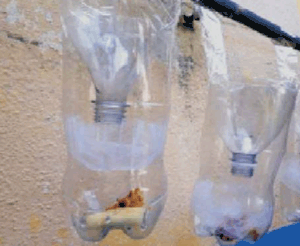
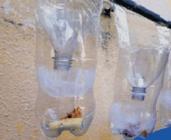
Introduction: the lack of studies in Venezuela that demonstrate the importance of flies of medical interest as mechanical vectors of enteroparasites, motivated the realization of this crosssectional descriptive work, with intentional sample, where with plastic and ecological traps, adults of flies were captured.
Materials and methods: the specimens were inactivated, to be classified by gender, washed with 0.85% saline, separated from the solution and then centrifuged 10 min at 3000 rpm, to later use the pellet, which was mounted between lamina and lamella to observe the sediment under a microscope.
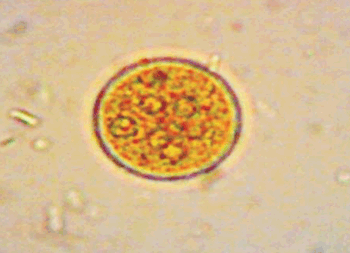
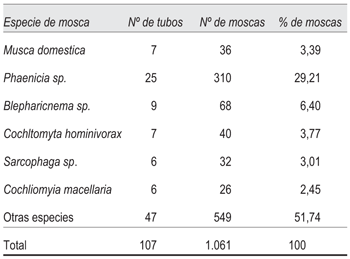
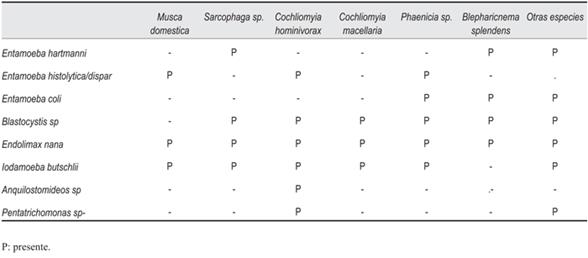
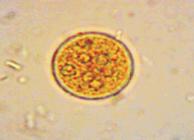
Results: 1.061 adults of flies were captured, which corresponded taxonomically to the genera: Phaenicia sp (29,2%), Blepharicnema splendens (6,4%), Cochliomyia hominivorax (3,8%), Musca domestica (3,4), Sarcophaga sp; (3%), Cochliomyia macellaria (2,5%) and the sum of other species (51,7%), such that from more than seven species of flies were able to identify the enteroparasites: Blastocystis sp, Endolimax nana, Entamoeba hartmanni , Entamoeba histolytica/dispar, Entamoeba coli, Iodamoeba butschlii, Pentatrichomonas sp (Trichomonas sp), while the only helminths obtained were Uncinarias (Anquilostomideos).
Conclusions: the enteroparasitic contamination of more than seven species of flies with seven species of enteroparasites diagnosed highlights the role of these dipterous transmitters in the cycle of enteric parasites.
Key words:
Flies; Parasites; Contamination; Venezuela
 Thumbnail
 Thumbnail