Device-based monitoring in physical activity versus self-report in Uruguayan university students
Introduction: precise measurement of physical activity (PA) is key to analyze its association with health results. However, there are no studies in Uruguay comparing the different methods to determine PA in adults. The study aims to analyze the reliability of the International Physical Activity Questionnaire (IPAQ) in Uruguayan university students and to assess its validity by comparing it to device-based monitoring PA.
Method: 54 Physical Education university students completed the IPAQ (long version) on 2 occasions with a 7 day difference using GeneActive accelerometers during that period. Reliability was assessed with the Intraclass Correlation Coefficient (ICC) and the Bland-Altman analysis was used to determine concurrent validity.
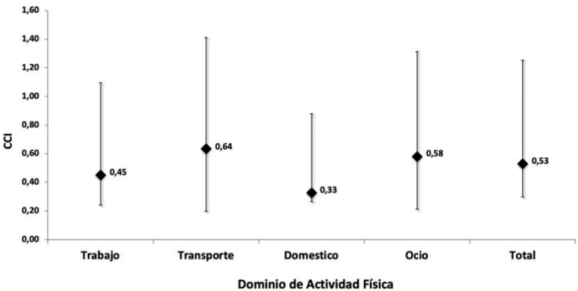
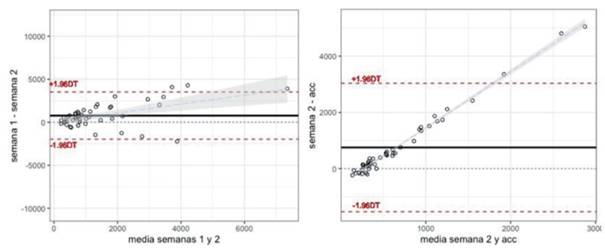
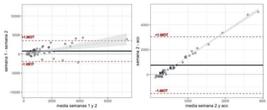
Results: all PA domains evidenced moderate ICC levels. Transport (ICC= 0.64), free time (ICC= 0.58) and total PA (ICC= 0.53) were the domains with the highest moderate levels. The total number of minutes of PA assessed by IPAQ reported an average of a 773 minutes difference (CI 95%: 362.88; 1184.01). Difference of PA in minutes, considering the assessment with the IPAQ and the accelerometers is 752 minutes (CI 95%: 418.05; 1087.16).
Conclusions: the IPAQ overestimates the PA when compared to the accelerometer in Uruguayan university students. However, it was more reliable when considering the transport and free time domains for participants who reported an average physical activity under 400 minutes per week.
Key words:
Physical activity; Evaluation; Reliability and validity; Adult
 Thumbnail
 Thumbnail