Fructose, a modifiable key factor in the pathogenic basis of metabolic syndrome, NAFLD and obesity
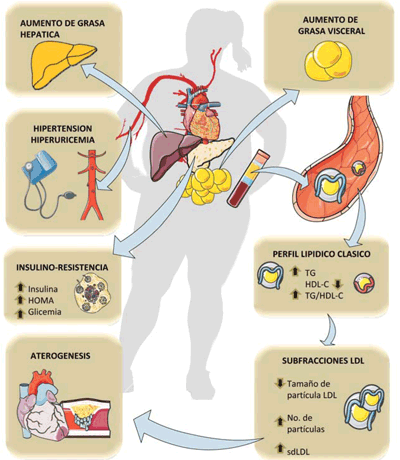
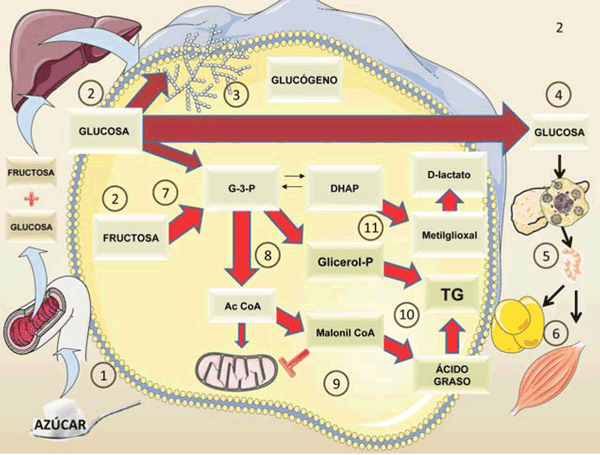
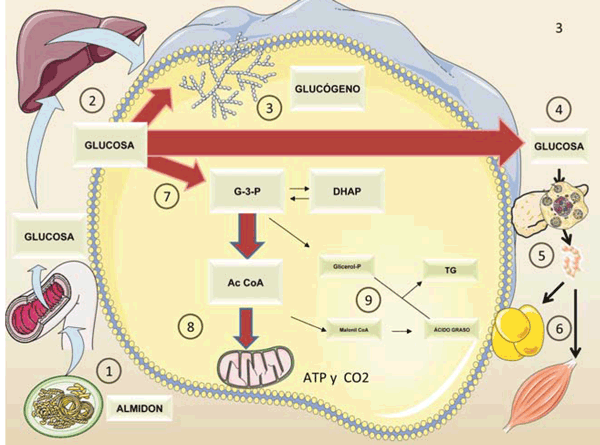
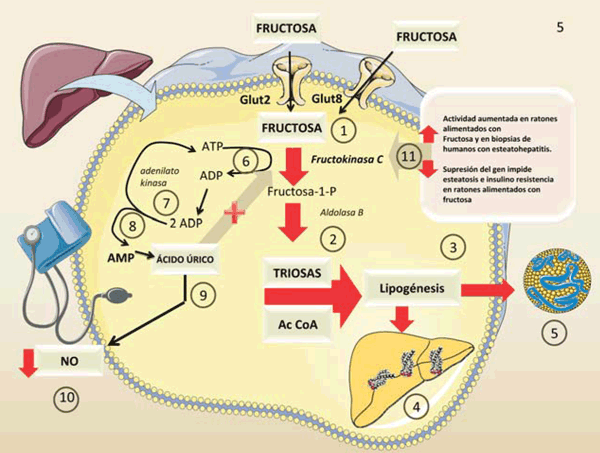
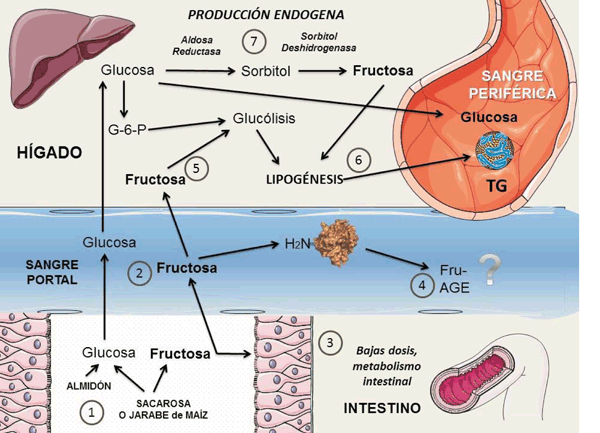
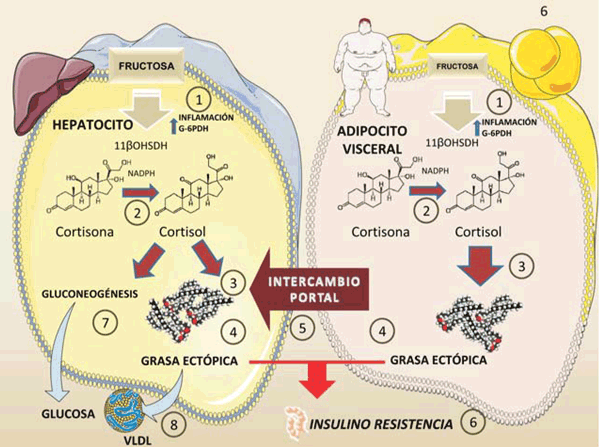
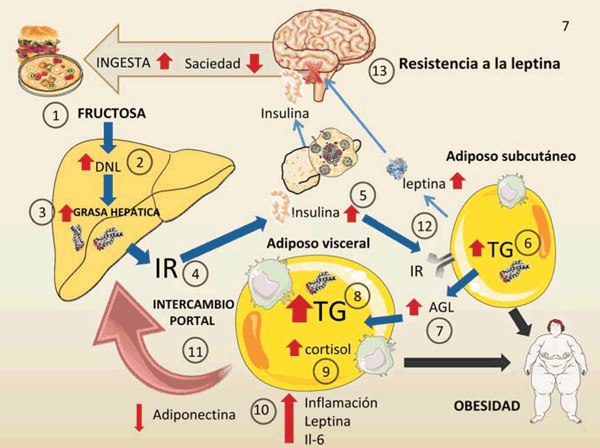
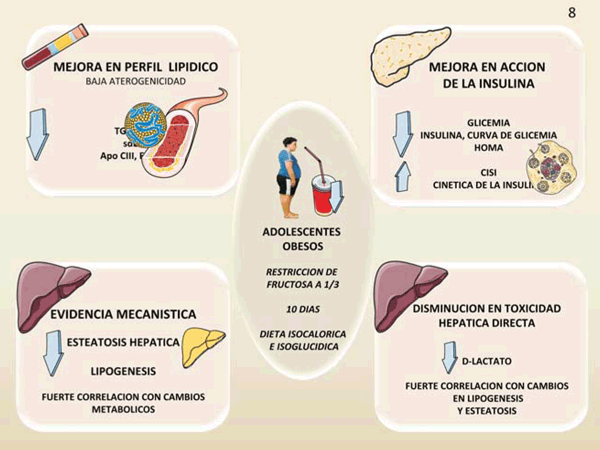
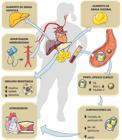
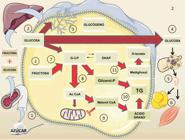
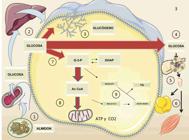
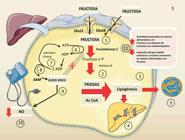
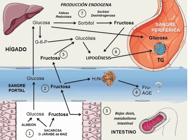
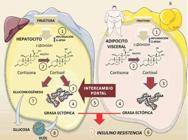
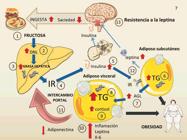
This review summarizes the specific role that excess fructose consumption (beyond its calories) may have in the development of MetS, NAFLD and its association with obesity. The effects of fructose (compared to glucose) on hepatic steatosis are discussed as well as their consequence: insulin resistance and hypertriglyceridemia. Unlike glucose, more than 80% ingested fructose stays in the liver, and due to lack of fine metabolic regulation, high fructose flows consume ATP generating uric acid, produce toxic metabolites such as ceramides and methylglyoxal and activate lipid synthesis. In addition, the study analyzes the effects of fructose on adipose tissue, cortisol activation and hormones involved in satiety control, all of which are affected by fructose consumption. The initial hepatic insulin resistance is complicated by systemic insulin resistance, which generates leptin resistance and a hyperphagia cycle. These results underscore the need for clinical and educational interventions within the population to regulate / reduce fructose consumption, especially in children and adolescents, their main consumers.
Key words:
Fructose; Metabolic syndrome; Fatty liver; Insulin resistance; Obesity; De novo lipogenesis
 Thumbnail
 Thumbnail
 Thumbnail
 Thumbnail
 Thumbnail
 Thumbnail
 Thumbnail
 Thumbnail