Study of the impact of safety issues and adverse events in the intensive care unit
Introduction: critically ill patients are extremely vulnerable to iatrogenia. Adverse events (AEs) contribute to the morbidity and mortality of hospitalized patients and therefore detection and prevention are of the essence.
Objectives: to study the impact of AEs selected from an intensive care unit and the resulting harm. To set the bases to create a system for the notification of adverse events.
Method: prospective study of impact using two methods: voluntary report and auditing of medical records.
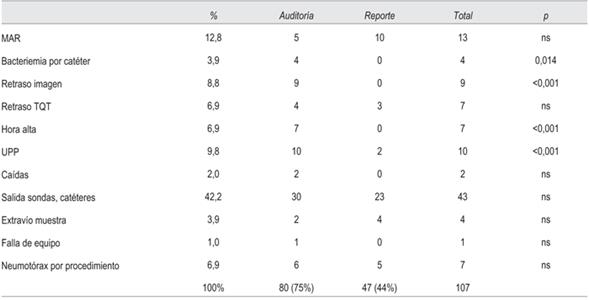
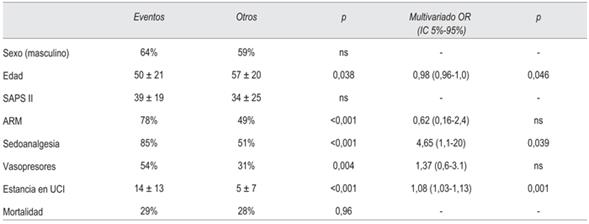
Results: 174 patients were included in the study. 107 adverse events were identified in 35% of patients. The most prevalent issues were probe and catheter exit-site (42%) and those related to high-risk drugs (12.8%). Age (p=0.046), length of stay in the ICU (p=0.001) and need of sedoanalgesia (p=0.039) were independently associated to the presence of adverse events. 76.6% of the events resulted in harm, although they were not associated to higher mortality (p=0.96).
Conclusions: AEs are highly frequent in the intensive care unit. Probe and catheter exit-sites are the most prevalent source. Also, adverse events are related to the need for mechanical ventilation, sedoanalgesia and length of stay in the intensive care unit. Voluntary reporting is a useful tool to identify adverse events.
Key words:
Patient safety; Intensive care units; Adverse event; Patient harm
 Thumbnail
 Thumbnail