The control of tobacco in Uruguay: Evolution of the last 20 year
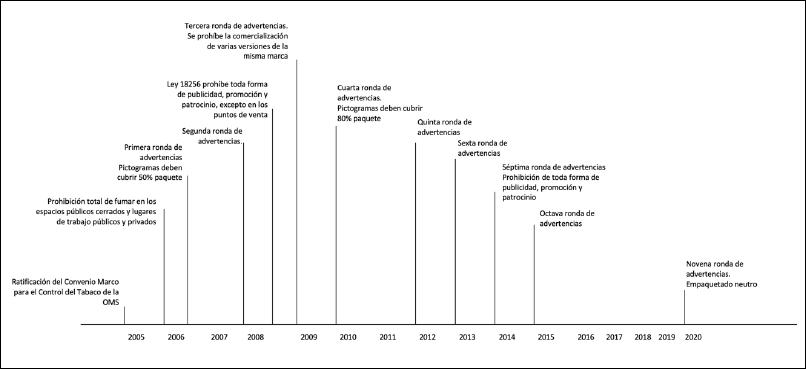
Objective: Uruguay has a comprehensive tobacco control policy; two decades after its implementation, smoking continues to be a public health problem, the leading cause of preventable death, and a risk factor for chronic diseases. We systematized the available information on policies, consumption, prices, and tobacco taxes, with the aim of detecting vulnerable groups that should be considered when focusing policies, as well as identifying which ones need to be deepened.
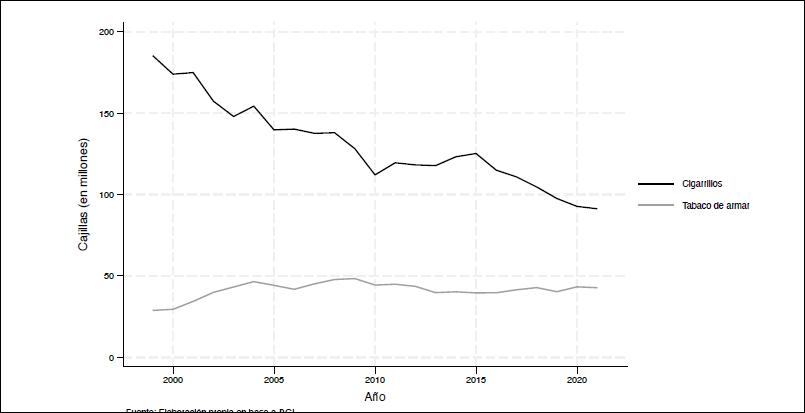
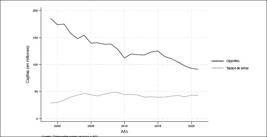
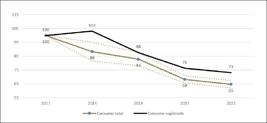
Materials and methods: Descriptive analysis of drug consumption surveys in households and middle school students, household surveys, household income and expenditure surveys, and administrative records of legal consumption. Estimation of gaps between reported consumption and legal sales as an approximation to smuggling.
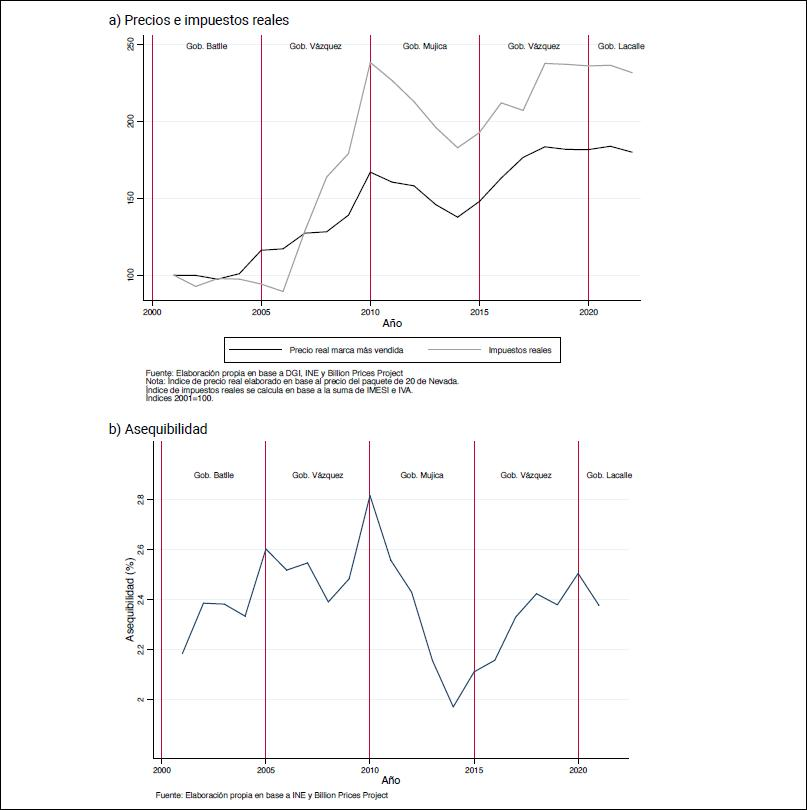
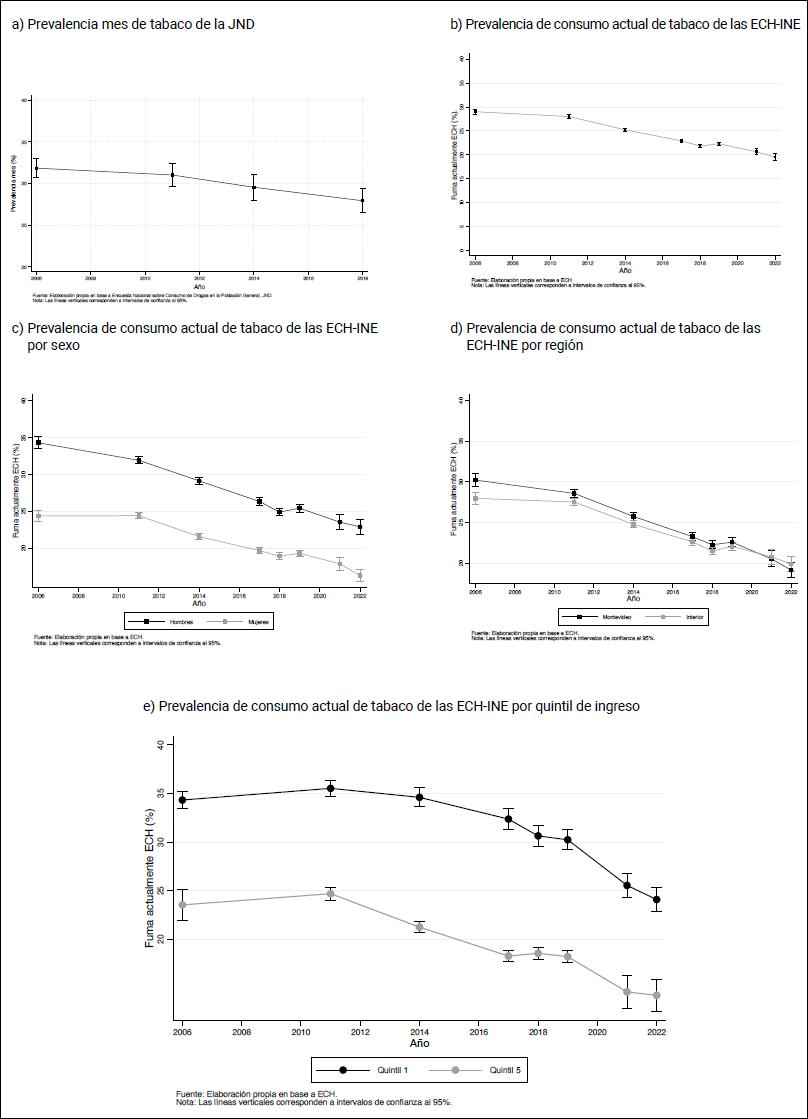
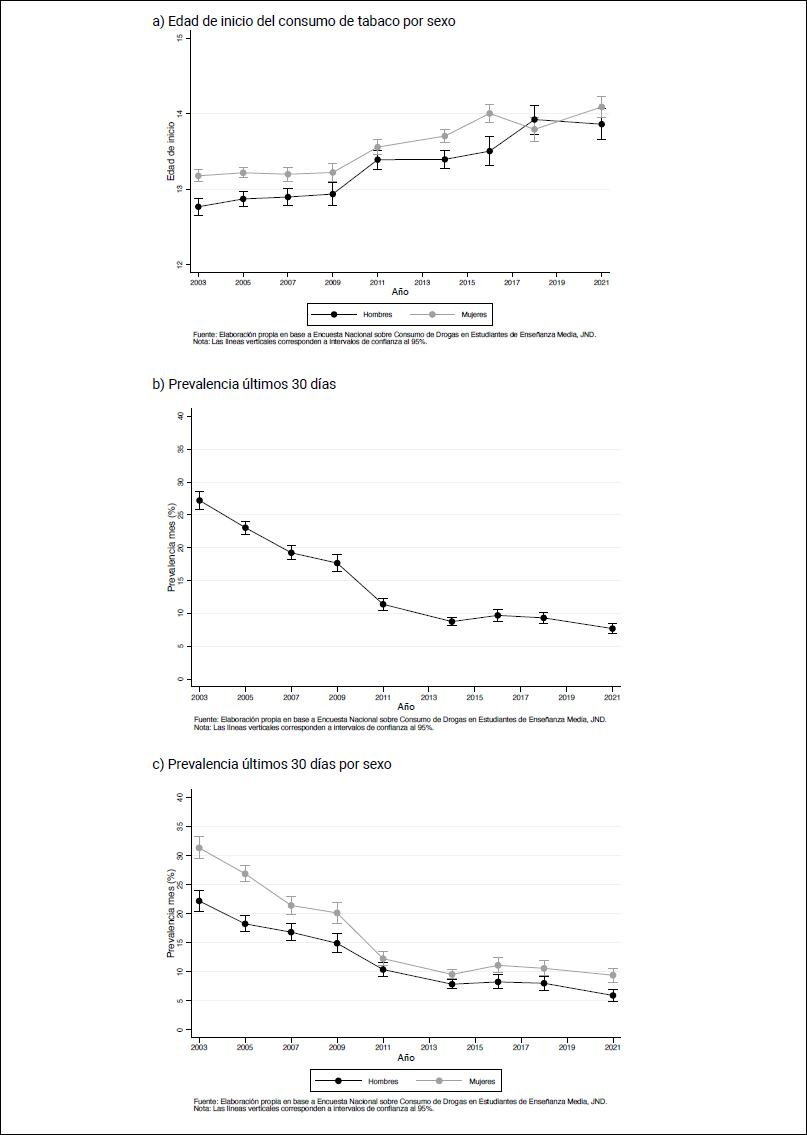
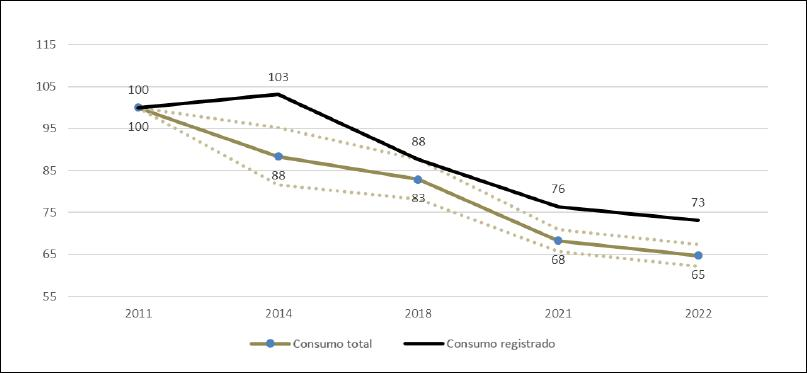
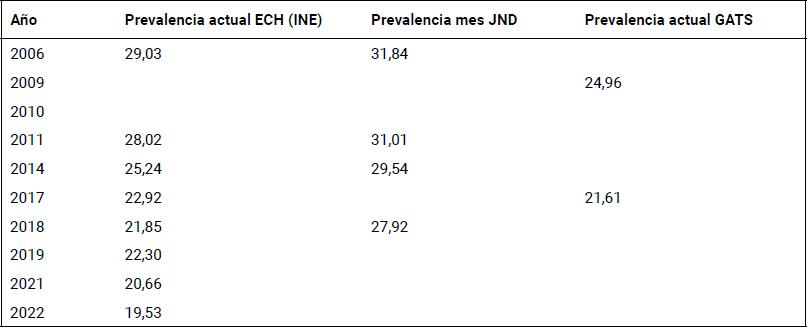
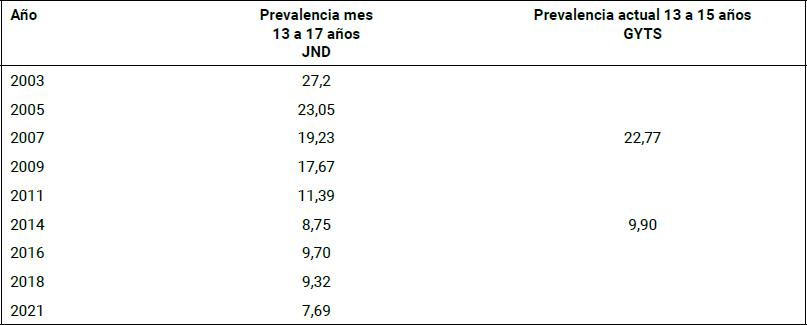
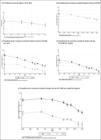
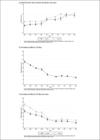
Results: Between 2001 and 2021, real taxes increased by 123% and the real price of a pack of cigarettes by 84%, with 65% of the price corresponding to taxes. Youth consumption dropped by 72%, while the age at which they start smoking increased, and adult consumption dropped by 33%. The groups that have had smaller reductions than the average are women, residents of rural areas, and those of lower socioeconomic status. The gap analysis shows that the penetration of illicit trade has decreased.
Conclusions: Taxes should be increased to reach the WHO’s minimum recommendation that at least 75% of the price of a pack corresponds to taxes, while tobacco treatment programs and the implementation of the protocol for the elimination of illicit trade should be strengthened and focused.
Key words:
Tobacco control policies; Smoking
 Thumbnail
 Thumbnail
 Thumbnail
 Thumbnail
 Thumbnail
 Thumbnail