Comparison of HPV typing performance and the Pap test as triage methods in the detection of cervical cancer and its precursor lesions in the ESTAMPA-Uruguay Project
Introduction: Human Papillomavirus (HPV), which has a high prevalence, causes cervical cancer in a low percentage of infections. HPV detection should be completed with a triage test that identifies women at higher risk of developing cancer.
Objective: To analyze the best triage strategies for detecting precancerous lesions and cervical cancer.
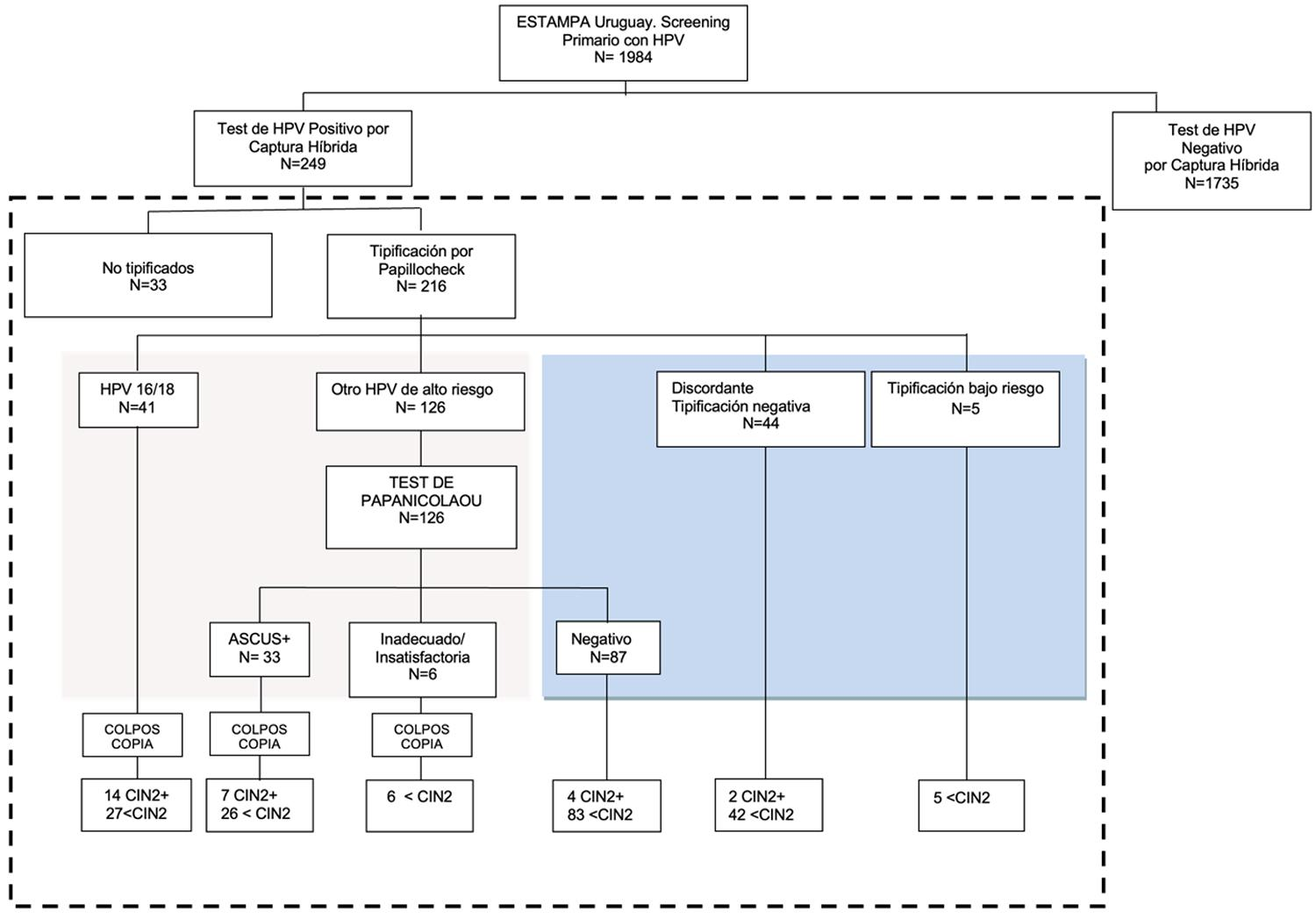
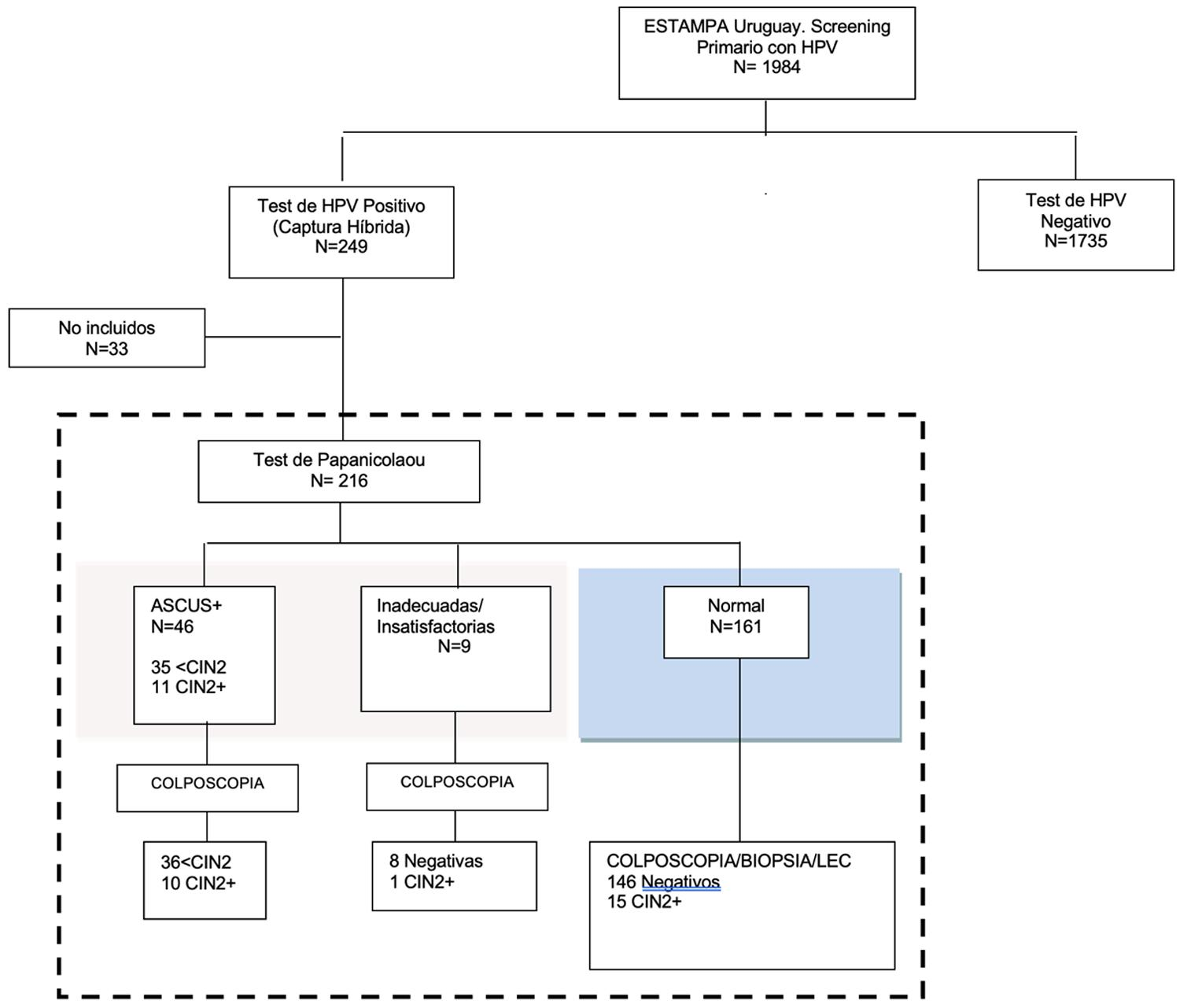
Method: The study is retrospective and observational. A Pap test, HPV test, and typing were performed on 1.984 women during the period 2014-2019. The performance of partial typing for HPV 16/18 combined with cytology (algorithm A) was analyzed against cytology without typing (algorithm B) for triaging HPV-positive women in primary screening.
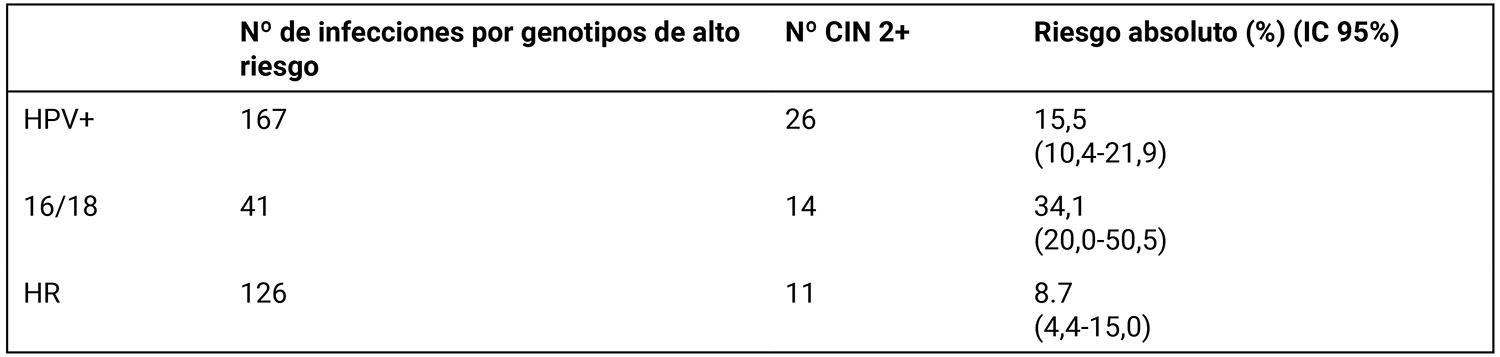
Results: 12,5% of the women were HPV positive. Twenty-seven cases of CIN2+ were detected (10,8% of the positives). The sensitivity for detecting CIN2+ in HPV-positive women was greater for algorithm A than for B (A=77,7% vs B=44,4%, p=0,006). The specificity was higher for cytology without typing (A=68,7% vs B=77,2%, p=0,002) but with a lower detection rate for CIN2+. The positive predictive value (PPV) was similar (A=26,2% vs B=21,8%, p=0,30). The negative predictive value (NPV) was higher for genotyping with cytology (A=95,5% vs B=90,6%, p=0,014). The absolute risk for CIN2+ was 34,1% (95% CI 20,0-50,5) for genotypes 16/18 and 8,7% (95% CI 4,4-15,0) for other high-risk genotypes.
Conclusions: Partial typing of HPV followed by cytology presents a greater sensitivity for detecting CIN2+ lesions and is more efficient in ruling out disease compared to cytology as a triage method. HPV genotypes 16/18 should be referred for colposcopy.
Keywords:
Uterine cervical neoplasms; Papillomavirus infections; Papanicolaou test; Screening; Human papillomavirus DNA tests
 Thumbnail
 Thumbnail