The impact of integrating breast tomosynthesis in a Breast Diagnostic Center
Introduction: significant technological progress has been made in the history of mammography. Recently, direct digital mammography plus tomosynthesis arrived and improved breast cancer screening.
Objective: to evaluate the effects of new technology in the performance of mammography, at the Breast Diagnostic Service of the British Hospital.
Method: mammography performance during 2019- 2020 was compared to that between 2010 and 2018. In 2019 the previous tehcnology was substituted by a direct digital mammogram with tomosynthesis, Hologic, Selenia Dimensions model.
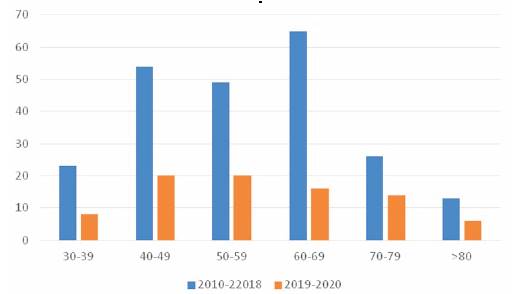
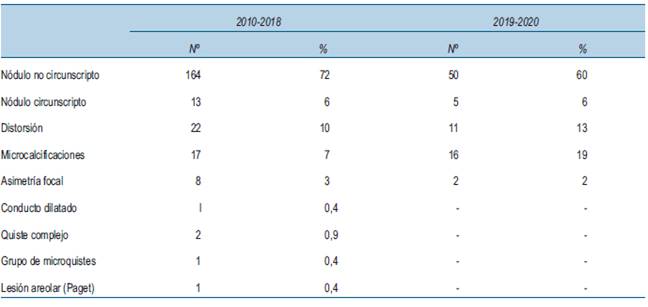
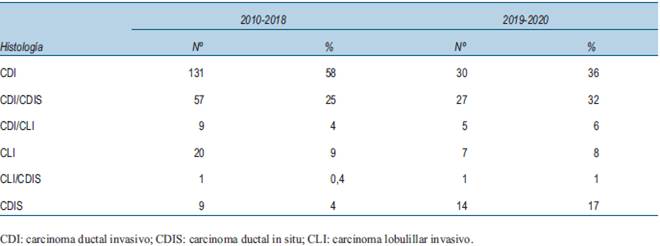
Results: 10.725 mammographies were done in 2019-2020. Cancer was detected in 84 cases and the cancer detection rate was 8 per 1000 persons. PPV was 35%. 45.438 mammographies were done in 2010-2018. Cancer was detected in 229 cases and the cancer detection rate was 5 per 1.000 persons. PPV was 40%. As to images, it is worth pointing out an increase in microcalcifications between 2019 and 2020, when they grew from 7% of cases to 19% of cases and distortions increased from 11% to 13%. DCIS was 4 times greater in 2019-2020 when compare to the previous period of time (17% of all detected cases).
Conclusions: the integration of tomosynthesis increased 60% the cancer detection rate and the DCIS was 4 times greater.
Key words:
Tomosynthesis; Mammography; Diagnosis
 Thumbnail