Application of a Population Pharmacokinetic Model for the Monitoring of Patients Undergoing Treatment with Dolutegravir: Pilot Study
Introduction: Despite advances in antiretroviral treatment, there is a possibility that people living with HIV may experience treatment failure linked to multiple factors that impact drug response.
Objective: To evaluate the usefulness of applying a pharmacokinetic model in patients diagnosed with HIV undergoing treatment with dolutegravir for the analysis of experimental plasma concentrations. Additionally, the aim is to identify potential drug interactions, assess adherence, and therapeutic failure.
Method: A cross-sectional, observational pilot study was conducted in HIV patients treated with dolutegravir, which included plasma concentration dosing, assessment of adherence using the Simplified Medication Adherence Questionnaire (SMAQ), and medication withdrawal. A population-based model referenced in the literature was used to predict dolutegravir concentrations in each patient and these were compared with experimental concentrations.
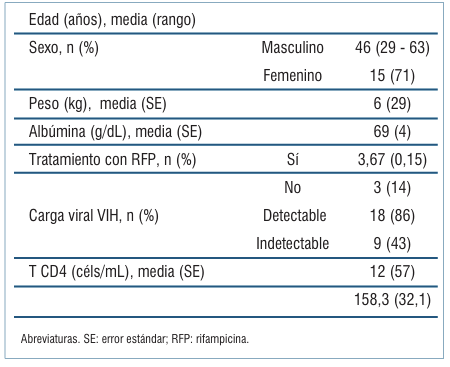
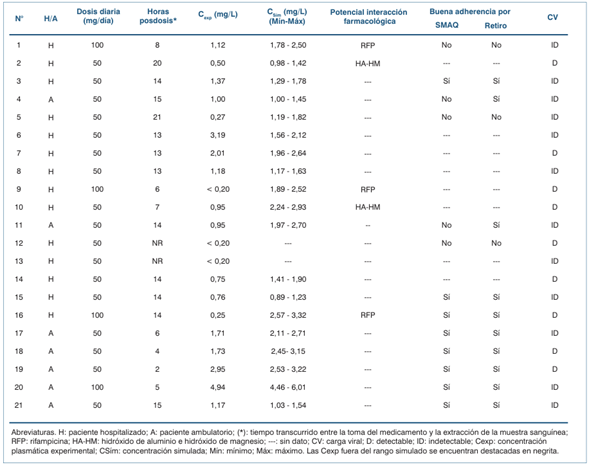
Results: Twenty-one patients were included in the study. When comparing experimental plasma concentrations with pharmacokinetic simulation, differences were found for 12 patients, which can be explained by possible drug interactions, poor adherence, or other factors affecting pharmacokinetics. Non-adherence was detected in 38% according to the SMAQ and 23% according to medication withdrawal.
Conclusions: The potential role of pharmacokinetic models in the interpretation of plasma concentrations is highlighted, emphasizing the need to advance in this type of studies to establish therapeutic ranges and clinical applicability.
Key words:
Antiretroviral therapy; Pharmacokinetics; Drug interactions; Adherence to treatment; Dolutegravir