Diagnostic value of CT and Pet CT for detection of peritoneal carcinomatosis. Preliminary study
Imagenology contributes to the accurate diagnosis of peritoneal compromise in the assessment of peritoneal carcinomatosis, although its effectiveness is still limited. CT is the most frequently used study and PET/CT is graduallly more requested in the assessment of different neoplasms. This study aims to assess performance of CT and PET/CT for diagnosis of peritoneal carcinomatosis in digestive and gynecological tumours.
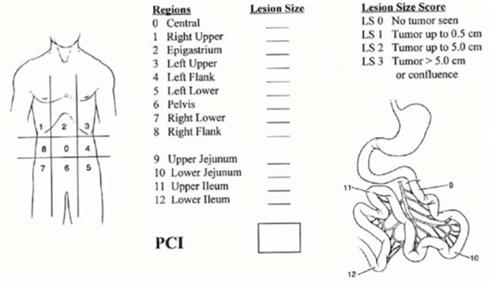
Method: retrospective, observational study of 11 cases operated on peritoneal carcinomatosis after a CT and/or PET/CT had been performed. The results of both image studies were analysed separately and altogether and they were subsequently compared to intraoperative and pathology studies.
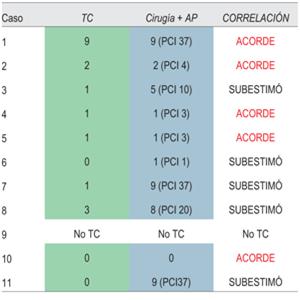
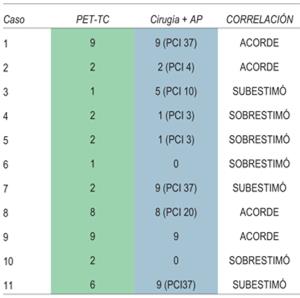
Results: CT matched findings in 8 out of 10 cases (sensitivity 78%, specificity 100%, positive predictive value 100%, negative predictive value 33%), whereas PET/TC matched in 9 out of 11 patients (sensitivity 100%, PPV 81%). When considered together, sensitivity was 100% y el PPV de 82%.
Conclusions: the results of the study confirm imagenology studies overestimate peritoneal carcinomatosis based on the characteristics of nodules and its uptake pattern. In CT/PET, SUV> 6 could increase the probability of diagnosing carcinomatosis. This small series of cases enables our suggesting CT and 18F-FDG PET-TC to be requested and analysed together to increase its efficiency, although surgical exploration continues to be the most effective method to diagnose and assess peritoneal carcinomatosis.
Key words:
Peritoneal neoplasms; Carcinoma; Peritoneum; Hyperthermia, induced; Positron-emission tomography; Tomography, X-ray computed
 Thumbnail