Study of the clinical use of positron emission tomography in the practice of oncological gynecology at the women’s hospital
18 fluoro-2-deoxy-d-glucose (18FDG) PET (Positron Emission Tomography) is a diagnostic non- invasive nuclear medicine imaging technique, and it is usually associated to oncological pathologies.
Objective: to assess the indication and impact of 18FDG PET in women with gynecologic cancer.
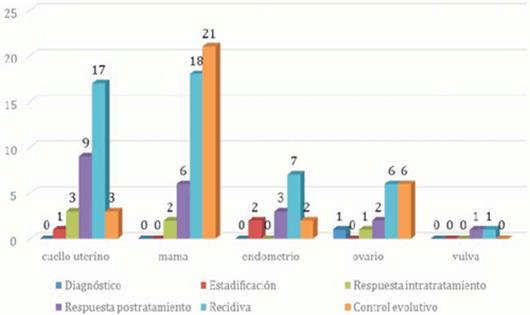
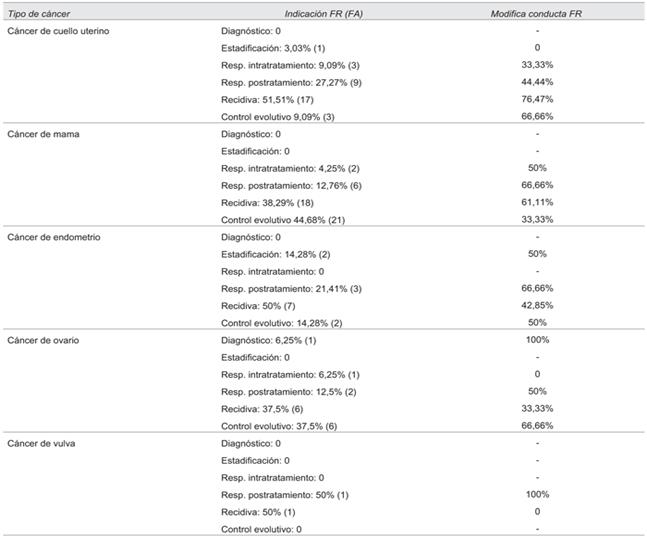
Study: retrospective, descriptive study by reviewing the medical records of patients with gynecologic cancer who were seen at the Women’s Hospital. They underwent an 18FDG PET in the diagnostic assessment or follow-up between January 1, 2014 and December 31, 2017. 68 patients were studied, and 112 18FDG PETS were carried out. As to indication, in the case of cervical cancer (CC) most PET studies (51.5%) were used upon suspicion of relapse; in breast cancer to control evolution (44.6%); in endometrial cancer upon suspicion of relapse (50%); in ovarian cancer 37.5% upon suspicion of relapse and same percentage to control evolution; in vulvar cancer in the post-treatment follow-up or upon suspicion of relapse (50% each). As to global impact in the clinical practice, in the case of cervical cancer 60% of the studies resulted in modifications of the clinical behavior; in breast cancer this percentage was 49%; in endometrial cancer it was 43%, in ovarian cancer 50%, and vulvar cancer 50%. 18FDG PET is a technique that has been included in the gynecological clinical practice and guidelines for its use are still required.
Key words:
Positron-emission tomography; Genital neoplasms, female
 Thumbnail