Intestinal rehabilitation using semisynthetic glucagon-like peptide-2 analogue. First experience with teduglutide in Uruguay.
Long-term home parenteral nutrition (HPN) is a life-saving treatment for patients with chronic intestinal failure, an invalidating condition. However, only 1 out of 3 countries can rely on this treatment and complications associated to chronic parenteral nutrition are rather frequent. The latter constitute the main indication for intestinal transplantion, a procedure that in most middle-income countries has not yet developed and has not shown the expected outcome. In recent years, intestinal rehabilitation has significantly improved at the global level with the use of GLP2, based on the growing evidence that proves the possibility of intestinal rehabilitation and independence from parenteral nutrition with Teduglutide, even in the case of patients with unfavorable anatomy. These results have caused a positive impact on survival and the quality of life of patients with chronic renal failure, and they can often abstain from transplant.
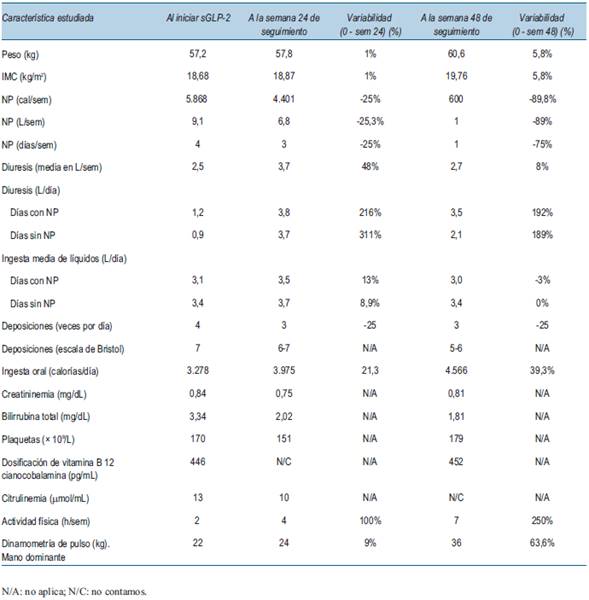
The patient of the case study is the first one who received this therapy in our country and this article analyses his favorable early response to treatment and future perspectives.
Key words:
Chronic intestinal failure; Short bowel syndrome; Parenteral nutrition, home; Glucagon-like peptide 2; Teduglutide
 Thumbnail
 Thumbnail