The role of thyroglobulin detection in washout fluid from fine-needle aspiration biopsies to diagnose gland metastases in thyroid cancer follow up
Recurrence of differentiated thyroid cancer (DTC) in the cervix is 5-20% of cases. Fine-needle aspiration cytology of adenopathies has been used to confirm ultrasound findings when suspicions of being malignant.
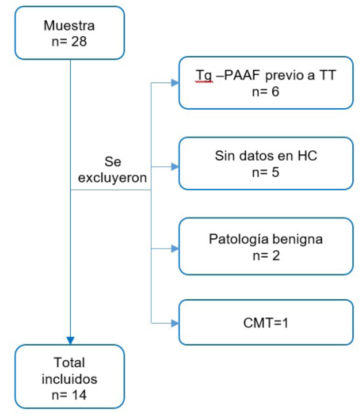
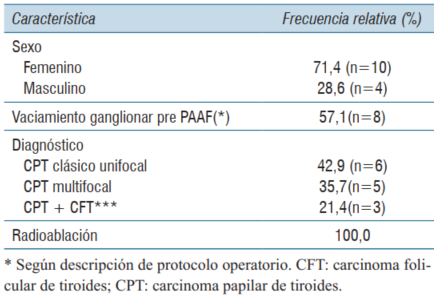
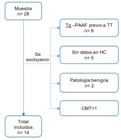
The study aims to evaluate usefulness of fine-needle aspiration of lymph gland to diagnose gland metastases in patients over 18 years old under papillary thyroid cancer follow-up. Retrospective, descriptive and observational study in a 14-patient-sample, mainly female (71,4%), with an average age of 40.9 ± 2.9 years old.
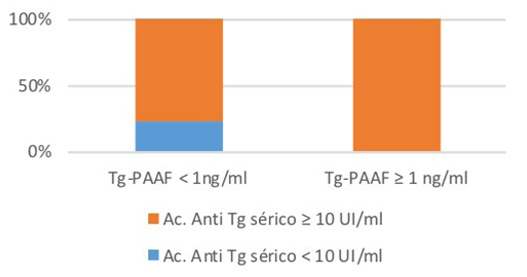
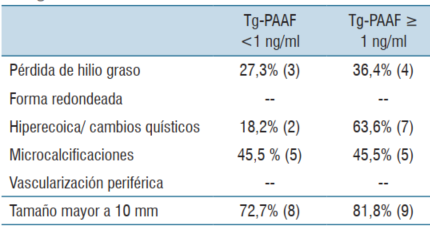
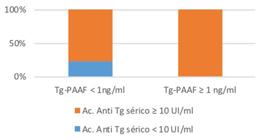
Results: single tumor focus papillary thyroid cancer was the most common type of thyroid cancer found. 50% of the 22 suspicious glands had FNATg ≥1ng/ml. All reactive adenitis had measurements < 1ng/ml, whereas metastatic adenopathies results were ≥ 1ng/ml. 85.7% of patients had anti-TG Ac ≥ 1ng/ml (5 patients with FNATg values ≥1ng/ml and 7 patients with FNATg < 1ng/ml), 14.3% of which obtained results < 10 UI/ml (all of them with FN1 ng/ml). Gland emptying was performed in 4 cases, and papillary thyroid cancer metastases was found in all of them.
Conclusions: FNATg is a good study to diagnose gland metastases in patients under differentiated thyroid cancer follow-up. Given the results of this study, supported by a bibliographic search, the use of FNATg has a great diagnostic value to detect gland metastases in the follow up of differentiated thyroid cancer, and thus it is recommended along with cytological and/or pathology studies.
Key words:
Thyroglobulin; Thyroid cancer; Punctures; Adenopathies.
 Thumbnail
 Thumbnail