Factores de riesgo para desarrollar neumonía asociada a la ventilación por Acinetobacter spp.
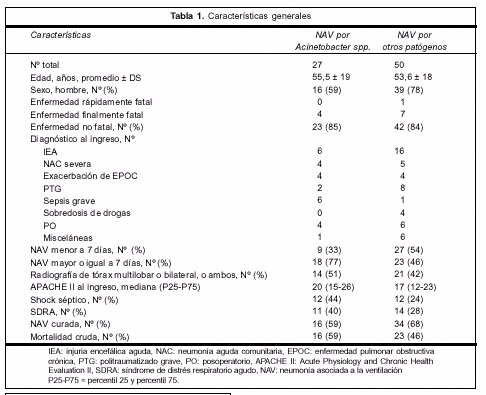
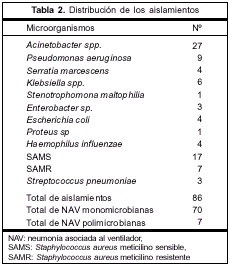
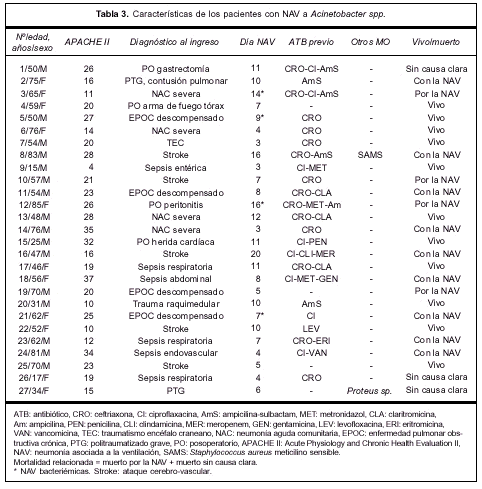
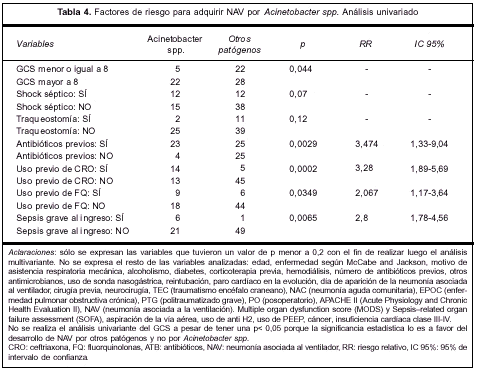
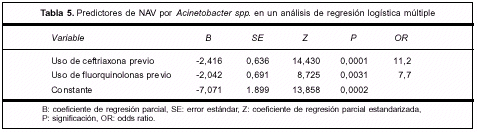
Summary The incidence of pneumonia associated with Acinetobacter spp.-ventilation (PAV) has risen both at national and international levels and determines high mortality rates. Risk factors for developing this hospital-acquired pneumonia vary in every centre. We aimed at identifying specific risk factors for developing PAV. This 24-month prospective study (May 2000-May 2002) took place in the intensive care units (IUC) of the Hospital Pasteur and the Hospital Policial. All ventilated patients for a period of 48 hours or more, suspected to carry PAV were enrolled. Only pneumonias bacterial-proved were analyzed. Results. In a sample of 137 patients, suspected carriers of PAV, 77 PAV events were bacterial-proved: 27 for Acinetobacter spp. and 50 for other pathogens. Logistic regression was used to analyze data, the independent variable was Acinetobacter spp. Previous use of ceftriaxone (CRE) (p = 0,0001, OR = 11,2) and flurquinolone (p=0,003, OR=7,0) significant and independently predicted PAV. Conclusions. CRE and fluorquinolone were indentified as risk factors for developing PAV. Restriction on CRE and fluorquinolone and use of other molecules of similar spectrum in rotation.
Revista Médica del Uruguay