Hepatic mucinous cystic neoplasm, case report and pathology analysis
Since the early reports in the literature, the nomenclature of hepatobiliary cystic lesions has been modified, with two types of lesions being described: serous and mucinous. In 2010, the World Health Organization established a new classification in which the terms hepatobiliary cystadenomas and cystadenocarcinomas were replaced by more specific entities such as mucinous cystic neoplasms and intraductal cystic tumors (intraductal papillary neoplasm, intraductal tubulopapillary neoplasm, and intraductal oncocytic papillary neoplasm).
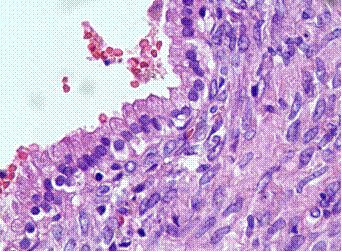
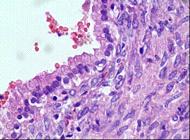
Regarding mucinous cystic neoplasms, the presence of ovarian stroma confers distinctive pathological and biological characteristics, which is a requirement in the WHO classification. This characteristic differentiates it from biliary hamartomas, congenital cysts, and Caroli's disease.
Such neoplasms are rare, with an incidence of less than 5% of hepatic cystic lesions, and occur almost exclusively in women, often perimenopausal. Their potential for malignancy has been described, and this is the indication for surgical resection treatment.
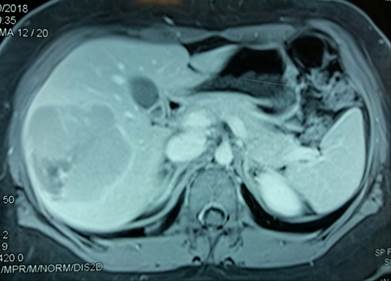
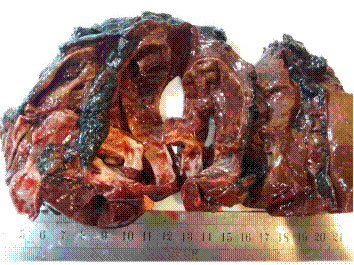
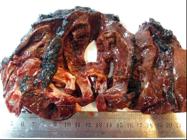
We present a clinical case of a patient with a mucinous cystic hepatic neoplasm, classified as a hepatic cystadenoma according to the old classification.
Keywords:
Hepatic cystadenoma; hepatic mucinous cystic neoplasm
 Thumbnail
 Thumbnail
 Thumbnail