An evaluation of rational choice theory: : the case of youths crime in Montevideo
Abstract
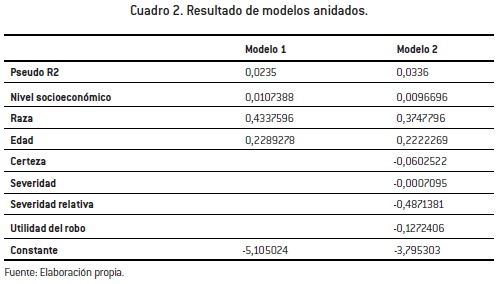
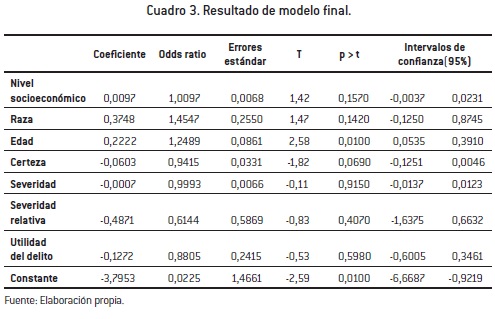
In this article we first describe the political discussion on the reform on diminishing the age of criminal responsibility and its assumptions: i) 16-17 youths are responsible for a significant portion of criminality in Uruguay; ii) increasing the severity of penalties diminishes crime. We use official statistics and the international literature to challenge both assumptions. Next, we estimate a logistic regression model based on a self-report survey conducted in Montevideo. Our findings show that most of the rational choice theory variables are statistically non significant or very weakly associated with crime, and the model fit was very poor. After describing the limitations of this study, we discuss issues associated with designing evidence based criminal prevention policies.
rationality; youth crime; criminal responsibility