The immutability of Uruguay’s agriculture: a case study about rural wage labor
Abstract
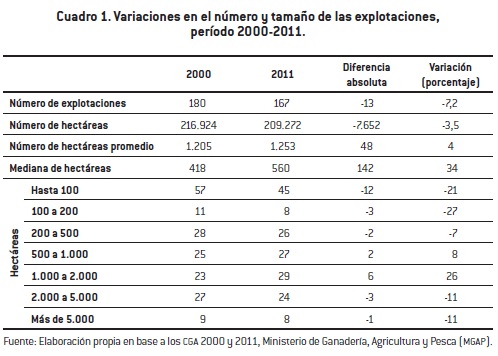
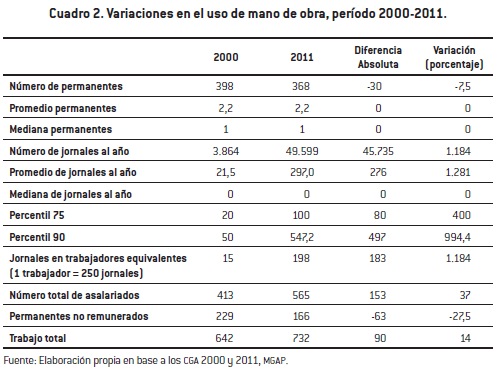
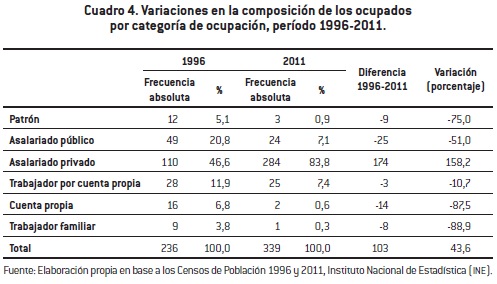
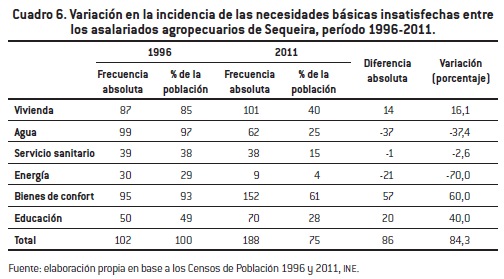
The article analyzes the productive, socio-demographic and living conditions changes in a rural area of Uruguay by triangulating quantitative and qualitative techniques. The aggregated results obtained generate an extremely different image from that usually associated to agriculture in the early twenty-first century in Uruguay. Besides, the discourses analyzed show a reprivatization process which leads the labor relation to the broadened private sphere of the agricultural holding, depoliticizing the negotiation and reducing the possibility of conflict and collective and organized claim.
Social inequalities; ubn; rural workers; depoliticization