Psychometric Evidence of the Self-Efficacy Inventory for Multiple Intelligences-Revised (IAMI-R) in Peruvian Adolescents
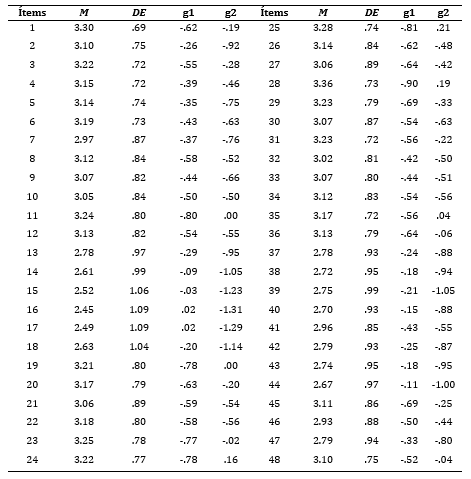
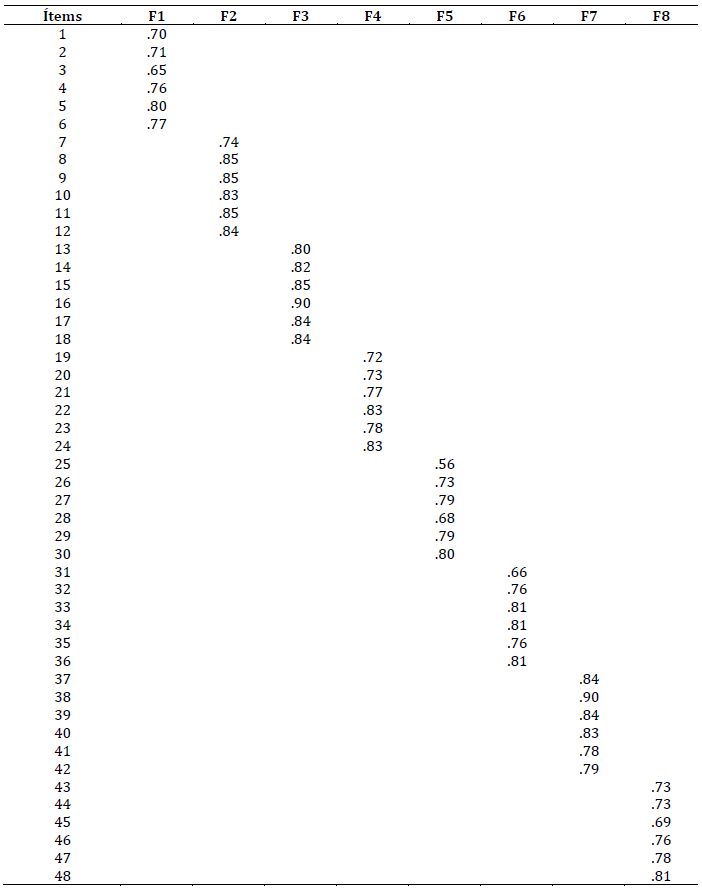
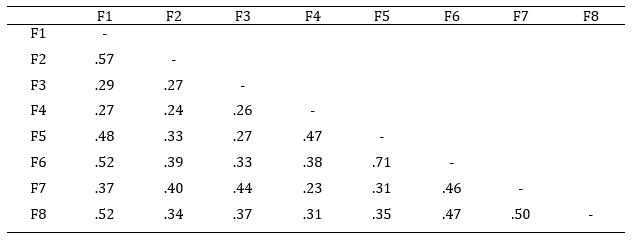
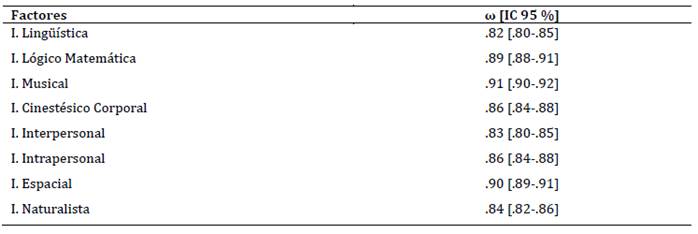
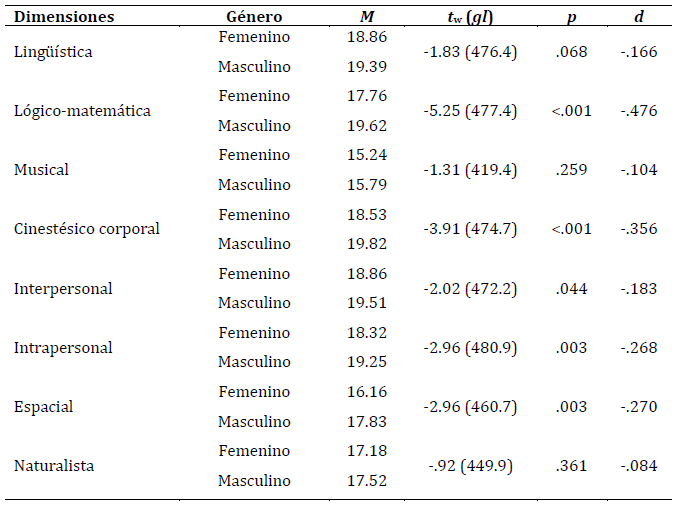
This instrumental design study examines the validity and reliability evidence of the IAMI-R in Peruvian adolescents. A total of 486 fifth-year high school students (44.03 % male and 55.97 % female) from schools in Chiclayo (65.43 %) and Cajamarca (34.57 %), Peru, participated in the study. The participants were aged between 15 to 17 years (M = 16.23; SD = 0.62). The internal structure was evaluated using confirmatory factor analysis (CFA), and reliability was assessed through omega and ordinal alpha coefficients. CFA with the WLSMV estimator was applied to test the model of eight correlated factors, revealing adequate fit indices: X²(1052) = 1786.25, p < .001, CFI = .96, TLI = .96, RMSEA (90% CI) = .04 (.035-.041), and SRMR = .05. The reliability indices ranged from .82 to .91. Significant differences were found in the self-efficacy perceptions for logical-mathematical, bodily-kinesthetic, interpersonal, intrapersonal, and spatial intelligences, with males rating themselves as more capable than females. The results and implications of the study are discussed
Keywords:
self-efficacy; multiple intelligences; adolescence; high school student; psychometrics